
 E-Paper



Eight years since Dabholkar murder in Pune: Will CBI begin trial?
The murder weapon that the Central Bureau of Investigation (CBI) claimed to have extracted from the Thane creek was later found not to match with the one used to kill Dabholkar, with the report exclusively published by Hindustan Times


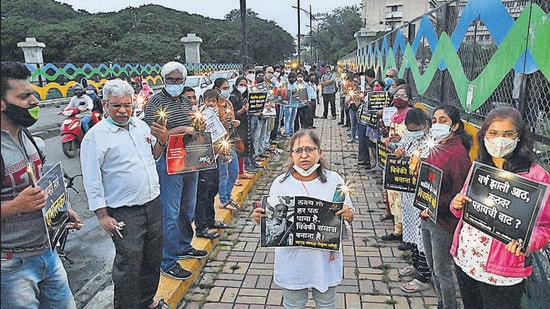
The hearing for the case involving the murder of Dr Narendra Dabholkar in Pune by two men on a bike who shot at him will take place in the Pune special court on Friday. The day also marks eight years since the murder was committed. Going by recent updates however, the case does not seem to have made any progress in the past two-and-a-half years.
The murder weapon that the Central Bureau of Investigation (CBI) claimed to have extracted from the Thane creek was later found not to match with the one used to kill Dabholkar, with the report exclusively published by Hindustan Times.
Asked if this feels like going back to square one, Dr Hamid Dabholkar, the son of Dr Narendra Dabholkar, said, “It won’t be right to say that the investigation is back to where it began. By now, we have identified and jailed the shooters. The chargesheet has been filed in all four cases. What remains elusive is the bike and the weapon but that seems to be a lost cause given that it has been eight years now. However slow the pace of the investigation may be, the High Court (HC) has allowed for the trial to begin and to continue the investigation to find the main conspirators. So, I take that as positive steps. Our demand this time is going to be to focus on the main conspirators.”
The CBI had applied for a stay on hearings in the lower court in October 2020. The stay, coupled with covid-19 pandemic restrictions, resulted in lack of progress in hearings for nine months. The proceedings were adjourned to later dates, even June, and finally started taking shape in July.
So far, three persons have been imprisoned in the case under sections 302 (murder), 120(b) (criminal conspiracy), 34 (common intention) of the Indian Penal Code along with section 3(25) of the Arms Act, including Dr Virendrasinh Sharadchandra Tawade, Sachin Prakashrao Andure and Sharad Bhausaheb Kalaskar. The case also includes sections of the Unlawful Activities Prevention Act (UAPA).
As part of decongestion procedures during the pandemic, the prison administration shifted Tawade to Yerawada central jail from the Mumbai jail as it was severely overcrowded. However in March, the court passed an order allowing him to be shifted back to Mumbai for medical treatment. While Tawade’s known medical condition was toothache, the exact medical grounds on which he was granted the transfer could not be confirmed as his lawyer, advocate Virendra Ichalkaranjikar, remained unavailable for comment despite repeated attempts to contact him.
The CBI in May 2019 arrested advocate Sanjiv Punalekar and his aide Vikram Bhave in Mumbai. While advocate Punalekar got bail within a matter of months, Bhave was granted bail by the Bombay HC only in May. Tawade is an accused in the murder of Kannada scholar M M Kalburgi and is currently on bail whereas Kalaskar is an accused in the murder of journalist Gauri Lankesh.
Dr Hamid Dabholkar said, “The forensic evidence has proved that the weapon was common in these cases. It is also on record that the five cases namely, Dr Dabholkar, Kalburgi, Lankesh and the Nalasopara case are a planned conspiracy.”
It now remains to be seen if the CBI will initiate trial in one of the most controversial cases of our times.


