
 E-Paper



From 3D bioprinting to brain-controlled drones: Students lead the action at ISF 2026
The festival saw a record 25,000 attendees, over 60 speakers, and 30+ interactive exhibits and workshops, making it one of India’s largest public science celebrations

 Prefer HTon Google


Sunday, January 11, 2026 was a celebration of science for Punekars as school students, parents, teachers, researchers, and curious citizens converged at the IISER Pune for the 7th edition of the India Science Festival (ISF) 2026.
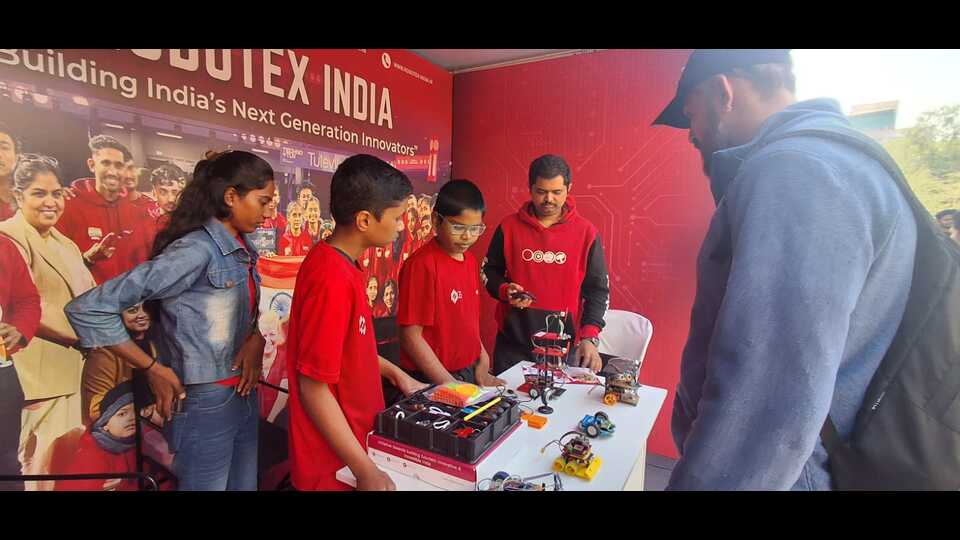
With over 50 talks and panel discussions featuring global leaders from ISRO, Cambridge, and Oxford and a Nobel Laureate among them; and over 35 exhibits and workshops, ISF 2026 had something for everyone. The festival saw a record 25,000 attendees, over 60 speakers, and 30+ interactive exhibits and workshops, making it one of India’s largest public science celebrations.
One of the major highlights was the ‘teacher training programme’ held on the second day of the festival. Speaking about the initiative, Ankish Tripude, facilitator, told Hindustan Times, “We organised a teachers’ training workshop where teachers from across the country participated. It was specifically for science and maths teachers and is aligned with the National Education Policy. We discussed active learning strategies and also conducted hands-on science activities during the sessions. The teachers had activity boxes with them and they performed 10 to 15 activities themselves. This is not just a two-day programme; we are going to engage with them throughout the year. Teachers from Tripura to Chandigarh participated, and a total of 47 teachers took part in the workshop.”
For younger audiences, the ‘backyard science lab’ by the TIFR outreach team turned basic scientific principles into playful experiments, while theatre and storytelling-based sessions like ‘scene 1, take 1: Science communication with nukkad theory’ drew crowds eager to see science explained through everyday objects and performance.
Culture and creativity also found space at the festival. Subaitha from Community 40 Kerala, who conducted a zine-making workshop for students, said, “We conducted a workshop for students titled ‘Make Your Own Hortus Malabaricus’. It was a zine-making workshop in which a total of 25 students participated. We spoke to them about everyday science around us through the zine-making process. We shared many cultural stories so that students could connect to science through these stories. Through this workshop, we promoted cultural heritage using science-based storytelling.”
Technology-driven science communication drew strong interest as well. Gubbi Labs from Karnataka introduced participants to AI-powered tools for making research more accessible. Dennis Joy from Gubbi Labs said, “We are a science communication organisation. Basically, we communicate research coming out of India. We build AI-based communication tools. In this workshop, we taught people how to effectively use AI tools to communicate science. We explained everything in a simple manner. Researchers need to convert their research papers to make them accessible to a larger audience so we helped them with that.”
The exhibition area remained crowded throughout the day, especially around assistive and neurotechnology displays. Ashwani Yadav from IIT Delhi showcased smart AI glasses for low vision students with features such as language translation, voice-guided navigation, and even the ability to control a mobile phone through voice commands.
Perhaps the most eye-catching attraction was the ‘neuro playground live device’ where Deepak Khatri, founder of UPside Down Labs, flew a drone using human body signals. “We teach students how to use these signals. Our technology enables human-to-machine and also human-to-human control,” he said.
For many students, Sunday was a day of inspiration. Hiya Khurana, a student attendee, summed up the experience saying, “Since yesterday, I have attended many talks. By this evening, I also participated in hands-on activities. It was fascinating to hear scientists from all over the world. The sessions covered a wide range of topics, from astronomy to quantum physics and diseases. As a science student, I felt it was a great experience, and I was very curious to learn everything at the exhibition. My favourite topics were climate change and conservation.”


