
 E-Paper



Girls students’ military training from Feb 1: Dada Bhuse
The announcements were made on Tuesday during the Diamond Jubilee celebrations of the Maharashtra State Bureau of Textbook Production and Curriculum Research (Balbharati), which marked 60 years of its role in shaping school education in the state.

 Prefer HTon Google


PUNE: From February 1, school students across Maharashtra will receive self-defence training, NCC and military-style instruction by retired officers, and structured spiritual guidance as part of a series of student-centric initiatives announced by school education minister Dada Bhuse.
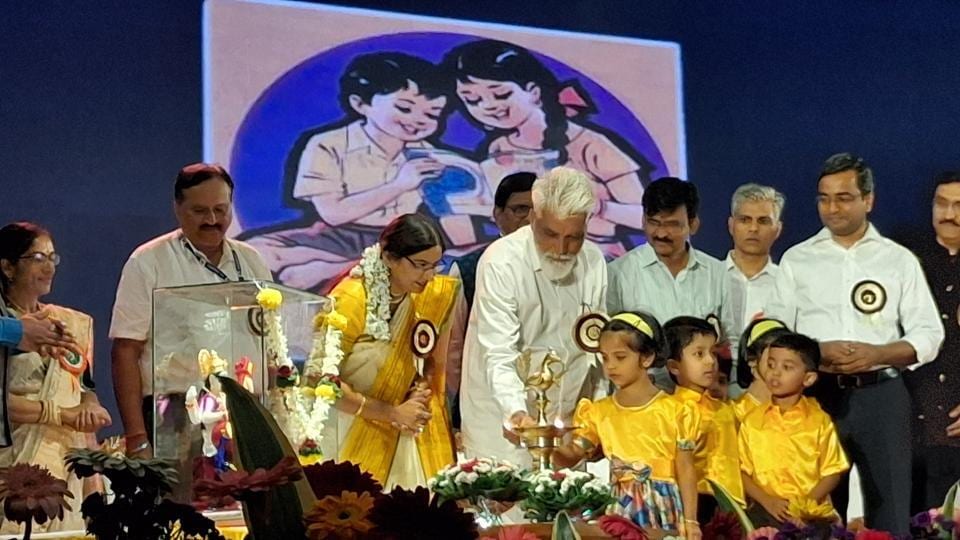
The announcements were made on Tuesday during the Diamond Jubilee celebrations of the Maharashtra State Bureau of Textbook Production and Curriculum Research (Balbharati), which marked 60 years of its role in shaping school education in the state.
Bhuse said self-defence training for girls would be introduced in the wake of recent incidents, including the Badlapur case, to help students protect themselves and respond confidently in difficult situations. “From February 1, girls will be trained in self-defence so that they are mentally and physically prepared,” he said.
He also announced that NCC and military-style training would begin from February 1, with around 10,000 retired officers being roped in to train students across the state. The initiative aims to instil discipline, leadership skills and a sense of national responsibility among students.
For holistic development, the government will roll out spiritual guidance programmes involving around 1,000 trained experts from all religions, Bhuse said. In addition, a Health Card will be introduced for every student to document medical details and ensure timely healthcare support.
Highlighting another recent initiative, Bhuse said more than two crore students and over 7.5 lakh teachers participated in a state-wide patriotic drill on January 26, for which the school education department received a certificate from the World Book of Records, London.
Speaking on Balbharati’s journey, Bhuse said the institution, established in 1967, has been an integral part of Maharashtra’s educational landscape. “Balbharati is emotionally connected to every household in the state. From alphabets to Marathi literature, it has shaped generations of students,” he said.
He recalled that the iconic Balbharati logo depicting a brother and sister was designed by noted artist Dinanath Dalal and continues to remain relevant even after six decades. Bhuse also described the enduring popularity of Balbharati’s songs and lessons as the “magic of Balbharati”.
Currently, Balbharati produces textbooks in 10 languages with contributions from thousands of experts. Over the past seven years, it has introduced new teaching methods and revised curricula to align with changing educational needs, including those of students in rural and remote areas.
Balbharati has also expanded into digital education, with e-books and NEP-aligned digital textbooks already available. Textbooks for Standards 2, 3, 4 and 6 are under development, along with new books focusing on agriculture, health, spirituality and sports education.
During the programme, Kishor magazine, Chitrakatha, four special publications and the Balbharati Geet were released, adding a cultural dimension to the Diamond Jubilee celebrations.
“At the government level, we are extending full support to Balbharati. Our aim is to provide education that builds national character and equips students with practical life skills,” Bhuse said.


