
 E-Paper



Godmen and their empires: Inside the shadow industry thriving in rural Maharashtra
The arrest of godman Ashok Kharat highlights Maharashtra's troubling rise of fraudulent spiritual leaders exploiting faith and vulnerability.

 Prefer HTon Google


Pune: The arrest of Nashik-based self-proclaimed godman Ashok Kharat has once again pulled back the curtain on a troubling and deeply entrenched phenomenon across Maharashtra — the rise of fraudulent spiritual figures who build powerful empires by exploiting faith, fear and vulnerability.
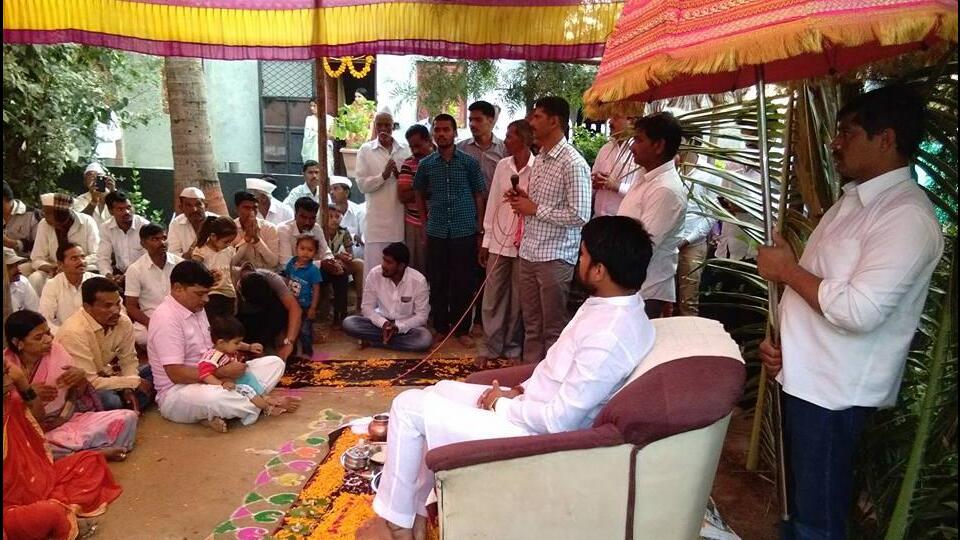
What investigators are uncovering in the Kharat case goes beyond allegations of sexual abuse. Police say it points to a wider ecosystem — a shadow industry where belief is monetised, followers are controlled, and influence extends into social and sometimes political spaces.
Officials and activists argue that Kharat is not an isolated figure. Across Maharashtra, similar patterns have surfaced repeatedly over the years, involving self-styled godmen who cultivated unquestioned authority before being accused of financial fraud, sexual exploitation and psychological manipulation.
From Solapur to Kolhapur, Ratnagiri to Nagpur, and even urban pockets like Pune and Vasai, these figures have operated with strikingly similar methods — creating networks of followers, building ashrams, and positioning themselves as the ultimate solution to life’s problems.
Fraudulent spiritual leader
One of the most prominent cases in recent years is that of Manohar Mama, also known as Manohar Bhosale, who built a vast following across Solapur, Satara and Pune districts.
Projecting himself as a spiritual healer, Bhosale convinced devotees that he could cure serious illnesses and resolve personal crises. Many believed he was an incarnation of Sant Balu Mama, a claim that helped cement his influence in rural areas where faith traditions run deep.
At his ashram in Karmala tehsil, spread over 1.5 acres, large crowds gathered regularly, especially on days like Amavasya (new moon day). Devotees paid for access — from basic darshan fees to premium payments for quicker entry — while others spent significantly more on rituals promising cures for illnesses such as cancer.
Over time, the steady flow of money translated into substantial wealth. Police investigations later revealed that Bhosale and his family owned land parcels in multiple districts, along with other assets, including ashrams and residential properties.
Yet behind the facade of spirituality, serious allegations began to emerge. These included cheating, extracting large sums through false promises, and sexual assault. In 2021, he was arrested following complaints that initially surfaced hesitantly, with victims reluctant to approach authorities.
Then Solapur rural superintendent of police Tejaswi Satpute said victims had to be persuaded to come forward. “Initially, they approached us but were not ready to file a complaint. After taking them into confidence, we registered a zero FIR and proceeded with the case,” she said.
Police described a carefully planned system behind his operations. According to Satpute, Bhosale appeared to possess uncanny knowledge about devotees — details such as birth information and personal circumstances — which were allegedly collected in advance by aides to create an illusion of supernatural power.
For followers like Vikram Waghmare from Madha, the experience was both persuasive and costly. “He charged ₹3,000 for darshan in the queue, and ₹21,000 for direct access. For curing diseases, he would take lakhs,” Waghmare alleged.
Fake ‘baba’
If Bhosale’s influence was built on promises of healing, the case of Sunny Bhosale — widely known as “Chutkiwala Baba” — highlights how fear itself becomes a powerful tool of control.
Operating across Kolhapur, Satara, Sangli and parts of Karnataka, he claimed expertise in removing black magic and offering instant solutions to personal problems. His darbar in Phulewadi drew large crowds, particularly on Amavasya and Purnima (full moon day). Dressed in saffron and known for his intense demeanour, he cultivated an atmosphere designed to intimidate and awe. Investigators say this was not accidental.According to police, many victims reported that he would first convince them they were under the influence of evil forces, and then offer paid rituals as the only solution.
Kishor Shinde, then a police inspector, said, “He would scare people by saying they were affected by black magic and then demand money for treatments.”
Raids conducted in November 2025 revealed what officials described as a staged environment — ritual materials, objects meant to evoke fear, and tools used to reinforce belief.
Investigations have since pointed to a pattern of financial fraud, emotional manipulation and allegations of sexual misconduct. Police also accused him of administering intoxicating substances to victims.
In one complaint, a man alleged that after taking ₹45,000 for rituals, the godman not only failed to help but also fled with his wife. Originally a mechanic, Bhosale’s transformation into a godman and his rapid rise underline how accessible and lucrative this path can be in vulnerable communities.
Former cop turns conman
In Ratnagiri, another figure — Shrikrishna Patil, known as Ram Rahim Baba — built a following by claiming to be an incarnation of Swami Samarth.
A former police driver, Patil turned to spiritual activities after retirement and established an ashram in Jharewadi. His gatherings drew large crowds, especially on Thursdays.
His methods, however, were controversial. Devotees alleged that he used abusive language and humiliation as part of his rituals, claiming such treatment could cure problems.
Despite the unusual practices, followers continued to believe in his powers — a reflection, activists say, of how authority once established becomes self-sustaining.
Complaints eventually led to police action in 2017. His ashram was sealed after a raid uncovered a structured setup designed to stage his appearances and rituals. Yet even after the crackdown, devotees continued to gather at the site, illustrating the resilience of belief systems built around such figures. One follower, speaking anonymously, said harsh language was part of the appeal. “The more abusive he is, the faster we get results,” the person claimed. While often associated with rural areas, such operations are not limited to them.
Bogus healers
In Vasai, Sebastian Martin ran a prayer centre where he claimed to cure serious illnesses including cancer and HIV through divine intervention. His activities attracted large crowds and strong criticism from rationalist groups.
Authorities eventually shut down the centre under anti-superstition laws, though devotees protested, insisting the practices were genuine. Similarly, in Nagpur, Abdul Kadir — known as Kadilbaba — targeted economically vulnerable families by promising rituals that would bring sudden wealth.
Police later described his operation as a criminal network involving sexual exploitation and blackmail. In 2025, he was arrested in a case involving the abuse of minor girls, where families were allegedly convinced to participate in “rituals” under false promises of hidden riches.
Even educated, urban families have fallen prey.
In Pune, a senior IT professional and his family reportedly lost around ₹14 crore over several years to a group claiming spiritual connections to a revered saint. The accused allegedly convinced the family to sell assets in India and abroad, promising healing for medical conditions that conventional treatment had failed to resolve.
Beyond these high-profile cases, several other self-proclaimed godmen continue to operate across Maharashtra — from Thane and Palghar to Pimpri and Nanded.
Though their stories differ in scale, investigators and activists point to a consistent pattern.
Modus operandi
The process often begins with identifying vulnerable individuals — those facing illness, financial stress, relationship issues or infertility. In regions with limited access to healthcare and counselling, these figures present themselves as immediate and accessible solutions.
They then construct an image of authority through staged miracles, symbolic objects and claims of divine connection.
Once trust is established, followers are gradually drawn into a cycle of dependence. Regular consultations, repeated rituals and emotional reliance ensure continued engagement — and continued payments.
Police say the financial model is systematic. It includes fees for rituals, sale of “energised” objects, donations to trusts, and in some cases, transfer of land and assets.
Over time, these operations evolve into organised networks involving agents and intermediaries who bring in new followers, expanding both reach and revenue.
Experts say the success of such godmen lies not just in deception, but in their understanding of human psychology.
Psychologist Mukta Puntambekar explains that people facing distress naturally seek certainty and hope — something these figures confidently provide.
Their appearance, rituals and large followings create a perception of legitimacy. As more people express belief, social proof reinforces the cycle, making scepticism less likely.
This is often accompanied by what experts describe as “authority bias” — the tendency to trust figures perceived as powerful or knowledgeable.
Over time, involvement deepens. What begins as small payments or rituals can escalate into significant financial and emotional dependence.
In many cases, victims — particularly women — are isolated or manipulated, making it difficult for them to question or leave such systems.
Hamid Dabholkar of the Maharashtra Andhashraddha Nirmoolan Samiti notes that social structures also play a role. “Women can be both carriers of superstition and its victims. Their unequal position in society makes them more vulnerable to such exploitation,” he said.
Law in place
Maharashtra has a dedicated law to tackle exploitative practices linked to superstition, introduced after years of advocacy.
Despite this, enforcement remains inconsistent. Cases often come to light only after significant harm has occurred, as victims hesitate to report due to fear, stigma or belief in the godman’s power.
According to Dabholkar, over 2,000 cases have been registered under the law, but conviction rates remain low, raising concerns about its effectiveness.
Activists argue that addressing the issue requires more than legal action. Awareness campaigns, better access to healthcare and counselling, and stronger monitoring of suspicious activities are essential. Over time, these godmen often evolve beyond spiritual figures into centres of influence. With steady cash flows and large followings, they can mobilise people, shape opinions and, in some cases, attract political attention. Activists warn that this creates parallel power structures, particularly in rural areas, where their influence can rival formal institutions. Fear and secrecy remain central to maintaining control. Victims are often told that disobedience will bring misfortune, illness or even death — a tactic that ensures silence.
Nandini Jadhav of the Andhashraddha Nirmoolan Samiti says this emotional manipulation is key. “Fear, stigma and belief keep victims from speaking out,” she said.
The arrest of Ashok Kharat has once again highlighted the scale and persistence of the issue.
Proactive plan
The Maharashtra Andhashraddha Nirmoolan Samiti has announced plans to submit a district-wise list of godmen allegedly involved in fraudulent practices to the police, along with supporting evidence. Members of the organisation recently met director general of police (DGP) Sadanand Date to press for stronger implementation of anti-superstition laws. While a government resolution (GR) already mandates anti-superstition cells in police stations, activists say many exist only on paper and have called for them to be made fully functional.


