
 E-Paper



Higher water levels lower bird numbers at Ujjani this winter
Higher-than-normal water levels following above-average rainfall in 2025 appear to have impacted bird presence at Ujjani (Bhigwan) reservoir this winter, with annual census recording dip in count

 Prefer HTon Google


PUNE: Higher-than-normal water levels following above-average rainfall in 2025 appear to have impacted bird presence at the Ujjani (Bhigwan) reservoir this winter, with the latest annual waterbird census recording a dip in overall numbers.
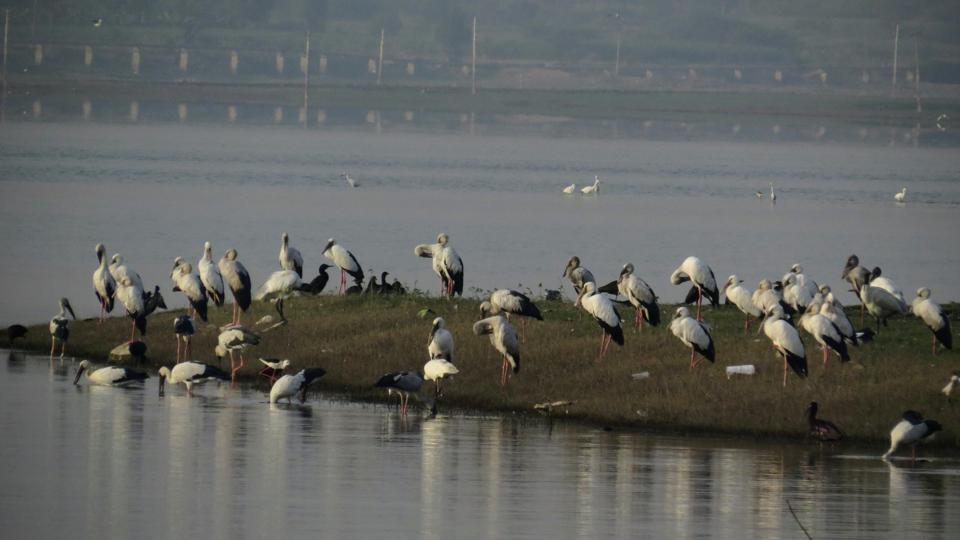
The latest annual waterbird census conducted on February 1, 2026, by the Wildlife Research and Conservation Society (WRCS) in partnership with the Solapur forest division recorded a total 6,604 birds belonging to 137 species at the Ujjani reservoir. Of the 6,604 birds recorded, 5,550 were waterbirds representing 61 species, highlighting the wetland’s continued ecological importance despite changing conditions. The census was carried out at nine sites along the reservoir’s shoreline with the support of 29 volunteers from Pune and Solapur.
By comparison, the earlier census conducted on January 26, 2025, recorded a total 7,467 birds belonging to 122 species, including 52 waterbird species. Last year’s census was conducted at eight sites along the reservoir’s shoreline with the support of 32 volunteers.
Researchers noted that the bird numbers were lower this year compared to last year, largely due to elevated water levels that reduced shallow-water habitats preferred by several species of migratory waterbirds.
Jayant Kulkarni, head, WRCS, said that the exercise plays a vital role in long-term wetland monitoring. “This is an important activity as the data from the waterbird count contributes to the Asian Waterbird Census (AWC). This year, some species that prefer shallow waters, such as flamingos, were not recorded during the count. We believe bird numbers may increase in the coming days as water levels recede,” he said.
Kulkarni added that the data will aid authorities and conservationists in strengthening protection measures for the reservoir. “Consistent monitoring helps us understand ecological changes and plan conservation strategies for this important wetland,” he said.
Despite the overall decline this year, there were many notable sightings. Volunteers spotted vulnerable species such as the greater spotted eagle and river tern, along with near-threatened species including the black-tailed godwit and pallid harrier. One of the major highlights was the sighting of a massive flock of Indian cormorants, with around 480 birds seen flying together.
Spread across nearly 29,000 hectares, Ujjani is one of India’s largest reservoirs and a crucial wetland along the Central Asian Flyway. Formed after the construction of the Ujjani dam on the Bhima River in 1980, the reservoir is regarded as a key wintering ground for migratory birds. Each year, species such as flamingos, bar-headed geese, ducks including the northern shoveler, black-tailed godwits, various waders, and several raptors draw birdwatchers from across the region.


