
 E-Paper



Yerawada-Wagholi BRT Corridor needs to be strengthened, not dismantled: ITDP
With a daily ridership of 1 lakh passengers travelling in both directions, the corridor has become a lifeline for commuters but still faces infrastructure challenges and neglect which impact its functionality and overall experience


A study conducted by the Institute for Transportation and Development Policy (ITDP) India has stressed on the importance of preserving and strengthening the Yerawada-Wagholi BRT (Bus Rapid Transit) Corridor instead of dismantling it. With a daily ridership of 1 lakh passengers travelling in both directions, the corridor has become a lifeline for commuters but still faces infrastructure challenges and neglect which impact its functionality and overall experience.
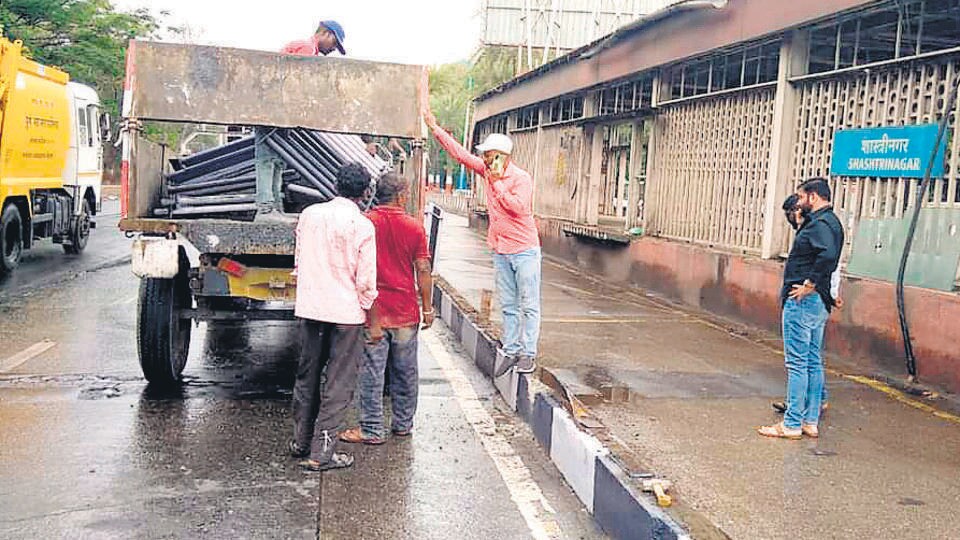
With the peak hour-peak direction demand rising from 2,000 in 2016 to 4,500 in 2023, the Pune Mahanagar Parivahan Mahamandal Limited (PMPML) operates around 55 buses per hour during peak time, maintaining a frequency of one bus per minute. The buses serve 24 routes along the corridor, ensuring widespread connectivity within the city.
According to the ITDP study, the average speed of buses within the corridor is 30 kmph, providing a faster mode of transportation compared to mixed traffic conditions whereas the average speed drops to 15 kmph. Contrary to popular perception, the BRT system (BRTS) does not lead to congestion. Rather, doing away with this system might lead to increased congestion, reduced operational speed, longer travel times and heightened pollution levels.
While infrastructure challenges hinder the smooth operation of the Yerawada-Wagholi BRT Corridor, neglect and lack of maintenance have resulted in its deterioration. Critical elements such as well-maintained stations, sliding doors at stations, wide uninterrupted footpaths, safe pedestrian crossings, and well-designed junctions are absent, adversely affecting the efficiency and safety of the system.
There are several encroachments on the corridor too, wherein approximately 25% of the road length on both sides of the corridor has been impacted by encroachments, exacerbating congestion and impeding pedestrian movement. Walkable footpaths are available only on 60% of the road length, with the remaining 40% either non-existent or encroached by hawkers and vehicles parked illegally. Addressing these issues is crucial to improving the corridor’s functionality and ensuring a safer environment for pedestrians.
According to the ITDP study, even the distribution of road space within the Yerawada-Wagholi Corridor is imbalanced. While BRT occupies 15% of the space, metro construction and footpaths occupy 5% each. Alarmingly, encroachments occupy another 5%, leaving nearly 70% of the road space for mixed traffic. Achieving a more equitable distribution and effectively managing road space is essential to enhance the corridor’s efficiency.
Pranjal Kulkarni, deputy manager, ITDP Pune, said, “The Yerawada-Wagholi Corridor plays a vital role in the city’s transportation network, serving a large number of daily passengers. However, infrastructure challenges, neglect, and encroachments significantly hinder its efficiency and overall experience. To address these issues, investment in maintenance, improvement of pedestrian infrastructure, and strict enforcement of regulations is necessary.”
“The BRT system’s potential to reduce congestion and pollution is evident as BRT buses occupy only 5% of road space but carry 25% of road passengers. Decisions should be taken based on data. Prioritising the development and enhancement of the Yerawada-Wagholi Corridor will lead to a more efficient and sustainable public transportation system, benefitting the city and its residents,” Kulkarni said.


