
 E-Paper



Jayakwadi Dam 66.39% full despite 39% rainfall deficit in Marathwada
While Marathwada meteorological subdivision grapples with 39% rainfall deficit this season, Jayakwadi dam has recorded record-breaking water storage of 66.39% as of early July

 Prefer HTon Google


PUNE: Even as the Marathwada meteorological subdivision continues to grapple with a 39% rainfall deficit this season, the Jayakwadi dam—considered the lifeline of the drought-prone region—has recorded an unexpected and record-breaking water storage of 66.39% as of early July. This marks a dramatic improvement from the paltry 4.12% water storage recorded during the corresponding period last year.
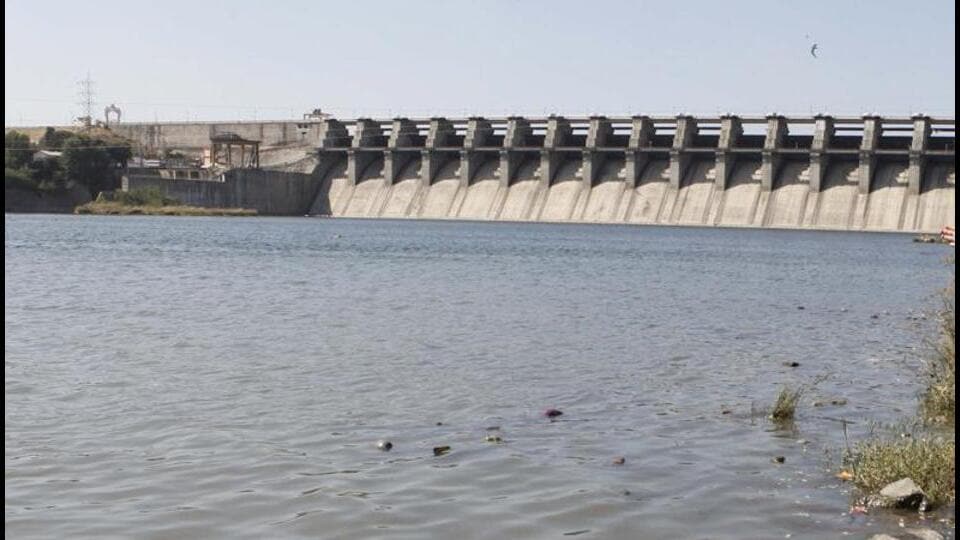
Also, according to experts, such levels are rarely seen in July as the dam typically holds only up to 10% of its capacity during this time. They attribute the unusually high storage to early and intense rainfall in May and June, especially in upstream regions like Nashik district, which contributed significantly to the inflow into the dam.
Mangesh Shelar, executive engineer of the Jayakwadi dam project, confirmed that the current water level is unprecedented. “This is the first time in the past 15 years that we’ve seen such high levels in July. It is certainly record-breaking. According to protocol, water is released only once the storage exceeds 78 to 79%. As of now, there is no need for any discharge, but an appropriate decision will be made once that level is reached,” he said.
Located on the Godavari River near Jayakwadi village in Chhatrapati Sambhajinagar district (formerly Aurangabad), the Jayakwadi dam project supports irrigation, drinking water, and industrial needs across large parts of the Marathwada region. Often referred to as Nath Sagar, the dam is designed to supply water for up to two years for agriculture and for up to four years for drinking purposes. The dam covers districts including Chhatrapati Sambhajinagar, Jalna, Beed, Ahilyanagar and Parbhani.
The Jayakwadi dam receives its major inflow from the Godavari River originating in Nashik, and the Pravara River in Ahilyanagar. According to India Meteorological Department (IMD) data, Nashik has received 505.8 mm of rainfall so far this year which is 106% above its normal of 245.2 mm—making it the highest rainfall recorded in the state this season. By contrast, Ahilyanagar has received just 100.9 mm of rainfall compared to its normal of 142.3 mm, reflecting a 29% rainfall deficit. Overall, Marathwada has recorded 110.2 mm rainfall this season against its normal of 181.6 mm, marking a 39% shortfall. However, Chhatrapati Sambhajinagar is relatively better off with 148.7 mm rainfall against its normal of 162.5 mm which is just a 9% deficit.
A senior IMD official explained that rainfall in Marathwada is largely dependent on weather systems forming over the Bay of Bengal. This year, a lack of strong systems in that region has contributed to the subdued rainfall.
The IMD’s extended forecast suggests moderate rainfall for Marathwada over the rest of July. Central Maharashtra, which supplies major inflows to reservoirs like Jayakwadi through its river systems, is expected to receive ‘above normal’ rainfall. This could sustain the current water levels and potentially improve them further, offering much-needed relief to the lakhs of residents dependent on these reservoirs.
So far this season, central Maharashtra has received 301.6 mm rainfall compared to its normal of 221.9 mm which is a 36% surplus, classified as ‘excess’ rainfall. Nashik leads the state in total rainfall received, followed by Palghar with 86% excess rainfall. Pune too has recorded 449 mm against its normal of 275.1 mm, which is a 63% surplus. These three districts, falling under the central Maharashtra subdivision, continue to play a key role in supporting water availability in Marathwada.


