
 E-Paper



Maharashtra on alert as India reports 4th monkeypox case
Maharashtra health department has alerted all doctors and local health departments to watch out for patients with foreign travel history


As the monkeypox cases tally in India goes to four, Maharashtra health department noted that they have alerted all doctors and local health departments to watch out for patients with foreign travel history of symptoms of monkeypox.
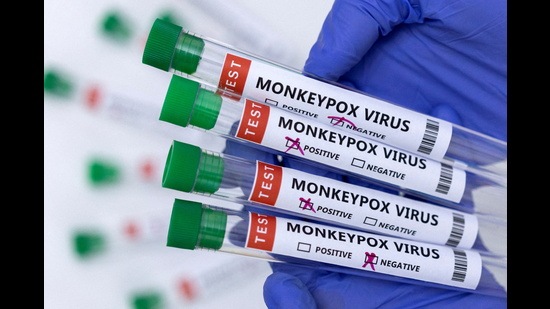
On Sunday, a 31-year-old resident of west Delhi with no recent foreign travel history tested positive for monkeypox. This is the fourth confirmed case of monkeypox in India, the first three were reported from Kerala.
The World Health Organisation (WHO) declared monkeypox a global health emergency on Saturday.
According to the Ministry of Health and Family Welfare, Government of India, monkeypox is a viral zoonotic disease with symptoms similar to smallpox although with less clinical severity. It was first discovered in 1958 in colonies of monkeys kept for research, hence the name ‘monkeypox.’
Dr Pradeep Awate, state surveillance officer, said that since the alert was sounded, we have tested seven patients for the same.
“All these seven patients have tested negative from Maharashtra. The state health department has asked health professionals to be on alert for passengers travelling from infected countries and monitor if any suspected person exhibits symptoms. However, so far Maharashtra has not tested any patient positive for monkeypox,” said Dr Awate.
Dr Nitin Ambadekar, state joint director of health services (procurement cell and hospitals) and now has additional charge as director of health services, said that a person of any age having a history of travel to affected countries within the last 21 days presenting with an unexplained acute rash along with other symptoms can be a suspected case of monkeypox.
“A person of any age having a history of travel to affected countries within the last 21 days presenting with an unexplained acute rash along with one or more of the symptoms of swollen lymph nodes, fever, headache, body aches and profound weakness can be a suspected case of monkeypox,” said Dr Ambadekar.
He added that human-to-human transmission is known to occur primarily through large respiratory droplets generally requiring prolonged close contact.
“It can also be transmitted through direct contact with body fluids or lesion material, and indirect contact with lesion material, such as through contaminated clothing or linens of an infected person,” said Dr Ambadekar.
He further added that monkeypox is usually a self-limited disease with symptoms lasting from two to four weeks.
“Severe cases occur more commonly among children and are related to the extent of virus exposure, patient health status and nature of complications. The extent to which asymptomatic infection occurs is unknown. The case fatality ratio of monkeypox has historically ranged from 0 to 11% in the general population and has been higher among young children. In recent times, the case fatality ratio has been around 3-6%,” said Dr Ambadekar.


