
 E-Paper



Monday Musings: Mula-Mutha rejuvenation should as much be a priority as river beautification
Will the Mula-Mutha beautification project just be a cosmetic make-up on something that requires bigger efforts? The PMC needs to clarify this especially when the manner in which the proposal was quickly cleared even as its cost has escalated to Rs4,727 crore from over ₹2619 around five years ago


Earlier this month when the Pune Municipal Corporation (PMC) hurriedly cleared the Mula-Mutha riverfront development project without much debate, it raised eyebrows. Last week when it went ahead and invited bids – in an equally hurried manner – it invited a warning from the state government’s water resource department that the civic body would be solely responsible for any flood situation arising due to the project.
The PMC plans to develop the riverbed on the lines of the famed Sabarmati riverfront in Ahmedabad. The project entails embankments, promenades, theme parks, walkways and even parking lots along the river bed.
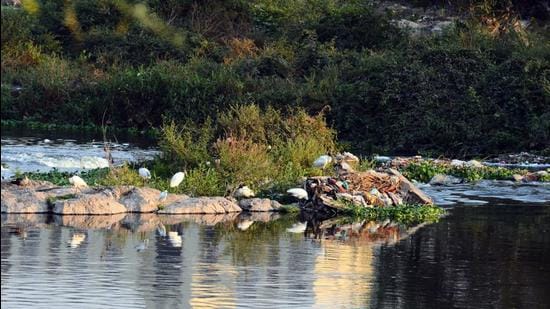
In their current form, the two rivers that flow through the city – Mula and Mutha – are among the most polluted water bodies in the state. The Maharashtra Pollution Control Board (MPCB) in its various reports have maintained that Mula and Mutha, which flows along a 22-km stretch through Pune city, contained human and animal excreta higher than the permissible limits. For Punekars, some spots of these rivers have become an eyesore as the river carries more sewage than clean water.
The beautification project intends to make the river accessible for citizens for recreational purposes, which is currently out of question. The development of the banks is expected to stop the dumping of garbage and aims to stop the threat of flooding by restoring the natural limit of the riverbanks
There is currently a rush for riverfront development projects across cities where water bodies are polluted. These projects put heavy stress on the beautification of rivers and being treated as an extension of urban spaces, as noted by South Asia Network on Dams, Rivers and People.
To take care of the ecological aspect and revive the river, there is another project the PMC has undertaken and is being funded by Japan International Cooperation Agency (JICA). To rejuvenate the river, the proposed pollution-abatement-cum-river-rejuvenation project aims to stop the flow of untreated water into the rivers which also increases the growth of hyacinths, leading to serious environmental issues and mosquito menace.
The project envisages construction of 11 new sewage treatment plants to cover sewage generation till 2027, laying of 1,13.6 km of sewage lines connected to houses in the city, construction of 24 community toilets in slum areas to stop open defecation along the river banks, monitoring of flow of effluent water, facilitation of public awareness programmes and the overall objective of rejuvenation of the Mula-Mutha. The project was sanctioned by the central government under the National River Conservation Plan (NRCP) in 2015. The actual project cost was ₹990.26 crore. However, due to delays, the estimated cost has gone over to ₹1,500 crore.
Both projects were on paper since 2016-17 but were delayed due to several reasons. They are in the pipeline now.
Will the beautification project just be a cosmetic make-up on something that requires bigger efforts? The PMC needs to clarify this especially when the manner in which the proposal was quickly cleared even as its cost has escalated to Rs4,727 crore from over ₹2619 around five years ago.
The two rivers are important to Pune’s ecology. Just as a blind replication of riverfront projects elsewhere in India or abroad can risk going public money down the drain, keeping them in their current form means keeping the 22-km stretch inaccessible to citizens.
The need then is to focus equally on river rejuvenation while riverfront development projects progress without alienating from the river. The need is also to ensure the beautification project is not just restricted to cosmetic make-up but a real change, which is in consonance with ecology.


