
 E-Paper



Need to further study rock outcrops in northern western ghats: Research
The study aimed to explore the relationship between vegetation, plant functional diversity, and the environment on rock outcrops in the northern western ghats


A recent study has highlighted that environmental factors such as altitude/elevation from sea level and temperature, and not base rock, influence the vegetation in the plateau areas of the northern western ghats.
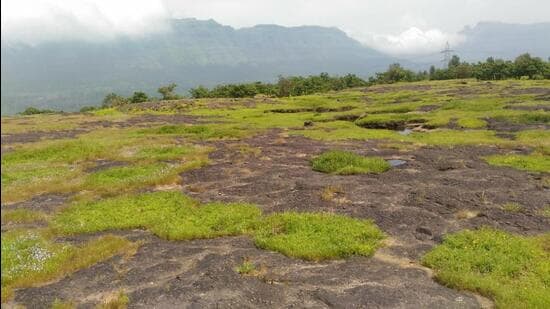
A research paper on this was recently published in the September issue of the Taylor and Francis Journal ‘Plant Ecology and Diversity’, which sheds light on the complex relationship between the environment and plant diversity. It reveals that macro-environmental parameters; most importantly temperature, precipitation, mean diurnal range, distance from the sea, and soil nutrients that co-vary with elevation determine the species composition of plants on the northern western ghat rock outcrops.
A team of researchers from the Agharkar Research Institute, Pune, comprising Aboli Kulkarni, Bhushan K Shigwan, Vijayan Smrithy and Mandar N Datar collaborated with Rohan Shetti for the study. Samples were collected from 30 sites in Konkan and the adjoining western ghat areas.
The study aimed to explore the relationship between vegetation, plant functional diversity, and the environment on rock outcrops in the northern western ghats. However, these outcrops are severely exposed to hostile and challenging climatic conditions, and there is a need to investigate how these rock outcrops’ species are fighting these environments. In this study, vegetation surveys were conducted at 16 high-elevation and 14 low-elevation sites using a transect and quadrat method. Floristic data was used to calculate plant diversity and plant functional type abundance. The relationship between vegetation; climatic (temperature, precipitation); and soil (soil carbon and nitrogen) variables was explored using cluster and ordination analysis.
Datar said, “Though globally well studied, Indian rock outcrops are largely understudied for their ecological intricacies. There is a general perception that vegetation in plateau areas mostly depends on the type of bedrock. The western ghats mainly consist of basalt and laterite rocks. Through this study, we inferred that altitude or elevation of a particular site/plateau – which is surrogate for macro-environmental parameters such as temperature, precipitation, mean diurnal range – along with soil nutrients, determines the species composition and plant functional traits of the northern western ghats’ rock outcrops.”
Kulkarni said, “We also observed that the plant species of selected plateau areas have matured over the years to sustain in higher temperatures. These unique traits need to be analysed for a better understanding of the dynamics between vegetation and the environment. Additionally, in the context of the current global warming, it is crucial to investigate rock outcrops as they possess habitat-specialist species and being exposed to severe climatic contrasts, they could serve as ideal model systems for investigating how vegetation would respond to the current climate change scenario.”


