
 E-Paper



NGT-picked panel finds untreated sewage from 20 villages polluting Pawana, seeks action plan from local bodies
To tackle the issues, the committee has recommended that the Pune Zilla Parishad expedite the commissioning of soak pits and kitchen garden systems at the household and community levels.

 Prefer HTon Google


Pune: An on-site inspection by a committee appointed by the Western Bench of the National Green Tribunal (NGT) found that untreated sewage and sullage from 20 villages along the Pawana River in Pune district are significantly contributing to river pollution, with several natural drains discharging wastewater directly into the river.
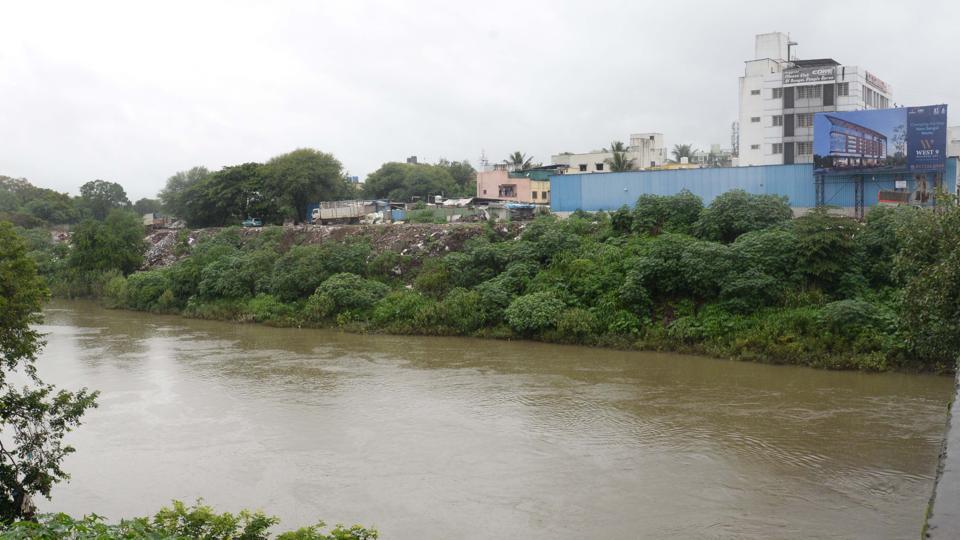
The committee carried out the inspection over two days, December 11-12, 2025, visiting households as well as industries along the river stretch, and submitted its report on February 12, 2026. The NGT was reviewing the report and any order, if passed, was yet to be uploaded on its website.
A total of 20 natural drains along the Pawana River stretch were inspected by the committee. And, continuous flow of wastewater into the river was observed in 17 out of the 20 drains. To tackle the issues, the committee has recommended that the Pune Zilla Parishad expedite the commissioning of soak pits and kitchen garden systems at the household and community levels. It has also asked the Pune Metropolitan Region Development Authority (PMRDA) to fast-track the work of the proposed 14 sewage treatment plants with a total capacity of 5.84 million litres per day and ensure interception and diversion of drains into these plants.
Earlier, the NGT, during a hearing held in December 2025, had issued directions to constitute a joint committee comprising officials from the Central Pollution Control Board, Maharashtra Pollution Control Board (MPCB) and the district collector, Pune, to address the pollution issues in Pawana river. The MPCB was appointed as the nodal agency to coordinate the inspection.
The case was registered based on a Hindustan Time’s report published on February 26, 2024, titled ‘Pawana river enters Priority 1 category due to increase in pollution’.
An application by river conservationist Krunal Gharre raising similar concerns was also merged in the same case by NGT. Gharre was also present during the two-day field inspection by the joint committee.
Samples collected during the inspection revealed elevated levels of Biochemical Oxygen Demand (BOD) and Chemical Oxygen Demand (COD) in several drains. In five locations, BOD levels exceeded the prescribed discharge standard of 30 mg/l, indicating the presence of untreated or partially treated sewage in the river.
The report noted that in the 20 villages, about 73 per cent of households have septic tanks. However, more than half of these households are not connected to soak or leach pits and instead discharge wastewater into open drains that ultimately flow into the Pawana River. Only 8.3 per cent of households have kitchen garden systems for grey water management, while the remaining households release grey water into open drains.
In densely populated villages such as Gahunje and Somatane, a large proportion of houses were found to be connected directly to open drains leading to the river.
The committee also identified violations by certain establishments, which discharged treated sewage and untreated effluent that exceeded the permissible BOD and COD limits under the Environment (Protection) Rules, 1986.
The committee has now directed the Pune Zilla Parishad and PMRDA to submit a time-bound action plan for implementing remedial measures aimed at preventing further deterioration of the Pawana River’s water quality.
Speaking about the findings, Gharre said, “During the field inspection, we found that untreated sewage and wastewater were being directly discharged into the river, which was polluting the Pawana. So far, only household sources have been identified, while the reports of industrial wastewater samples are still awaited. Once these reports are received, we will have a clearer picture of the pollution sources. Now, it is important to see what stand the NGT takes after considering the report.”


