
 E-Paper



PMR to face 100 TMC water demand by 2047, state explores Mulshi diversion, river link
Current water reservation of 36.90 TMC falls short of existing demand of 41.65 TMC; CM asks for linking rivers in the Konkan with the Bhima basin.


PUNE:
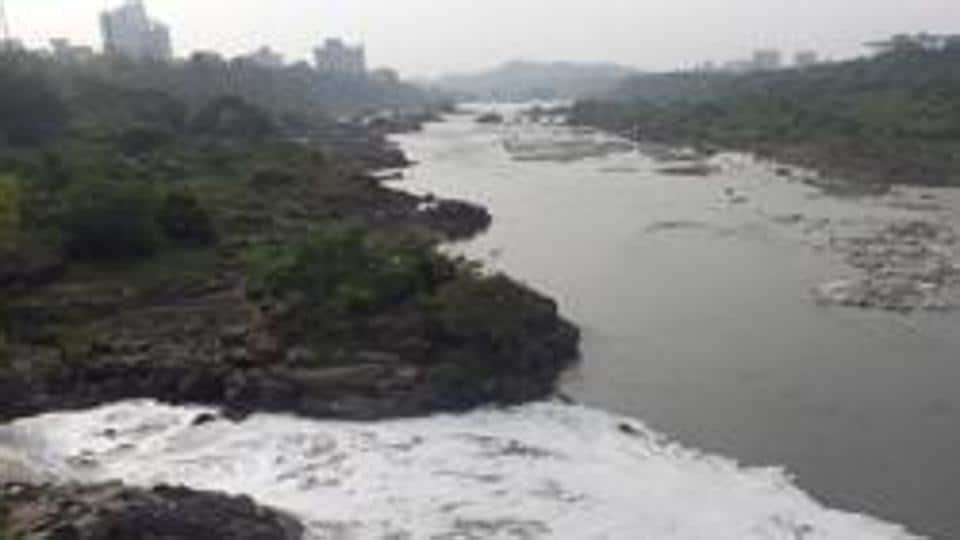
As Maharashtra grapples with severe drought and water scarcity, chief minister Devendra Fadnavis has directed officials to prepare an integrated, time-bound and financially viable long-term water supply plan for the for the Pune Metropolitan Region (PMR) up to 2047 and Mumbai Metropolitan Region (MMR) which will remain valid till 2051.
He also sought a feasibility report on the demand for eight TMC (thousand million cubic feet) water for Pune city and other areas of PMR from Mulshi and Khadakwasla dams to resolve the current deficit.
In a review meeting on Friday in Mumbai, Fadnavis emphasised that both regions must also focus on reusing treated wastewater, controlling leakages, employing rainwater harvesting, and alternative water sources to ensure future water security.
The Pune Metropolitan Region Development Authority (PMRDA) presented its long-term water demand projections, highlighting the widening gap between available water and requirements. The region, with an estimated current population of 1.80 crore, is expected to have 4.12 crore residents by 2047.
PMRDA metropolitan commissioner Abhijit Chaudhary said that the region currently has water reservations of 36.90 TMC against an estimated demand of 41.65 TMC. “By 2047, the annual requirement is projected to rise to around 100 TMC, equivalent to 7,816 million litres per day (MLD),” he said during the presentation.
Fadnavis directed officials to examine the technical and financial feasibility of bringing around eight TMC of water from the Mulshi dam through a pipeline to the Khadakwasla area. He also asked them to explore river-basin linking and groundwater recharge as part of the long-term water security plan.
“Another proposal involves diverting water from the Savitri river basin in the central Konkan towards the Kukadi, Bhima, Indrayani, Mula-Mutha and Nira river basins. The chief minister directed officials to prepare a preliminary project report for the proposed Konkan-to-Bhima river-linking scheme,” a statement from CMO stated.
The chief minister also called for greater use of treated sewage to reduce dependence on fresh water. He asked the authorities to plan tertiary treatment of sewage for supply to industries, power plants and data centres, while secondary-treated water should be used for irrigation.
Fadnavis said leakage control, smart metering, repair of ageing pipelines and expansion of 24-hour water supply schemes should be prioritised. These measures could save around 350 MLD of water, he said.
He also asked civic bodies to conduct water audits and maintain an accurate account of water supplied, distributed and billed. Smart meters should be increasingly introduced for commercial and industrial consumers, while non-revenue water should be reduced in a phased manner.
The chief minister stressed that ongoing water projects should be completed on schedule and that clearances, land acquisition and rehabilitation for proposed projects should be pursued simultaneously.
The chief minister also proposed the Maharashtra Industrial Development Corporation (MIDC) establish a wholly owned subsidiary to manage industrial water supply by sourcing fresh water as well as treated wastewater from municipal sewage treatment plants.
Pune Municipal Commissioner Naval Kishore Ram, Pune divisional commissioner Sheetal Teli-Ugale, Pune district collector Jitendra Dudi also attended the meeting.


