
 E-Paper



Pune RTO sees rise in number of applicants clearing permanent DL tests
Between January 1 and December 31, 2024, a total of 221,953 candidates cleared the test while 1,111 failed

 Prefer HTon Google


Over the past three years, the Pune Regional Transport Office (RTO) has seen a consistent improvement in the number of applicants successfully clearing the permanent driving licence (DL) test despite the test being conducted on stringent, sensor-based, automated tracks. Officials attribute the upward trend to better preparedness among candidates and smoother, more transparent testing processes.
As per RTO data, a total of 211,359 applicants passed the test while 981 failed between January 1 and December 31, 2023. Between January 1 and December 31, 2024, a total of 221,953 candidates cleared the test while 1,111 failed. Between January 1 and November 20, 2025, a total of 237,177 applicants passed while 1,095 were marked as failed.
Deputy regional transport officer Swapnil Bhosale said, “The improvement in pass rates is a positive sign of enhanced driving discipline and better training practices. Over the last few years, we have seen that applicants are taking the test more seriously and preparing thoroughly before appearing. Driving schools are also aligning their training to match the requirements of sensor-based tracks. The automated evaluation system ensures total fairness, and those who pass genuinely demonstrate the necessary driving skills. Our priority is to ensure that only fully competent drivers get a licence. As vehicle numbers continue to rise in Pune, strict, skill-based evaluation becomes all the more important.”
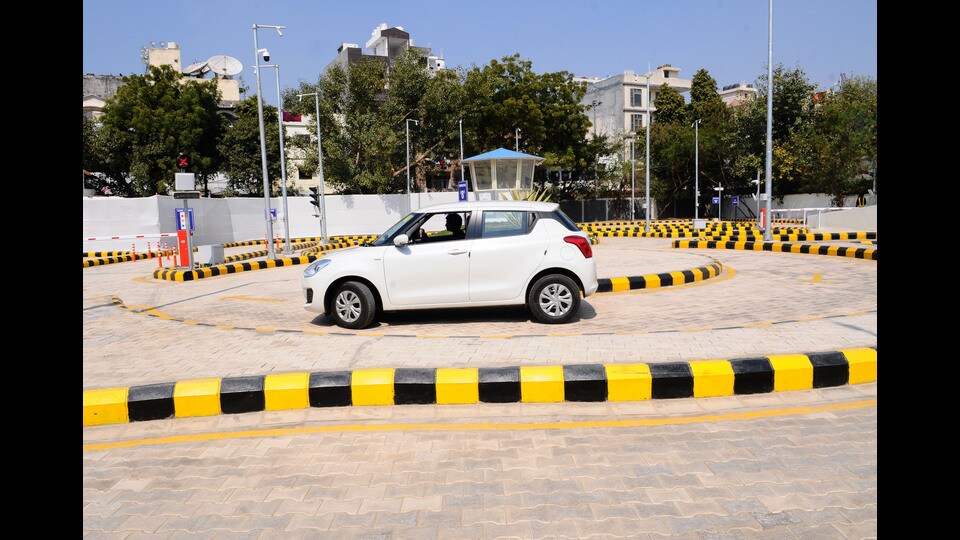
For the permanent DL test, two-wheeler applicants must appear at the Phulewadi RTO on Alandi Road, while four-wheeler applicants are tested at the IDTR (Institute of Driver Training and Research) facility at Bhosari Phata Chowk. Operated by the Central Institute of Road Transport (CIRT) since March 2015, the IDTR setup includes three technical tracks: an ‘8’-shaped track to assess turning skills, an ‘H’-shaped track for reverse driving, and a gradient track that evaluates a driver’s control on slopes and inclines.
Shweta Mahajan, who recently cleared her four-wheeler test, said, “The reverse ‘H’ track was challenging, but the process felt completely fair since the system gives an instant, unbiased result.”
Another applicant, Kedar Ganjale, who did not clear the gradient test on his first attempt, said, “The slope test is tougher than expected. Even a slight rollback gets detected. It made me realise that I need more real-world practice before trying again.”
While failures do occur as many applicants are newly trained and unfamiliar with specialised track designs, the majority successfully clear the test after adequate practice. The evaluation is fully automated and sensor-based, recording each vehicle movement with precision and generating an instant pass or fail result without human involvement.


