
 E-Paper



Startup Mantra: One-size-fits-all solution for three AI-based tools
With ₹15-lakh award money, DutyPar was developed; IndoAI Technologies Pvt Ltd now offers services in facial recognition, vehicle tracking and fire alert

 Prefer HTon Google


Pune: Rashmi Kulkarni started an e-invoicing service in 2018 that helped companies to automatically create quotations and recurring invoices. The cub startup was chugging along till she took part in the Maharashtra Innovation Society’s AI contest. “That year we won the award and ₹15 lakh was the prize money,” she said. Substantial for a startup. But it came with a rider. The winner had to build an AI (artificial intelligence) model for their students who attended the skill development programmes run by the Maharashtra government.
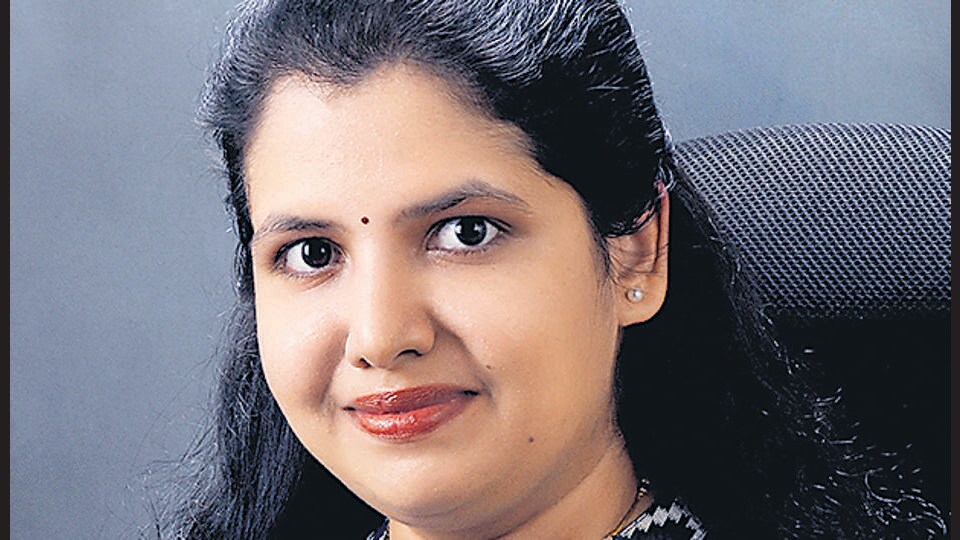
“We developed an app called DutyPar that facilitated face recognition using one’s mobile phone. The app replaced the need for any hardware, so it became very easy to use by the government that runs several such programmes across the state, be it for sewing, typing and so on. Since it required no special hardware or cameras, it became very easy for the authorities to mark attendance of people all over Maharashtra, urban or rural. All one needed was their smartphone,” she said.
The app was a success and soon DutyPar was being used not just by the state government, but also other states as well as the central government. “The National Skill Development Programme too started using our app and, as of now, we register close to eight lakh people daily who attend such sessions,” she said.
DutyPar charged ₹15 per user per month. They offered their face recognition and GPS (global positioning system) location-based attendance service to smaller clients like SMEs and educational institutes as well. So far, so good. But no startup can afford inertia, else it may simply stagnate and die.
“At that time,” said Rashmi, “one of our angel investors introduced us to the BVG Group. This was our first private sector client. BVG provides different services, including housekeeping at airports and the 108 ambulance service. They needed to get a grip on 75,000 of their staff attendance who were all over the country, from cities to villages. And DutyPar was perfect for their needs.”
A large private client came with its own special needs. Rashmi said, “So far, we had not encountered any problem with our app. But at BVG, we realised that scaling up comes with special requirements. Many of their employees were semi-literate or had little or no idea about basic technology. Our UI (user interface) and UX (user experience) was fairly simple, however, the people who were marking their attendance were aged 19 to 65. They needed some hand-holding so we had to hire people to help them initially. We used these team members to help other clients with their issues as well.”
The facial recognition phase
E-invoicing was the starting point. But AI is a different ball game altogether. Rashmi said, “To develop an AI-based app, we needed large data sets. So, if a person is sitting at home or in an office, or with a beard, without a beard, profile and so on, all angles, situations in which a person marks his attendance should be captured by our AI.
“AI is like a neural network that uses images to process data. Initially we used multiple data sets from Google, about 10,000 faces. Then even the skill development department allowed us to use their data to train our AI which was a big help. The algorithms take the images daily that are embedded, which in turn trains the AI.”
In four months, they had the mobile app for AI-based face recognition and GPS-based location matching attendance app ready for use. “It could be used on Android, iOS or web applications.”
The prize money and Covid, somehow conspired to make DutyPar a success. Starting with the government as a customer then moving on to the private sector, the going was good. The initial prize money of ₹15 lakh Rashmi invested in developing the AI-based facial recognition app.
“The money was used to pay our staff and cover other expenses. Whatever revenues we earned, we invested back in the business. In the first year, we had revenues of ₹8 lakh. In 2022, we earned close to ₹22 lakh. Our revenue last year was ₹60 lakh. We have been focussing on stabilising the product and the revenue churn from existing clients in managing our expenses. So far, we had not focussed on direct field sales, but through distributors and channel partners,” she said, heading a team of 25 staff.
The new plan
Rashmi saw the possibilities that AI was offering. “Not just facial recognition for attendance, but AI could be used in different circumstances. Such as fires, security, vehicle tracking, gesture recognition and more. To that end we used our resources to build AI apps for vehicle tracking at parking lots, bus stops, housing societies etc. We have developed an AI model which can detect fire and smoke, and raise an alarm. The problem with smoke detection is that it can mistake cigarette smoke for a fire, so we had to train our AI to differentiate harmless smoke from dangerous fire smoke.”
With newer applications for their app, the company has now been renamed IndoAI Technologies Pvt Ltd.
“We have developed our own Edge Ai cameras where all the data is processed in the camera itself. There is no need for any other external hardware like DVRs/NVRs (digital and network video recorders). The data is sent to our server where it is encrypted, and a report is prepared for the customer. Reports for attendance are given as present or absent.
“For example, our camera at the school at Badlapur will be able to identify attendance of teachers and staff. Trespassing by a stranger (person not registered by the school) will prompt an alert to the authorities. Personal information in no way is compromised as it is encrypted and on our server which then gets destroyed.
“And the plus point is that Indo AI’s offering can be used on a mobile phone, unlike many that need special hardware. All one has to do is set up the IndoAi edge Ai camera and assign people for the task at hand. It could be for attendance monitoring, security at parking lots, fire safety etc. Our AI tool will inform the responsible people on their mobile phones directly,” she said.
Indo AI has decided to get proactive about its new offering.
“Though we do our sales online, we have hired 10 salespeople who will manage the field. We are also planning to tie up with service providers like Urban Company to help in the last mile delivery. So, if we make a sale in Tamil Nadu and the company needs help with the installation of the camera, then the people from Urban Company can go and help them for which we will make a fee agreement. Will work for them, will work for us as well,” Rashmi said.
Presently, the AI works on specialised cameras developed by Indo AI. “These cameras process all information and send a report to the customer. All they then need is their mobile phone. The camera currently costs ₹2,50,000. We aim to sell 2,000 cameras by December 31, 2024.”
But will the cost be an obstacle? Rashmi is quite confident that it will not.
“When people look for solutions, they are ready to pay for it because the cost of failure is much higher. We are also working on a chip that could be deployed on any Edge Ai camera or drones. That would cost a customer about ₹60-70,000.”
This easy use of an AI tool on any mobile phone is what she calls “appisation”, “because you can use any of our services from your mobile phone. You don’t need different hardware for facial recognition, vehicle tracking or smoke detection. All the apps can be used on mobile phone.”
From e-invoicing, to contests, to attendance tools to now an AI app. But this “appisation” is not yet complete. It has miles to go and many newer phases to evolve into.


