
 E-Paper



Startup Mantra: Putting logistics into place for quick delivery, minimum product returns
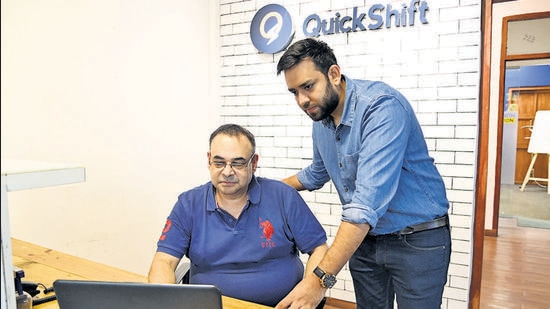
In India time is more than money. It is, in the words of Anshul Goenka and Prodipto Roy, founders of QuickShift, a technology fulfilment startup, the key to ensuring an order placed online is delivered in “48 hours, max”, across 26,000 pin codes in India


It’s a lead selling point on any direct-to-customer (D2C) platform – delivery time.
While mega movers in the space, cue ecommerce behemoths like Amazon and Flipkart, can bust their bottom lines and the bottom lines of sellers on their platforms to ensure, ahem, same-day delivery, for a 800-odd other ecommerce platforms, websites, apps, the numbers do not add up so easily.
In India time is more than money. It is, in the words of Anshul Goenka and Prodipto Roy, founders of QuickShift, a technology fulfilment startup, the key to ensuring an order placed online is delivered in “48 hours, max”, across 26,000 pin codes in India.
QuickShift is the accelerator for brands in the D2C, B2B and retail space, enhancing scale and penetration and ensuring delivery times have no impact on the finances, which means, ensuring product returns are down to a minimum.
It’s a logistical problem, that when, in 2015 Flipkart and Big Basket were aggressively expanding, Anshul Goenka, just back with an MBA from the UK, saw as his “eureka” moment – fulfilment centres on a platform that connects the entire online retail system – from manufacturing to customer, but especially inventory.
Logistics is viewed as a cost centre for businesses. With lack of standardised solutions across the supply-chain, last-mile logistics – at the right time and cost – was a big challenge.
How do companies reach the end customers?
“We started speaking with brands and customers, and slowly started crafting QuickShift,” Goenka says.
“When a brand goes online, they have to deal with inventory, customer experience, shipping, technology,. We built QuickShift on the idea that we want to be a one-stop shop for any of these D2C brands or SMBs looking to go online or maybe retail. For end customers also, it was important that they get deliveries faster. Today in India, shipping is fragmented. From a centralised location, the brand ships it to tier 2 or tier 3 cities, it takes about seven days. We have decentralised the way any brands store their inventory around India,” Goenka explains.
In the beginning…
Goenka has an MBA in marketing and operations from Symbiosis. He went to the Leeds Becket University (UK) and did another MBA in consultancy there. Says Goenka, “In 2015 I returned to India, but never wanted to fit into a 9-to-5 job. I also wanted to work on something meaningful that would impact and build an ecosystem. I conceptualised a couple of ideas, did some brainstorming and that’s when we stumbled upon logistics. At the time, Flipkart and Big Basket were aggressively expanding and they were all new-age companies. When they started expanding, their logistics started becoming a problem. We thought it’s an opportunity there.”
Decentralising inventory
QuickShift was launched in 2017. Says Goenka, “In the e-commerce sector, players like Amazon and Flipkart are dominating. We have also seen a lot of other brands growing. When we looked at the landscape, there were very few organised players that were providing end-to-end fulfilment or support services to these brands.”
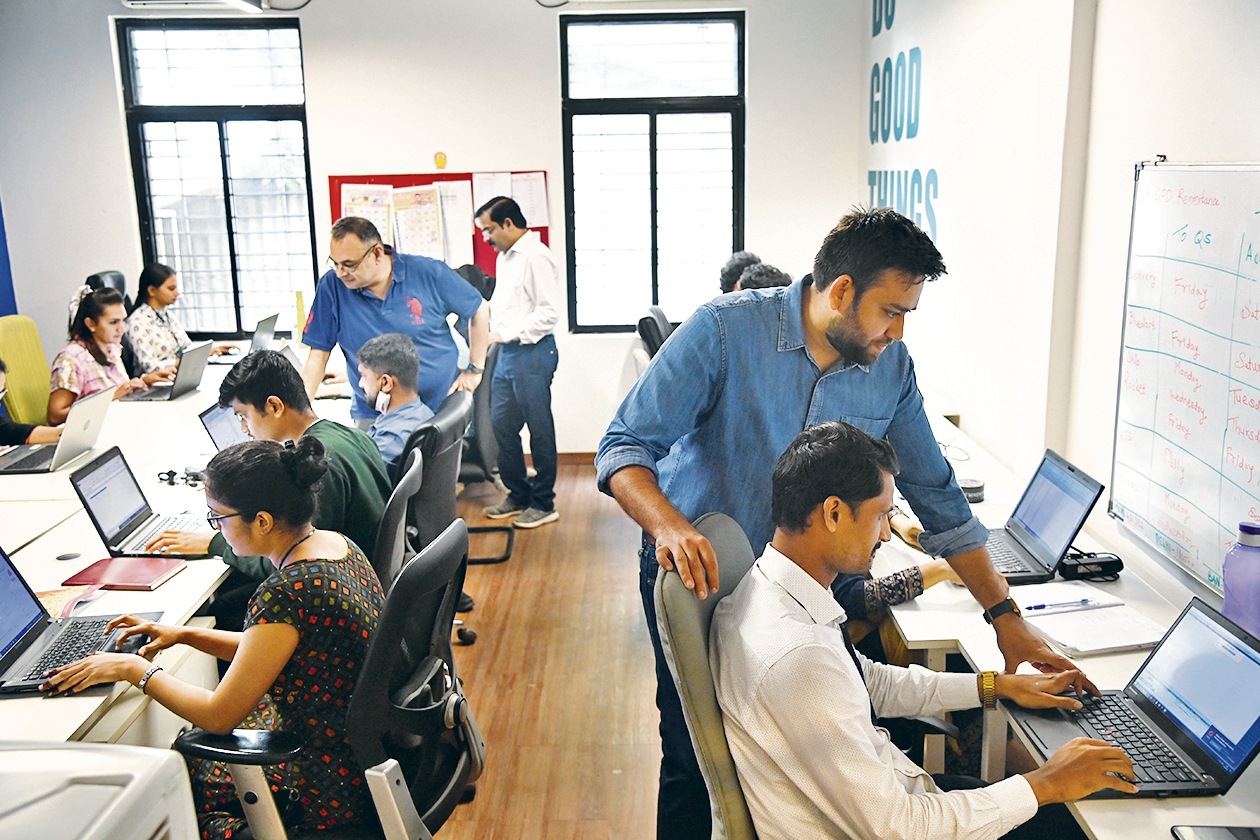
QuickShift opened a network of fulfilment centres - one such centre in Pune, a second in Mumbai and later in Bengaluru, Delhi, and Kolkata.
“These are all modern-day fulfilment centres built for speed. We have connected all these fulfilment centres through a common technology platform,” he added.
‘Quick’ shift from B2C to B2B
“Initially we were more into the B2C segment. We thought we will build a tech platform for B2C audience. Later, we saw enterprise customers had more value. We were lucky to get good connects in the space. Through connects and reaching out to decision makers in the industry we got Big Basket as our first client. With good and long-term contractual values, our cash flows got steady,” says Goenka.
The ‘convincing’ factor
Says co-founder Prodipto Roy: “About a decade back, new brands had new ideas, good products, and money to spend on marketing. But, they were clueless on how to deliver at a time and speed of the customer’s choice. Big players could manage this problem. With the advent of ecommerce, small businesses and new brands could list themselves on the marketplace, but it did not solve the problem of delivering at a time and speed suitable for the end customer. QuickShift answers that question.”
“When the brand connects all the ecommerce marketplaces and when the order hits their stores, it gets carried to their nearest fulfilment centre and the order is serviced within one or two days. We have brought down the seven-day delivery time to 24 and 48 hours. Whenever a customer shops on the website of a D2C brand and they see that they are getting the delivery in one or two days, they are more inclined to placing an order. This helps in getting more order volumes for the brands,” Roy adds.
QuickShift claims to be among the few players providing warehousing fulfilment services combined with technology and shipping. The platform allows a brand to scale up rapidly.
“They just have to focus on their product development, marketing and customer services. Retail has been hit hard due to the pandemic. E-commerce has taken up the space and with Covid we have seen the pace accelerating,” Roy adds.
Addressing the ‘return’ problem
Brands suffer heavily from product returns.
In India, the return rate is around 25 to 30 per cent, which is very high for a brand, because there is a forward and reverse cost involved.
Says Prodipto Roy, “Customers want transparency. They are comfortable shopping on known marketplaces as they are aware of the return policies. If you are a new brand, the customer might not have the conviction to buy the product from your website. We have created tools to encourage the customer to take the order and not to return it. For clients working with us, the return rate is about 7-10 per cent. We give transparency to these customers by giving them step-by-step notifications on Whatsapp. In case of missed delivery attempts, customer gets an alert of whether they want a reattempt or not. Rate of rejection goes down considerably.”
And then, there is AI
Explaining artificial intelligence (AI) used on the platform, Goenka said, “Brands have to partner with multiple shipping partners. To deal with each shipping partner is difficult. They are also on not-so-easy to use platforms. Hence, we have also connected all shipping partners on a single platform. With a combination of five-six shipping partners, we cover 29,000 pincodes in the country. Orders get allocated based on time required and cost incurred. The platform automatically decides which shipping partner to use for delivery based on the AI algorithm inputs.”
“The algorithm to choose the last-mile-shipping partner is based on the cost and time taken to deliver. All pincodes in India are not mapped by courier partners. A partner can deliver at a particular pincode, but others may not be able to do so. So, we update our active pincode list with our courier partners every day. The AI engine knows which courier partner can serve a particular pincode and at what cost. This data is pre-fed before the client is onboarded,” he added.
Revealing their future plans, Goenka said, “The Indian consumption story is growing. We want to be significant player in this market. We will be spending a lot on technology and using a lot of data. Businesses rely on very impactful data pertaining to what is working for them, customers, and demographics. These insights will be developed through our platform. Businesses will know what to sell, where to sell, what price points to sell and how they should target their marketing efforts. We will also help brands to generate demand.”
Investor speak
“Today, India houses 800 D2C brands which have garnered immense interest from the VC community. While the pandemic brought unprecedented changes, these brands seized the day to grow multi-fold, and with that came the need for enablers in the ecosystem. We believe that the idea that has been put into motion at QuickShift, is perfectly poised to capitalise on this opportunity that is expected to be worth over $100 bn in the next 3-4 years.”
-Ashvin Chadha, co-founder, Anicut Angel Fund
“The new wave of D2C brands has increased consumer choices, with rising demand from all corners of the country. While existing marketplaces have allowed brands to build top-lines, they have often struggled with demand fulfilment. They fall short on consistent consumer experience, managing inventory, and scaling geographical distribution. Quickshift’s vision is to solve this. Their fulfilment platform enables brands to build distribution, own consumer experience, outsource fulfilment and focus on growth. At Axilor, we continue to back disruptors and are delighted to partner with Quickshift, which is well on its way to market leadership.”
-Nandan Venkatachalam, principal, Axilor Ventures


