
 E-Paper



Sudden spikes in air pollution levels on certain days without any apparent reason: Official
Currently, MPCB has stations at six locations and Indian Institute of Tropical Meteorology (IITM) monitors air quality at 10 locations across Pune and Pimpri-Chinchwad

 Prefer HTon Google


The Maharashtra Pollution Control Board (MPCB) will install two new automatic air quality monitoring stations in Chikhali and Kasarwadi area of Pimpri-Chinchwad to study and analyse air pollutants in real-time.
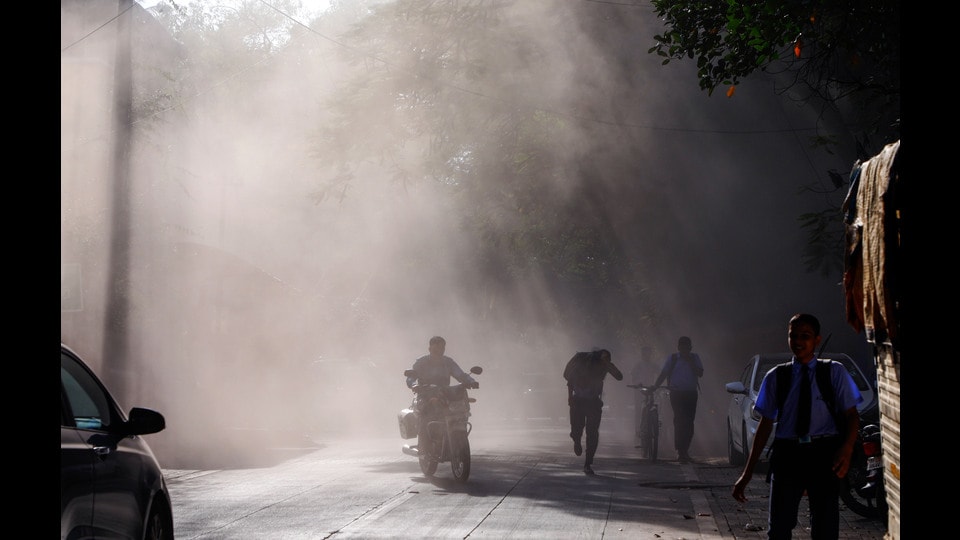
Manchak Jadhav, sub-regional officer, MPCB, said, “Our network covers traffic junctions, commercial and industrial zones, as well as residential areas. The readings are recorded periodically and updated on our official website. We have observed some unique and rather surprising trends in our air quality readings. For instance, there are sudden spikes in air pollution levels on certain days without any apparent reason. On some occasions, we also found that pollution levels remain high during nighttime, even when there is negligible vehicular movement or construction activity. These irregularities indicate that there are several other influencing factors which need to be studied in detail to understand the local air quality dynamics.”
“Although we do not have any scientific records at this stage to establish a direct correlation, the impact of temperature and weather variations on air quality cannot be ruled out,” he said.
Currently, MPCB has stations at six locations and Indian Institute of Tropical Meteorology (IITM) monitors air quality at 10 locations across Pune and Pimpri-Chinchwad.
The board will set up the new stations near the sewage treatment plant at Chikhali and Moshi.
“These stations are expected to become operational within the next month,” Jadhav said on Saturday.
AQI rises to ‘moderate’ with change in weather
As the city began experiencing clear weather conditions from October 10, Pune’s air quality index (AQI) moved up from the “Good” to the “Moderate” category. According to the Air Quality Early Warning and Decision Support System (AEQMS) — a joint initiative of the Centre for Development of Advanced Computing (C-DAC) and IITM — the city’s overall AQI was recorded at 137 around 5:30 pm on October 11.
At least nine monitoring stations across Pune reported AQI levels above 100, which falls under the “Moderate” (101–200) category. The stations include Nigdi (131), Bhumkar Chowk (116), Katraj Dairy (106), Savitribai Phule Pune University (121), Gavalinagar (133), Wakad (189), Thergaon (173), Pashan (122), and Lohegaon (149).
Officials noted that the improvement in weather clarity has coincided with a rise in pollution levels, possibly due to reduced atmospheric moisture and dispersion capacity. With the winter season approaching — a period typically marked by stagnant air and lower wind speeds — experts anticipate that the city may witness more days with “Moderate” to “Poor” air quality in the coming weeks.


