
 E-Paper



PM Narendra Modi’s direct review with DMs against federalism: Hemant Soren
Jharkhand chief minister Hemant Soren says that the state governments need to be taken into confidence by the Centre before any decision, otherwise, there would be a problem in implementation.

 Prefer HTon Google


While Covid-19 cases in Jharkhand have shown a declining trend in the last few days, chief minister Hemant Soren says the state can’t let the guard down as uncertainty about the nature of the pandemic remains. In a telephonic interview with Vishal Kant, the chief minister spoke over a host of issues including rural spread of the pandemic, hiccups in the vaccination drive besides the Centre-state relations. Here are some excerpts.
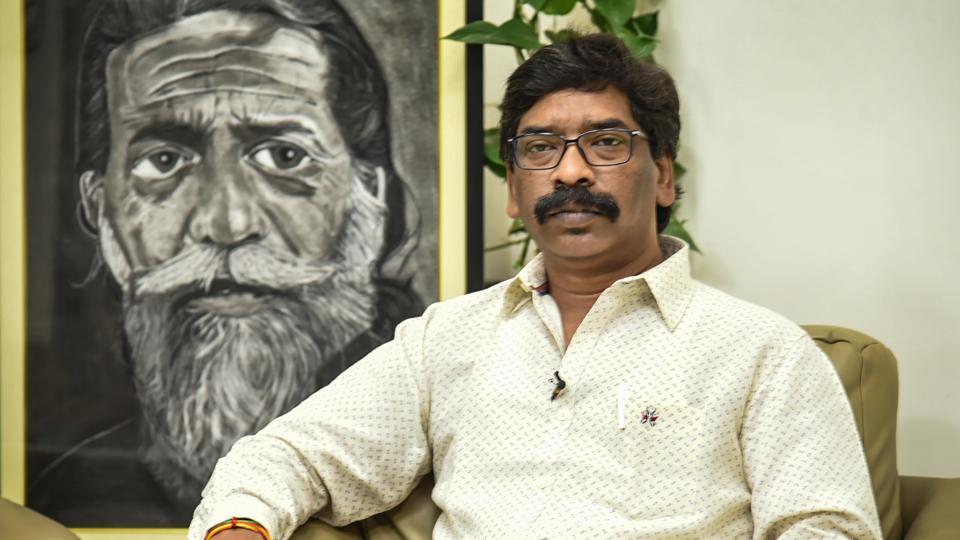
Q) We are in the middle of the second wave of the pandemic. The numbers of positive Covid cables in Jharkhand have started falling. What is the government’s assessment? Have we crossed the peak?
A) Our experience shows a lot of uncertainty related to this disease. It keeps going up and down. Now, there are more associated issues coming up like the black fungus. I think the numbers going down could also be a result of the restrictions we have put in place. So we cannot lower our guard. Overall social distancing and use of masks are the best practice to save oneself from the disease besides vaccination.
Q) Besides the high positivity rate, the second wave is more worrying due to its spread in the rural areas, which have very poor health infrastructure?
A) Yes, our challenge has increased. In the first wave the spread was largely in the densely populated urban areas. But this time, it has penetrated the rural part. Initially, the situation was getting chaotic. However, we have things under control now. We have now also started a special door-to-door drive in rural areas to scan people, be it those who are unwell or even those who have died. We don’t want to hide data, even of death. In fact having exact data of death also gives us an idea of the direction in which the spread might be going.
Q) This pandemic has also brought back the focus to an inadequate public healthcare system. Jharkhand traditionally has had a very poor public healthcare with shortage of doctors, paramedics and technicians. Has this pandemic forced policy makers and your government to change the approach towards public health and make improvements accordingly?
A) I totally agree with it. The role of public healthcare has come to fore like never before. In fact despite all the limitations, it is the public healthcare infrastructure that has led the fight against the crisis. The private sector’s role has been exposed that ultimately they are business entities. There is no denying the fact that lots need to be done. Traditionally we have been a poor and anaemic state, be it on economic, social or educational parameters. We are doing an assessment and working on plans to improve healthcare. However, I would also underline that we handled the pandemic in a much better way despite the limitations than some of our neighbouring states.
Q) Vaccination is the key to fight this disease. But it’s very slow in the state, especially in the 18-44 age group. What’s the plan ahead?
A) There is no denying the fact that there is shortage of vaccines due to supply constraints. Initially, the Centre was doing the procurement and distribution. Then they suddenly left it to the states to procure it for the 18-44 age group. That has led to a chaotic situation. States are now going for global tenders. And then there is no parity in pricing [of vaccines] for the states and the Centre. But we are still making the best effort because the same people will turn around and blame the states if there is a delay in vaccination.
Q) Will Jharkhand also go for a global tender?
A) Yes, it’s in the process. We will issue it within the next few days.
Q) But do you think that will help?
A) I am not very hopeful. ...it is going to be a huge burden on the states, especially poor states like us. There is no price parity. Spending hundreds of crores would be a huge burden. But we have no choice.
Q) Some other states have said the Centre should be taking over the entire vaccination programme. What’s your position?
A) Absolutely. I made a similar demand from the UPA (united progressive alliance) platform. And I still think so. It’s not too late. They made a budget of ₹35,000 crores. The Centre should be doing all procurement and distribution. They are allocating oxygen, medicines and equipment. Similarly, vaccination needs to be done at the national level in a transparent manner.
Q) In Jharkhand, there is another challenge in the vaccination programme--- hesitancy, largely due to rumours surrounding the after effect of vaccines especially in rural areas.
A) Yes, we have also got feedback about this problem in the rural areas. This is mostly related to lack of awareness. And the confusion and certain events related to vaccines and other drugs being used in the fight against Covid has also contributed to it. People hear about some side effects of the vaccine and duplicate drugs being administered. These things add to the rumours, making it a bigger challenge in a state like ours due to the illiteracy levels. However, we have chalked out a detailed awareness programme with the help of all elected representatives across the political spectrum. The campaign will run up to the level of gram panchayats in order to dispel rumours and encourage people to get vaccinated.
Q) Centre-state relations often become a talking point. We have seen conflict situations even during the pandemic. Your tweet about the PM went viral, with the BJP hitting back. What really did you mean by that tweet? Was it to say that such meetings/discussions are not fruitful?
A) The basic thing is that there needs to be transparency. I tweeted about the phone call only after news started flashing on TV that he spoke to CMs. We saw the incident of Delhi CM Kejriwal. He was reminded about the protocol of the meeting. But how come what the PM speaks comes in the media? So, how do we (the states) share our concerns and demands? My view was that the state governments need to be taken into confidence before taking any decision. Or else, there would be a problem in implementation. We have an example of what’s happening with the ventilators supplied to states.
Q) West Bengal CM Mamta Banerjee raised the issue of PM-DM conference? You were part of it. Do you share similar views?
A) I want to clarify that I have no ego hassles to sit there with DMs. However, such meetings are against the principles of federalism. Have we ever seen any other PM in the past hold a review meeting directly with DMs. I totally agree that such meetings are done to humiliate us where we have nothing to speak or contribute. Will the Centre be comfortable if I start doing review meetings with the Union health secretary? He (PM) also needs to think that he is sitting at a very high-level.
Q) In the first wave, it was the Centre that imposed the lockdown. This time it has left the states to decide on that. Such restrictions have huge economic fallout? How will the state fight that? There are already reports of economic stress. Two days back a driver sought food in Ranchi for his starving family?
A) In that specific case, as soon as we got to know, we extended help to the family at 1 am in the night. As far as imposing a lockdown is concerned, there are double standards there as well. In the first wave, for the Centre lockdown was the first option but the states have been advised that it should be the last option. As far economic stress is concerned, we have an eye on it. We didn’t let anyone starve in the first wave, it won’t happen this time as well.
Q) Will the lockdown be extended?
Q) The restrictions have clearly helped in containing the spread. We still have 2-3 days left (restrictions end on May 27 morning). We are assessing the situation. The survey we are doing will give us more clarity about the spread in rural areas by around 25th May. We will take a decision as per the situation.


