
 E-Paper



Reliable air-quality data essential to end air pollution
It will help standardise measurements and bring down the cost of monitors by boosting manufacturing in the country.


The National Physical Laboratory (NPL) certification of all instruments and equipment that monitor emissions and ambient air quality will help standardise measurements and bring down the cost of monitors by boosting manufacturing in the country. The NPL is the Council of Scientific and Industrial Research’s national measurement standards lab that calibrates the national standards of weights and measures and maintains standards of the International System of Units, which is the world’s most widely-used measurement system.
In the Ministry of Environment, Forests and Climate’s notification dated August 22 under Section 3 of the Environment Protection Act, NPL has been authorised to certify instruments and develop testing and certification facilities conforming to ISO standards for both automatic and manual samplers used to monitor air quality.
The NPL has already established certification of manual-monitoring systems for PM2.5 and PM10, which will now be extended to Continuous Emission Monitoring System (CEMS) that are used to track grossly polluting industries to ensure they comply with regulatory norms. It will begin by certifying the AQI monitors being used by the Central and state pollution control boards to track ambient and source-based emissions, and then move to certify instruments used in homes.
PM 2.5 and PM 10 are dust and pollution particles 2.5 microns and 10 microns or less in diameter, respectively, which are inhaled and get lodged in the airways and lungs. Ultrafine dust (particulate matter 2.5 microns or less) are the size of viruses and can cross the lung-blood barrier to slip into the bloodstream, inflaming the blood vessels and damaging heart health.
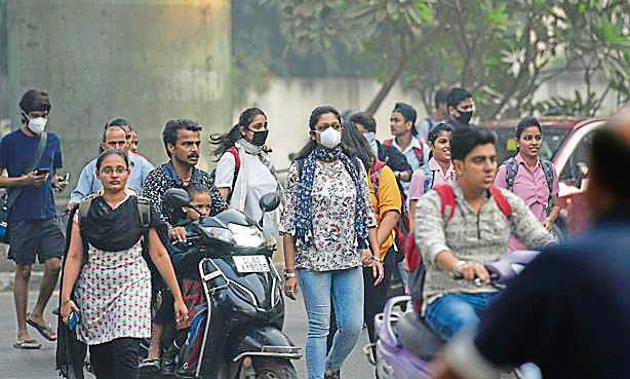
With an estimated 91% of the world’s population exposed to air pollution, poor air quality is world’s biggest environmental health risk. It causes and aggravates several diseases, including respiratory diseases like asthma, lung infections and chronic obstructive lung disease, heart disease, stroke, and cancers.
Air pollution leads to at least 7 million deaths worldwide each year, of which around 4.2 million deaths are from poor quality outdoor air and 3.8 million deaths from indoor air pollution, mostly from the use of unclean cooking fuels like coal and wood. In India, pollution kills 1.1 million people every year and accounts for 10.6% of all deaths, according to the State of Global Air 2018 report.
Measuring air quality using reliable data helps launch actionable measures to mitigate pollution, such as introducing clean air laws, stopping industrial pollution, using cleaner fuel for transport and cooking, issuing health alerts for people at risk, among others.
Under the national clean air programme (NCAP), the Centre is expanding the air-monitoring network to cities and towns that don’t comply with national air quality standards. The NCAP has a target of reducing PM 2.5 and PM 10 concentration by 20-30% by 2024 in 102 non-attainment cities over the 2017 levels. Non-attainment cities are those that did not meet the national standards for annual PM10 concentrations from 2011 to 2015.
The National Air Monitoring Programme (NAMP) uses at least 700 manual and automatic stations measure levels of sulphur dioxide, nitrogen dioxide and respirable suspended particulate matter (RSPM/PM10), along with meteorological parameters such as wind speed and direction, relative humidity and temperature, across 240 cities/towns in 31 states and union territories. Some states like Delhi also measure ozone and PM2.5 concentrations.
The instruments currently being used to monitor pollution, especially those used for CEMS, are manufactured abroad and certified by international agencies in the US and European Union. Not having its own certification process forces Indian industry to get international certification, which is expensive and time consuming.
Domestic certification and manufacturing will help meet the increasing demand for reliable monitors that function optimally in the extreme temperature variations, dust and humidity in India. The affordability of these made-in-India industrial, home and portable devices will be an added bonus.


Stay updated with all top Cities including, Bengaluru, Delhi, Mumbai and more across India. Stay informed on the latest happenings in World News along with Delhi Election 2025 and Delhi Election Result 2025 Live, New Delhi Election Result Live, Kalkaji Election Result Live at Hindustan Times.


