
 E-Paper



Water seeps through walls of ₹9-crore Rose Garden subway
With finishing works pending, project is awaiting inauguration. However, seepage from retaining walls following rain puts question mark on its structural stability


Even before its inauguration, the Chandigarh administration’s much-touted pedestrian underpass connecting Rose Garden and Sector 17 witnessed water seepage from its retaining walls following incessant rains over the weekend.
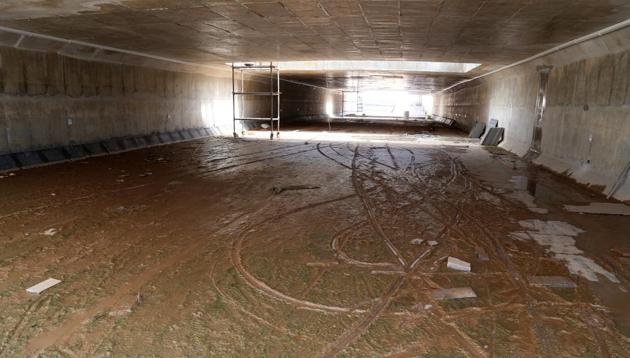
The main structure of the project, which is coming up for ₹9 crore, is ready while finishing works, including beautification, are going on, according to UT engineering department officials.
Its inauguration has already been delayed by several months, missing the deadline four times so far.
When Hindustan Times visited the underpass on Monday, it was seen that at one its end leading to Sector 17, there was no seepage with the floor and walls still dry. However, on the other side that opens at Rose Garden water could be seen seeping through the retaining walls from at least two points. At one of these points, the flow rate was quite heavy and the floor was covered with sludge because of the water collected there.
Terming the water seepage “dangerous”, Surinder Bahga, a city-based architect and member of the home minister’s advisory council for the Union Territory of Chandigarh, said: “Water leaking from retaining walls can cause structural damage. If not plugged in time, it would raise a serious question mark on the safety of the structure.”
Even though the underpass is yet to be opened for the public, “once a retaining wall has been constructed, there should be no leakage from it”, he said, adding that it reflects “poorly on the workmanship”.
However, UT chief engineer denied that there was any seepage. “I have visited the site this morning. There was no seepage. We will get it checked,” he said.
Delayed project
The 70m-long and 12m-wide underpass is a part of the Sector-17 rejuvenation plan.
UT administrator VP Singh Badnore laid its foundation stone in June 2017, but the work started in the first week of December 2017. The administration had fixed a nine-month deadline for completing the project.
After failing to complete the project by September 2018, officials of the engineering department set March this year as the deadline. As the structure was not completed by then, the department fixed June-end as the deadline to open the underpass for public.
Again failing to meet the deadline, officials said the underpass will be completed before the Independence Day (August 15). Now, they say it will take another month for the project to be inaugurated.
Not only delays and now water seepage, the project has been marred by controversies even before the construction began. After the administration floated the project, the UT urban planning department had raised objections. The department had reasoned that the project would eat up a lot of green space in Rose Garden and will lead to wasteful expenditure as only a few pedestrians will be using it. However, the project was approved.
Even the Punjab chapter of Indian Institute of Architects had termed the underpass a “colossal waste of money”. A study conducted by the institute reported that 42,488 vehicles cross the Jan Marg from both directions of the stretch daily, while only 133 pedestrians use it.


