
 E-Paper



Wildbuzz: Bearing a tooth ache
Dental infections, rotting teeth and mouth ulcerations were common among ‘dancing bears’


Having rescued over 600 Sloth bears from the barbaric ‘dancing bear’ practice, the NGO, Wildlife SOS, found them unfit for release into the wilderness as they had suffered mutilation, physical and psychological trauma, and chronic medical complications. Their delicate muzzle had been pierced by hot iron pokers and teeth forcibly removed. Dental infections, rotting teeth and mouth ulcerations were common among ‘dancing bears’. Dental pain, as those among us who suffer it can testify, is the emperor of common maladies as it festers among countless nerves and blood vessels.
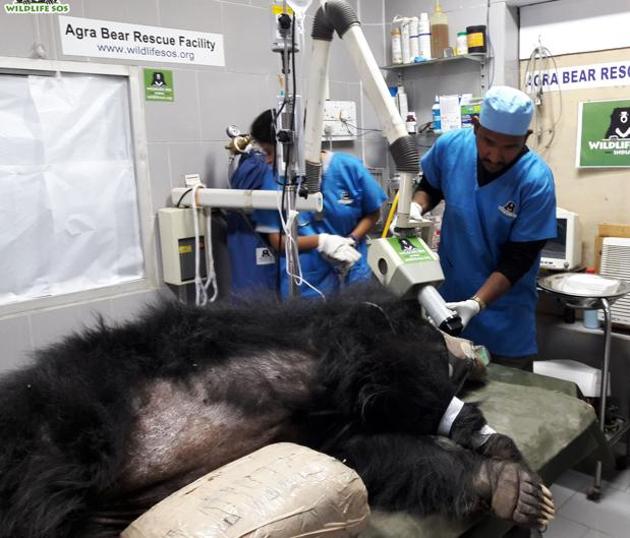
However, according to Kartick Satyanarayan, CEO, Wildlife SOS, “Veterinary dentistry is a specialisation badly needed in India as only a handful of specialists are working in this area.” Realising that dental surgery would lend a new life to suffering bears by effecting a remarkable change in their temperament and making them healthier and more active, the NGO went the extra mile by having their veterinarians trained by UK experts.
That expertise transformed the lives of the bears retained at the NGO’s rescue centres as they undergo regular dental procedures such as root canal treatment in cases of minimal damage, tooth extraction in cases of irreversible damage such as infected abscesses, and dental scaling to clean tartar build-up. Geriatric bears (older than 15 years) undergo regular dental scaling as neglect can lead to long-term damage to enamel and gums, making it very difficult for older bears to consume food.
“Recently, a bear named Durga upon receiving a root canal treatment showed improvement fairly quickly. Evidently no longer in pain, Durga is much more energetic and is back to munching on watermelons and dates!” Wildlife SOS spokesperson Arinita Sandilya told this writer.
SUNFLOWERS ON A MOTHY NIGHT
If butterflies are unchained flowers of our sunny gardens, moths are their mysterious counterparts designed to haunt the dark. On a sunflower at about 8pm in our Chandigarh garden, I observed a moth whose wings seemed touched by the lightness of lilac, evoking comparison to clouds doused in the goodbye glows of sunset. It was as if this beautiful creature had flown to the clouds in twilight and embraced that colour before taking wing on earth below to feed on sunflower nectar when the sun was no longer around.
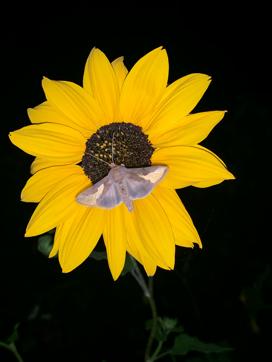
I sought the expertise of the Hong Kong-based Dr Roger Kendrick, who is regarded as an authority on Asian moths, and Prof Jagbir Singh Kirti, head of zoology department, Punjabi University, Patiala. They were kind enough to identify this mostly unseen creature of Chandigarh as a species named, Thysanoplusia orichalcea, and distinguished it from the closely related and similar looking species, Thysanoplusia intermixta. Their expertise in distinguishing such cryptic species was revelatory!
Prof Kirti recalls trapping this moth species in Chandigarh in 1979 while he was an MSc student at the Panjab University. Having worked extensively on moths across India, he discovered a 100 moth species and recently donated 10,000 specimens of his lifetime work to augment the collections of the Zoological Survey of India, Kolkata.
Unlike bird species, which enjoy common Punjabi names, moths are little seen and thus are generically known as ‘Patangas’ in the vernacular. “While we know that honeybees are pollinators, moths perform the same task by sucking nectar from flowers and juice from fruits at night, thus gathering pollen and dispersing it. This moth species is commonly known in English as the Soyabean looper as it is regarded as a pest on that crop when it is a caterpillar feeding voraciously on Soyabean leaves. However, moths predate our crops in evolutionary history and were forced to shift to eating crops because humanity destroyed their natural habitats. So, they have suffered a negative connotation in popular consciousness for no fault of their own,” Prof Kirti told this writer.
vjswild1@gmail.com


