
 E-Paper



Covid-19: Use grassroots institutions in the battle| Opinion
Now more than ever, both the central and state governments need information on people so that they can make targeted interventions


There are deep apprehensions that if the curve of infections is not flattened quickly enough, the coronavirus disease (Covid-19) could ravage India’s rural areas. But in this battle, do remember that there are robust institutions at the grassroots, which, if activated and adequately aided by the government, can lead from the front against the virus in the villages and semi-urban areas when the need arises.
One of these is the Panchayati raj institutions, 33% of panchayats are women-led. The largely unsung ministry of Panchayati raj has developed information in both English and Hindi, which the gram panchayats can disseminate in rural areas, and, at the same time, come up with realistic assessments of what is required to deal with the virus in these areas.
There are other community organisations which can be used effectively in rural areas. Among these are the village education communities (VECs) and self-help groups (SHGs). The government must co-opt them into the effort with much greater vigour than it is doing now. SHGs are largely led by women. Wherever there have been active SHGs, social development indicators such as health and education have improved. These organisations can help in spreading awareness in the local language and can talk to people in a culture-sensitive manner given that they have their roots and interpersonal ties with the communities in which they function.
They could help counter the foolish stigma associated with returning migrant workers. They can be a frontline defence against vigilante groups, which tend to spring up and come up with sanctimonious diktats or even attack health workers as has happened in some places.
Now more than ever, both the central and state governments need information on people so that they can make targeted interventions. These SHGs and panchayats could provide granular information on vulnerable populations such as the elderly, those with chronic morbidities, pregnant women, women in need of post-natal care, those with disabilities. Such people can then be assisted through the various schemes that the government has formulated on a priority basis.
SHGs can also provide specific localised information on people who may have travelled out for work or who could be potential carriers of the virus. They can also be useful in reporting or dealing with domestic violence, which will increase with decreased mobility. SHGs can engage with returning migrants on many levels. They can help with food, local quarantine facilities and act as a bridge between district administrations and villages.
But for women’s groups to do all this effectively, they must be assured of their safety, given protective tools and a suitable reimbursement for risking their health and lives.
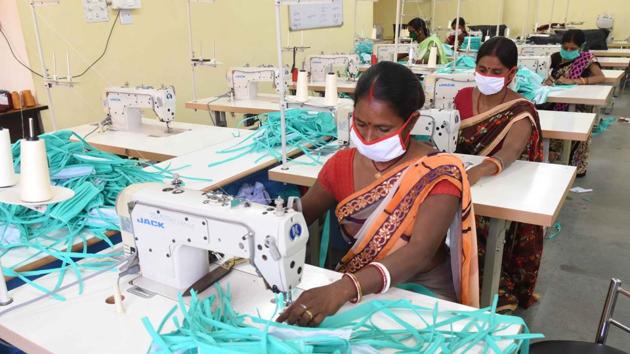
Across the country, women have proved their mettle in taking on the challenge posed by the virus. The prime example, of course, is Kerala where a doughty health minister has made international headlines with her prescient, sensitive, humane and scientific approach to dealing with the virus in a state that has a huge migrant population. But Kerala is not the only one. In Odisha, women in anganwadis and SHGs have been at the forefront of making masks, cooking food for panchayat kitchens and assisting in health checks.
Many experts have said that there will be a sea-change in the way we will regard localised leadership after this crisis blows over. Certainly, there will be a change in the way the role of women at the grassroots is perceived. They are key warriors in the battle against the pandemic.


