
 E-Paper



Kashmir, Trump and a slap on the wrist
Trump is unlikely to abandon the idea entirely because he has given it some thought and, contrary to what some Pakistan watchers have suggested, he was not tricked into it by Prime Minister Imran Khan’s public appeal at their White House meeting couched in fawning praise of Trump as the leader of the world’s most powerful nation.


President Donald Trump will not easily forget Prime Minister Narendra Modi’s unequivocal rejection of his offer to mediate the Kashmir dispute at the Biarritz G-7. If he ever wavered, the stinging slap on his wrist from Modi — the sound of which was heard around the world thanks to the boom mics of the TV crews in the room — would bring him back. Hopefully.
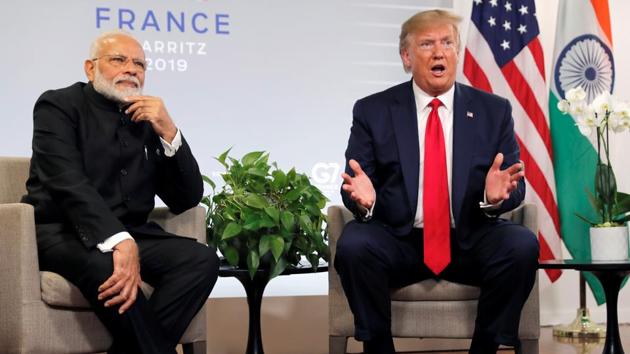
Be warned, though, that Trump is unlikely to abandon the idea entirely because he has given it some thought and, contrary to what some Pakistan watchers have suggested, he was not tricked into it by Prime Minister Imran Khan’s public appeal at their White House meeting couched in fawning praise of Trump as the leader of the world’s most powerful nation.
Trump’s thoughts and views on Kashmir, and on India-Pakistan tensions, have remained under the radar only because he has not engaged with the issue as aggressively as he might have wanted. He probably first spoke publicly of mediating the dispute in an interview with this reporter on the sidelines of an election rally in New Jersey in October 2016. Trump was the Republican nominee then and voting was just days away.
“If it was necessary I would do that,” the nominee had said in the interview when asked if he would like to play a role in resolving the India-Pakistan dispute. “I would be honored to do that. If we could get India and Pakistan getting along, I would be honored to do that. That would be a tremendous achievement.
“I think if they wanted me to, I would love to be the mediator or arbitrator,” he had added to another question making it clear at the time with implications for the future, that he would agree to play a role only if both countries wanted him to, and not insert the United States into the dispute unilaterally as President Barack Obama had suggested as a nominee in 2008.
Trump’s position remains unchanged. Even when making the mediation offer in response to an appeal from Khan during their meeting at the White House in July, the US president was careful to note he was willing to mediate only because both sides had asked him and based it on a misinformed assumption that Modi had made him the same request recently.
Trump’s 2016 offer needs some context, therefore. One, it had come amidst heightened tensions between India and Pakistan in the aftermath of the Uri terrorist attack, a situation not dissimilar to the current escalation following the Pulwama attacks. Two, and this is instructional, Trump has a view on the issue. He had waved off attempts at the time by an aide who had tried to steer the conversation away from what was clearly a sensitive subject and one that the nominee had not been coached on beforehand.
Trump had it under control, indeed. He had handled the issue far better than Obama, the Illinois senator and policy wonk who as a member of the senate foreign affairs committee at the time would, or should, have been aware of longstanding Indian opposition to third-party intervention in Kashmir.
Obama had said then that the United States “should probably try to facilitate a better understanding between Pakistan and India and try to resolve the Kashmir crisis”.
Obama never tried again. Trump, however, is Trump.


