


 Live Score
 Cricket Teams
 Cricket Players
Punish PCB but shield others? ICC’s India boycott sanctions threat exposes cricket hypocrisy as past precedents return
ICC has warned PCB of sanctions for boycotting the India game, but past precedents expose inconsistencies in how similar government-led refusals were handled.

 Prefer HTon Google


It was widely speculated, but the International Cricket Council (ICC) made it official on Sunday. Amid Pakistan’s prolonged review of its participation in the T20 World Cup, media reports indicated that the decision to protest the ICC’s stance on Bangladesh did not sit well with the global governing body. The ICC was reportedly displeased not only with PCB chairman Mohsin Naqvi accusing it of “double standards”, but also conveyed that such a move could invite strict repercussions.
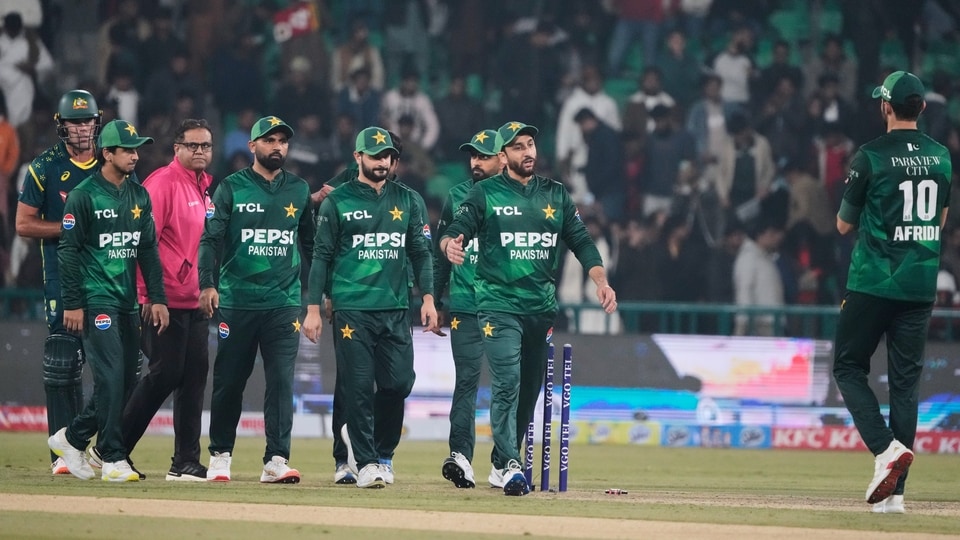
On Saturday, the Pakistan government granted approval for Salman Ali Agha and his team to travel to Sri Lanka for the T20 World Cup. However, it made clear via a social media post that Pakistan would not take the field for the February 15 Group A match against India in Colombo.
ALSO READ: Pakistan's decision to boycott India T20 World Cup match sign of 'protest' against ICC's 'biased decisions': Report
A subsequent report by news agency PTI sounded the alarm on the sanctions the PCB could face if the boycott is formalised. Beyond the previously discussed threats, including a blanket ban on overseas players in the Pakistan Super League (PSL) and reluctance from member nations to tour Pakistan bilaterally, the ICC could also dock World Test Championship (WTC) points and freeze Pakistan’s movement on the ICC rankings chart.
For now, the PCB has not officially communicated the government’s decision to the ICC. The report added that Naqvi is expected to address the media soon, during which he may also clarify Pakistan’s stance should a potential India clash arise in the knockout stages of the tournament.
However, historical precedent paints the ICC’s threat of sanctions in a hypocritical light.
This is not the first instance of a team refusing to play in an ICC tournament due to a government directive. During the 1996 World Cup, co-hosted by India, Pakistan and Sri Lanka, the island nation was awarded walkovers in two of its group matches after Australia and the West Indies refused to travel to Colombo following the Central Bank bombing by the LTTE. Despite prolonged negotiations, neither board altered its stance, and Sri Lanka, who eventually went on to lift the trophy, faced no opposition or penalties.
Similar situations unfolded in later tournaments. England boycotted their 2003 World Cup match against Zimbabwe due to political concerns, while New Zealand refused to travel to Nairobi for their group fixture against Kenya citing security reasons. In the 2009 T20 World Cup, Zimbabwe forfeited a match against England after declining to travel following government-level disagreements.
In none of these cases did the ICC impose sanctions or financial penalties on the concerned boards, citing government intervention as the deciding factor.
That history raises an uncomfortable question: is the ICC being consistent in its stance against the PCB?
Or has Pakistan exploited a procedural loophole by having the government announce the boycott before the cricket board makes it official?
The ICC would be justified in terming this a “selective boycott”, which makes PCB’s case fundamentally different from previous precedents. Pakistan will be playing at a venue of their own choosing, agreed upon in advance through a pre-tournament arrangement involving the ICC and the BCCI, leaving no room to cite security concerns. Adding to the contradiction, just hours before the Pakistan government’s announcement, the country’s Under-19 team was contesting a knockout match against India in Zimbabwe.


