Tim David, Australia’s Singapore-born naturalised allrounder, is the only new face in Australia’s T20 World Cup winning squad from last year. And it was a change necessitated by the conditions (Australia instead of the UAE) to allow the hosts an extra batting option instead of an out-and-out spinner in Mitchell Swepson. India have made seven changes till date, two of those forced upon them in the month leading up to this T20 World Cup in the form of Jasprit Bumrah and Ravindra Jadeja.
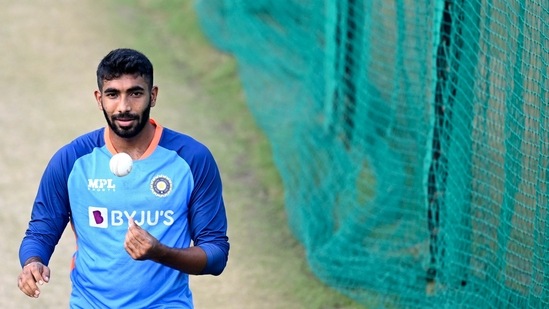
India's Jasprit Bumrah prepares to bowl in nets
Barring West Indies, the non-Asian teams haven’t gone for wholesale changes from last year. A freak golf accident ruled out Jonny Bairstow before England decided to dump T20 specialist Jason Roy in favour of Phil Salt; Rassie van der Dussen is the most notable omission in the South Africa squad and even though New Zealand made three changes, their squad looks most settled apart from Australia. Pakistan, Sri Lanka and Bangladesh have rung in major changes but no team has undergone a makeover like India.
The captain and the coaching staff has changed, Suryakumar Yadav has emerged as the batting enforcer, Dinesh Karthik has pushed Ishan Kishan into the shadows and made Rishabh Pant the second wicketkeeper, only R Ashwin among four spinners (Varun Chakaravarthy, Rahul Chahar and Jadeja being the other three) is still in the mix as India now ponder Bumrah’s replacement a few days after picking Axar Patel to fill in Jadeja’s shoes. India have a wide enough pool of talent but putting Mohammad Shami—who hasn’t played a T20I since the last World Cup— on standby, leave alone considering him now to replace Bumrah puts a question mark on the planning, especially after the lengths India went to try out players on a rotation system in the time between the two World Cups.
Ten openers were tried in 35 matches, 11 batters at No 3 and 4 and 14 between Nos 5-7. On the bowling front, 12 fast bowlers and fast bowling allrounders apart from seven spinners and spin bowling allrounders were tried. Striking a balance between experimenting and rotating the core players is a delicate exercise. And in India’s case, they were probably too besotted with fitting in Hardik Pandya, Karthik and Pant in the same batting order. The numbers reflect that as well.
India played 35 matches in the last 11 months but Virat Kohli featured in just 14 while KL Rahul, who was sidelined due to a sports hernia, played in 12. Of the eight players to have played at least 20 games since the last T20 World Cup, four were bowlers—Bhuvneshwar Kumar, Harshal Patel, Axar Patel and Yuzvendra Chahal. Among batters, Pant and Karthik played 24 matches each while Yadav and Sharma played 26 matches each.
The idea was clear: India were planning for the World Cup taking the participation of some of their top players for granted. Bumrah was the face of the fast bowling attack with Kumar and Harshal as first and second changes and Hardik Pandya (who played 19 matches) as the bowling allrounder. The same way, Chahal and Patel were given a thorough run with Jadeja and Ashwin’s participation considered a given. But Axar isn’t a like-for-like replacement for Jadeja, especially when you factor in the fielding bit. And Bumrah is irreplaceable.
Had the thought process been not so presumptive, India would have picked Shami for the Asia Cup that was held right after the tour of England in July where he had featured in the Test and ODI legs.
Workload management and injury, as Rahul Dravid pointed out recently, are a fact of life now. “Some of the changes, or experiments that people like to call them, are sometimes forced upon you,” he said before the second India-South Africa T20I in Guwahati. “If Bumrah doesn’t play the last game, it’s not because we are experimenting. It’s because he gets injured. The five-match series against South Africa in June, we played exactly the same XI in all five matches. People were saying, ‘why don’t they change the XI?’….so I think we can’t win either way.”
As it is India play more international matches than other teams, the workload becomes incomparable when the Indian Premier League is factored in. Bhuvneshwar has played 27 T20Is since the last T20 World Cup but that number stands at 41 if you add this IPL, 53 if the last IPL and the World Cup is added. That’s too much cricket by anyone’s standard.
But whether all this cricket has helped India get the result they sought from their experiments is anybody's guess at this point. Dravid and Co would have ideally liked to have been more certain before the World Cup begins but now we can all only wait and watch.
Somshuvra Laha is a sports journalist with over 11 years' experience writing on cricket, football and other sports. He has covered the 2019 ICC Cricket World Cup, the 2016 ICC World Twenty20, cricket tours of South Africa, West Indies and Bangladesh and the 2010 Commonwealth Games for Hindustan Times.Read More


 Live Score
 Cricket Teams
 Cricket Players