


 Live Score
 Cricket Teams
 Cricket Players
Replaced Rayudu for World Cup, suffered suspicious injury, never played again: The 75 days that rattled Vijay Shankar
Between April 15 and July 1 of 2019, Vijay Shankar experienced the ultimate roller-coaster ride.

 Prefer HTon Google


Vijay Shankar’s retirement announcement was something media outlets weren’t prepared for. Not because they did not see it coming, but because he had faded from public memory. The “3D cricketer”, as he playfully referred to himself in a statement laced with a pinch of salt, last played competitive cricket five months ago in January. Despite moving on from Tamil Nadu to represent Tripura, the 35-year-old Shankar looked far from finished, scoring an unbeaten 151 in that match.
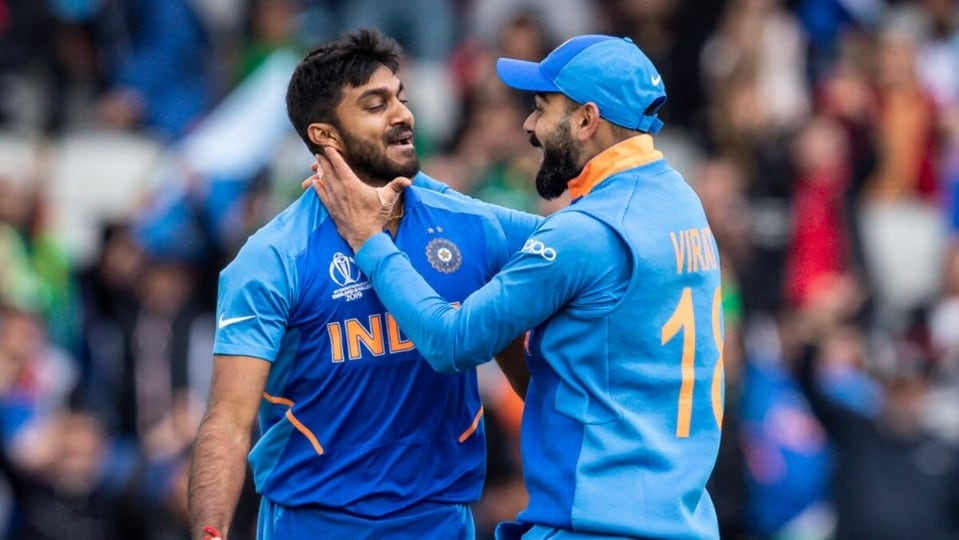
Vijay Shankar was never the ideal all-rounder for India. He wasn’t the fittest around, didn’t have pace, and wasn’t a remarkable batter. But the man is a pure soul, and whatever cricket he played, he did it with earnestness. Which is why what happened in the summer of 2019 will go down as the most turbulent phase of his career. On April 16, then chairman of selectors MSK Prasad sprung a surprise by naming Shankar in India’s 15-member World Cup squad. By July 1, both his campaign and his India career had effectively come to an end.
To understand these complex 75-odd days, let’s rewind six years. The Virat Kohli era achieved several unprecedented milestones in Indian cricket, but one recurring criticism during his captaincy was the lack of communication. Yuvraj Singh, who announced his retirement during the 2019 World Cup in England, later revealed that, around 2017, he was not given clarity about his role. According to Yuvraj, it was MS Dhoni who bluntly informed him that neither the captain nor the coach viewed him as part of India’s future plans. Shankar was another casualty of this mess.
Since Yuvraj’s exit, the No. 4 position became one of the hottest talking points in Indian cricket. In the lead-up to the World Cup, India tried as many as 11 options for the role after the 2017 Champions Trophy, including Kedar Jadhav, Shreyas Iyer, Manish Pandey and Dinesh Karthik. But the longest rope was given to Ambati Rayudu, whom Kohli had all but confirmed as India’s best bet at No. 4. In fact, Rayudu was recalled to India’s ODI set up after two years during the triumphant Asia Cup campaign in 2018. Between then and India’s final match before the World Cup, Rayudu played 20 innings at No. 4, scoring 464 runs at an average of 42.18 and a strike rate of 85.60, including a century and two fifties.
However, on the day of selection, Rayudu was shown the door and the spot went to Shankar. He had scored 244 runs and taken just one wicket for Sunrisers Hyderabad in the IPL. Why Prasad picked Shankar over Rayudu remains one of the biggest selection shockers in Indian cricket, while Rayudu’s public outburst only intensified the criticism surrounding his omission.
Off to England we go
Shankar played his first World Cup match straightaway in Manchester, where India took on none other than Pakistan in a marquee clash. After Bhuvneshwar Kumar pulled up injured midway through an over, Kohli turned to Shankar, and the all-rounder instantly became part of World Cup folklore. The very first ball Shankar bowled in a World Cup brought him the wicket of Imam ul Haq. Before the tournament, he had batted only five times for India in ODIs. Post Manchester, he would get just two more opportunities.
After conceding 29 crucial runs against Afghanistan in Southampton and another 14 against the West Indies, came the jolt. India had already lost Shikhar Dhawan to a thumb fracture by then and were forced into a back-up plan, promoting KL Rahul to the top as an opener. Rahul had initially been pencilled in as India’s No. 4 for the tournament, but Dhawan’s injury threw the balance out of place.
Then, ahead of India’s penultimate league game against England, reports emerged that Shankar had suffered a toe injury seemingly out of nowhere. What made the episode fishy was its timing. It may make more sense in hindsight today, but back then, the injury looked suspicious to us reporters tracking India through the tournament. The injury had reportedly occurred before the Afghanistan match, yet Shankar not only played that game but also featured in the one after. He was eventually replaced by Rishabh Pant in the XI against England, with Pant going on to bat at No. 4 in India’s remaining matches, while Mayank Agarwal came into the squad as cover.
As it turned out, Shankar never played for India again. It was a classic case of short-sightedness from the BCCI selection committee. India already had two high-quality all-rounders in Hardik Pandya and Ravindra Jadeja, yet the hasty decision to back Shankar not only brought unnecessary criticism upon the BCCI but also derailed Rayudu’s run.
Rayudu announced his retirement in a fit of rage, a decision he later reversed, but the damage was done by then. Publicly taking on the selectors rarely went unpunished in Indian cricket. Karun Nair had paid the price a year earlier. Like Shankar, Rayudu too never played for India again.
In little over two months, Shankar had gone from experiencing the thrill of a World Cup campaign to returning to the grind of domestic cricket.


