


 Live Score
 Cricket Teams
 Cricket Players
Virat Kohli, the relentless run-machine of India: What his return to No.1 ODI rankings say about his game
Virat Kohli returns to No. 1 in ICC ODI rankings on January 14, 2026, marking his 11th time at the top.


Virat Kohli is back at the top of ODI batting, returning to No. 1 in the ICC men’s rankings on 14 January 2026.
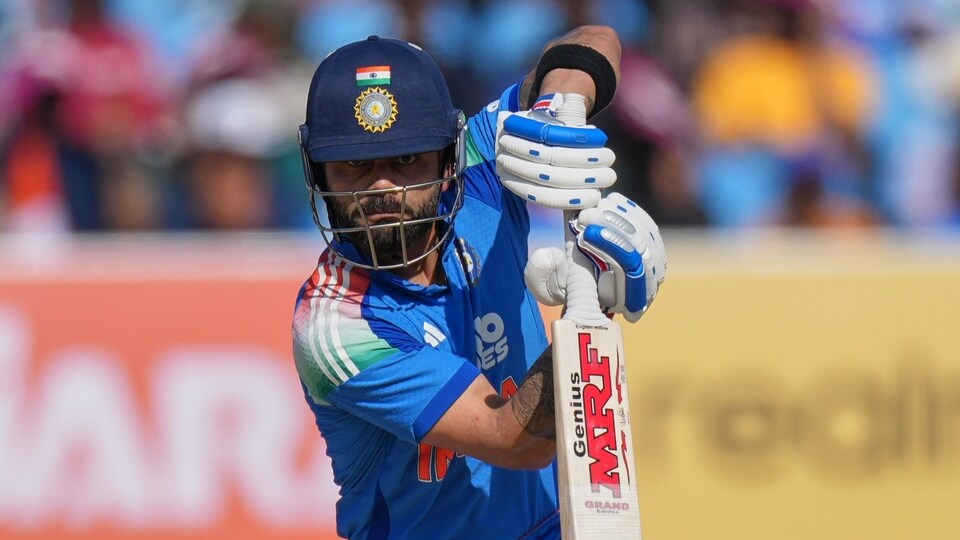
It’s his first time leading the list since July 2021 — and the timing matters, because this isn’t a runaway crowning. It’s a razor-thin race, and Kohli has walked right back into the middle of it.
Kohli returns to No. 1 after more than four years
Kohli’s jump to the summit follows his match-winning 93 off 91 balls against New Zealand in Vadodara, an innings that blended tempo-control with the kind of chase-management that has long been his ODI signature. The rankings swing isn’t being driven by a single flash score, though. It sits on a run of consistent, high-impact innings that has kept him near the top tier even during the period when he wasn’t wearing the No. 1 tag.
The milestone inside the milestone is that this is the 11th time Kohli has reached the No. 1 position in ODI batting. That number is a career statement on its own. Many great batters climb once and defend. Kohli’s ODI story has been about returning — across different phases, different opponents, and different versions of the format itself.
Also Read: IND vs NZ Live Score: Prasidh Krishna makes pressure count, India pick second wicket in defence of 285
825 days at No. 1: where Kohli sits in ODI history
The ICC’s historical tally credits Virat Kohli with 825 total days as the No. 1 ODI batter. That’s the most by an Indian and places him 10th on the all-time list for days spent at the top.
This is the cleanest way to understand ODI dominance because it measures control over time, not just a peak rating. It also puts Kohli in a very specific room: batters whose best wasn’t a season — it was an era measured in years.
A one-point lead: why the top spot can flip instantly
Kohli’s return isn’t a comfortable cushion. He sits on 785 rating points, with New Zealand’s Daryl Mitchell on 784 and Rohit Sharma on 775. Only 10 points separate the top three, which makes the next big innings — from any of them — a potential rankings switch.
Mitchell’s rise is part of the same story. His 84 in Vadodara has pushed him past Rohit to No. 2, turning the top of the ODI charts into a live scoreboard rather than a settled hierarchy. In practical terms, it means Kohli’s No. 1 badge is already under immediate pressure — and that’s what makes the return more meaningful. This isn’t ceremonial; it’s contested.
What this says about Kohli’s ODI game right now
ODIs still reward the batter who can repeat impact without living on low-percentage risks. That’s where Kohli remains brutally relevant. His method has always been built around managing tempo in phases, limiting dismissals, and converting starts into innings that decide the match rather than just decorate the scorecard.
The “11 times at No. 1” line fits that profile. It suggests Kohli’s ODI greatness hasn’t been one straight peak; it has been multiple climbs back to the top, which is harder in a format where ratings punish inconsistency and reward sustained output.


