E-Paper



Dwindling migratory bird count worries experts in Uttarakhand
Insecticide use in farms, forest fires and constructions blamed for fewer sightings of some species


Use of insecticides in fruit orchards and farms, forest fires, monkeys destroying nests and increased construction activities have affected movement of birds in some areas of Uttarakhand and led to their number dwindling, according to avian experts and birdwatchers.
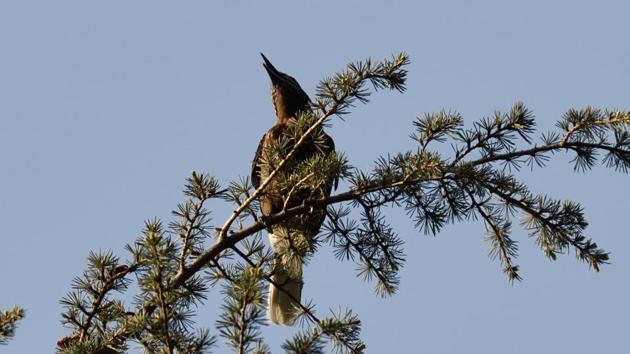
“Compared to the past, the number of migratory birds, both trans-Himalayan and local migrants, has witnessed a decline in some areas of the state. Over the decades, I have seen their numbers coming down with some fluctuations here and there,” said Nainital-based Anup Sah, a mountaineer and a photographer who is also a member of the state’s wildlife advisory board.
Sah said he had been watching birds in the region for nearly four decades and had set up a birdwatchers’ club at Nainital way back in the ’70s.
Asked about the reasons for the decline in the migratory bird count, he said more research was required on the avian dynamics that involved many variables.
“But from my experience as a birdwatcher and a mountaineer who has been documenting the avian life in the region, I would say use of insecticides in fruit orchids and farms, forest fires, and monkey menace that leads to destruction of bird nests could mainly be blamed,” he said.
Ornithologist Sanjay Sondhi said fewer sightings of some bird species in the state could be due to increased use of pesticides for more produce, habitat destruction, deforestation, forest fires, constructions, mono-plantation for compensatory afforestation, climate change and so on.
“I will give you an example. I live in Dehradun. Some birds that used to be seen near our house in 2008 are nowhere to be seen now,” said Sondhi, co-author of the ‘Updated Checklist and Bibliography of the Birds of Uttarakhand’.
“These bird species include black-throated accentor, Eurasian wryneck, white-browed rosefinch, and rufous-breasted accentor. They are also not so commonly sighted anymore in other parts of the state.”
Sondhi said when they were preparing the checklist of birds in collaboration with the state forest department, they found that the presence of 31 species, which were recorded in old literature, was doubtful.
“Take the example of Himalayan quail, specimens of which were collected from near Mussoorie and Nainital before 1877. But this species is now feared extinct in the state,” he said. “In some cases, it could be that there was an error in the recording or misidentification of the bird species earlier.”
Citing another example, Sondhi said Yale Museum had listed in its collection a specimen of golden-naped finch from eastern Kumaon. “But there are no recent records of this species in the state.”
Uttarakhand has half of the 1263 bird species recorded in the country. The updated checklist of birds, which Sondhi co-authored with Dhananjai Mohan and was published by the forest department last year, lists 710 bird species in Uttarakhand. The first detailed checklist published in 2003 had listed 623 avian species in the Himalayan state.
Of the 710 species, 6 are listed as “critically endangered” in the IUCN Red List of Threatened Species, 3 as “endangered”, 19 as “vulnerable” and 28 as “near threatened”.