
 E-Paper



How youngsters in Uttarakhand are helping researchers in ISRO-sponsored project
The youths have been trained by the nodal agency of project in the state to click the photographs of the vegetation present in the meadows and send them back to the researchers.

 Prefer HTon Google


Amid the pandemic with not much work in hands, the youths living near the Himalayan alpine meadows, locally known as Bugyals, are helping researchers study their condition by surveying them in an Indian Space Research Organisation (ISRO)-sponsored project in Uttarakhand.
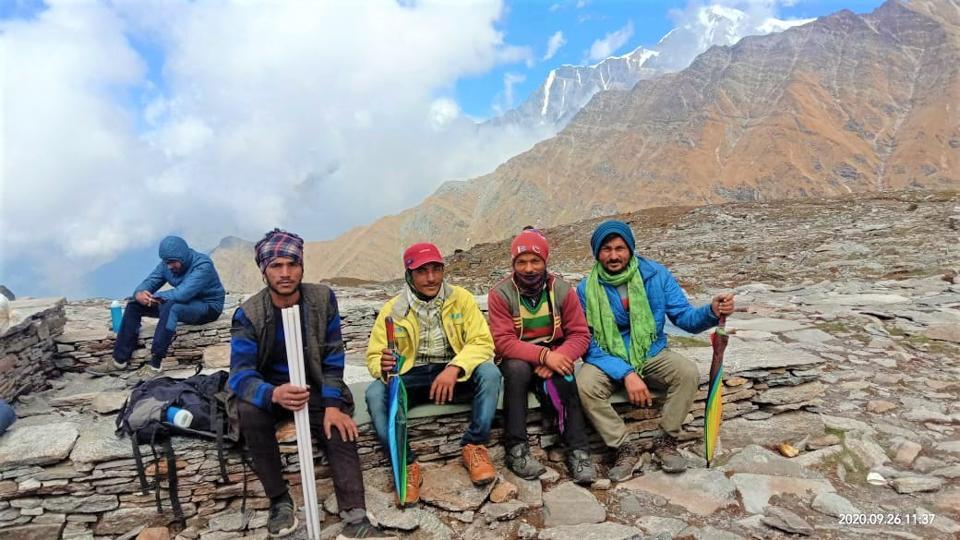
The youths have been trained by the nodal agency of project in the state - Uttarakhand Space Application Centre (USAC) - to click the photographs of the vegetation present in the meadows and send them with latitude and longitude coordinates back to researchers to enable them to study them.
There are more than 80 meadows in Uttarakhand and under the project, six of them have been included in the first phase. The meadows included are Kedarnath-Mandani, Madhmaheshwar, Chopra, Valley of Flowers, Bedni and Dyara.
Devendra Singh, who lives in a small hamlet near Bedni Bugyal in Chamoli district, is involved in the survey of the meadows. “We joined the project after we were contacted by USAC officials about it. They explained that as we are familiar with the meadows, we could help them in studying the present condition of the vegetation including different medicinal herbs,” Singh said.
Also read: Bhim Army chief wants ‘Y’ security cover for Hathras gang-rape victim’s family
Singh who works as a guide to the trekkers coming to Bedni Bugyal said due to the lockdown and ongoing pandemic he was not having much work and when the offer came, he accepted as it was about saving the meadows.
“We were more than happy to join the project as it was about studying the beautiful meadows and saving them. If they would be saved then it would be good for our future only. Also, they will be paying us for our work which would help us in this pandemic,” said Singh.
He informed that the USAC gave them basic training on WhatsApp video call before starting the work.
“They provided us with satellite images of the meadows consisting of the spots where we needed to visit and take photographs of the vegetation to send them by uploading on a mobile app installed on our mobile phones,” said Singh, adding that they started their work on September 23 and ended it on September 28 while covering an area of about 15-20 square kilometre.
“We then submitted our results to the USAC on September 29. We have agreed to work with them in the future also,” he added.
Another local youth Akash Chauhan, who is involved in the project in the Valley of Flowers National Park, said he has been “learning a lot while working on the project”.
A second-year B.Sc. student in Dehradun, Chauhan returned to his village amid the pandemic which is located close to the Valley of Flowers.
“We have been visiting the Valley of Flowers from our childhood and when we were offered the opportunity to work on the project, we happily agreed,” said Akash who is surveying the vegetation at the UNESCO World Heritage site with his friend Aditya Chauhan.
Akash said he started the work on September 25 and will continue for about 10 more days. “We are learning a lot about the existing vegetation and the effect on them due to various factors like climate change,” he said.
“We leave home early morning at around 8 and return in the evening at around 5 after completing our day’s work as per the directions given by the USAC. We are coming to know about different sorts of plants and herbs,” said Akash.
Describing the work of locals important to the project, MPS Bisht, director, USAC, said, “We decided to involve the locals because they are very much familiar with the meadows, plus working on the project would also generate interest for science in them.”
Bisht also said that they also made a point to include them to provide them with some productive work during the pandemic.
“We provided them with virtual training and told them what all they are were supposed to do. So far, all of them have been enthusiastically doing that and sending us the photographs of the vegetation in the meadows,” he said.
“The information provided by the youths from the field survey will help the researchers to study the condition of existing vegetation on various factors like the impact on their growth due to climatic change and others,” said Bisht.


