
 E-Paper



Reluctant donors make plasma collection tough at Uttarkhand’s Doon Hospital
The hospital authorities also highlighted a crisis of blood in the blood bank

 Prefer HTon Google


The authorities at the Government Doon Medical College (GDMC) Hospital in Dehradun, Uttarakhand’s premier healthcare facility dedicated to coronavirus disease (Covid-19) treatment, are finding the going tough as far as plasma therapy is concerned owing to reluctant plasma donors amid a daily spike in the viral infection cases in the hill state.
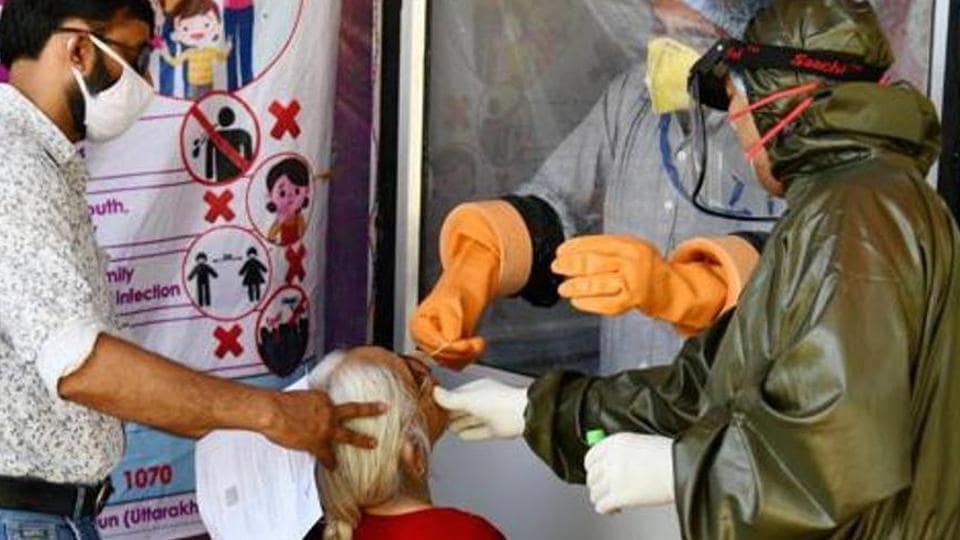
Doctors said recovered Covid-19 patients are steadfastly refusing to donate plasma because they are “scared that they might contract SARS-CoV-2 that causes the viral disease”.
“This is a dedicated Covid-19 facility after the first case of the viral outbreak was reported in Uttarakhand. Many Covid-19 patients, who have since recovered, are reluctant to donate plasma because they are scared that they might get infected again. However, we are trying to convince them that the Covid-19 wards and plasma donation centres are two separate entities. And the plasma donation process is absolutely safe,” said Dr. Ashutosh Sayana, principal, GDMC.
He explained that the hospital authorities had pulled out all stops to create awareness about donation of plasma through mass media such as newspapers, television channels and other means of communication like social media platforms.
Hospital counsellors have been tasked to convince recovered Covid-19 patients to donate plasma, but their efforts have come a cropper to date.
Dr. Shashi Upreti, in-charge of plasma therapy and blood bank, GDMC Hospital, said not a single recovered Covid-19 patient has donated plasma since the equipment for plasma therapy was installed at the government-run healthcare facility.
“The machinery for conducting plasma therapy was installed at the hospital around end-July, but not a single recovered Covid-19 patient has donated plasma to date. We managed to trace seven-eight recovered Covid-19 patients, but unfortunately, they didn’t have sufficient anti-bodies. As a result, they couldn’t donate plasma,” said Dr. Upreti.
She said only the mild and severe Covid-19 patients are mostly able to develop enough antibodies to donate plasma.
“For plasma donation we have to check a few parametres. For instance, Covid-19 patients in the age group between 18 and 65 years are eligible to donate, except for pregnant women and those suffering from comorbidities. Most Covid-19 patients are asymptomatic, who recover quickly. However, only mild and severe Covid-19 patients can develop enough antibodies that help them to donate plasma. We have over 800 such eligible donors, but a vast majority refused to donate their plasma. Of the 800, only eight were screened and all of them found to be ineligible, as they did not have sufficient antibodies,” she said.
The officials urged the public to come forward and help other Covid-19 patients in the hill state.
Dehradun district has reported the second-highest Covid-19 cases in Uttarakhand, as over 4,000 people have been found to be afflicted with the contagion.
The hospital authorities also highlighted a crisis of blood in the blood bank.
Only 10 units of blood were available in the bank until Monday and none from negative blood groups. “We are trying to organise blood donations camps, as the hospital is in dire need of blood for its bank,” Dr Upreti added.


