E-Paper



Uttarakhand to set up its first Himalayan honey testing lab
The Uttarakhand government is setting up the state’s first Himalayan honey testing lab at Jeolikot in Nainital district to check the purity of harvested honey said officials from the horticulture department

 Prefer HTon Google


The Uttarakhand government is setting up the state’s first Himalayan honey testing lab at Jeolikot in Nainital district to check the purity of harvested honey said officials from the horticulture department.
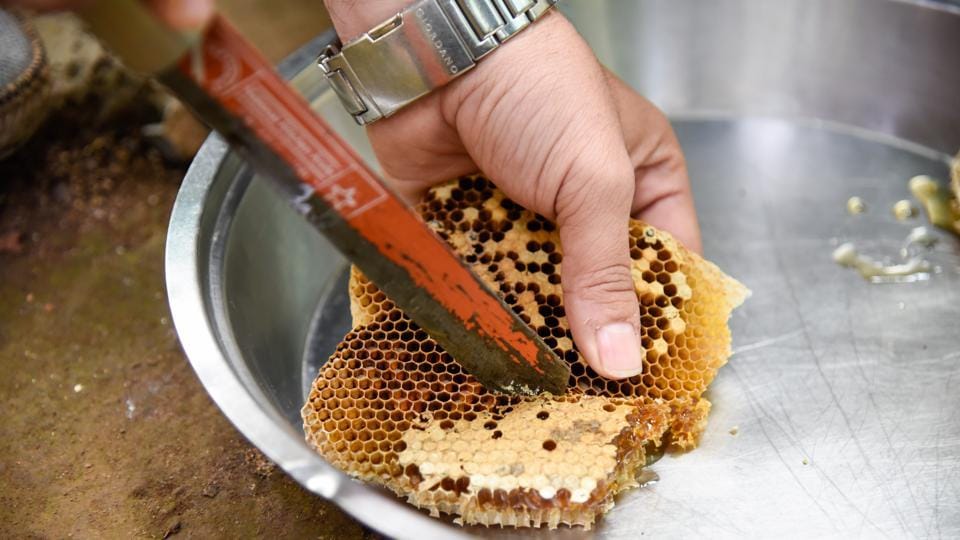
State apiarist (state beekeeping officer) MC Tiwari said the state government’s first quality control lab will be set up at Jeolikot as it has a legacy of bee rearing.
Tiwari said that the honey bee centre was established at Jeolikot as early as 1938. He said quality control testing lab will help standardise the quality of honey produced, help in branding and attract more buyers to Uttarakhand’s Himalayan honey.
“The lab will be set up at a cost of around ₹50 lakh. It will help check antibodies, sugar, trace elements like lead and other foreign materials that make their way into the honey during production,” he said.
Tiwari said that the presence of antibiotics in honey is not good for humans. “When bees suffer from a disease, the beekeepers mix antibiotics in sugar solutions and feed them to the bees and the antibiotics finally make their way into the honey,” he said.
The sale of honey has a direct correlation with its quality. “People, who want to buy honey, don’t mind spending extra money to ensure that the honey is pure. If the honey is tested, it increases its commercial value and it can even be exported or send to other states.
In 2010, traces of lead were found in consignments of honey that were sent from India to European Union. This emerged as a major concern for the quality of honey produced and sold,” he said.
There are 5,566 beekeepers in Uttarakhand who produce over 1400 metric tonnes of honey annually. Uttarakhand has a rich diversity of flowering plants which are good sources of nectar and pollen for bees.
According to experts, there is a need to adopt modern beekeeping practices by traditional beekeepers in the state, especially in areas like bee management, better extraction, honey storage and quality control.
The main honey extraction months are April (Chait), May (Baisakh), July-August (Ashaad) and in some areas October (Kartik). The honey extracted in April-May is considered to be the sweetest, while that extracted in July is less sweet.