
 E-Paper



At Delhi’s Covid-19 review, no answers to 2 crucial questions on Tablighi Jamaat
Lt Governor Anil Baijal reviewed the medical preparedness, enforcement of lockdown, perimeter control measures and social distancing at his meeting

 Prefer HTon Google


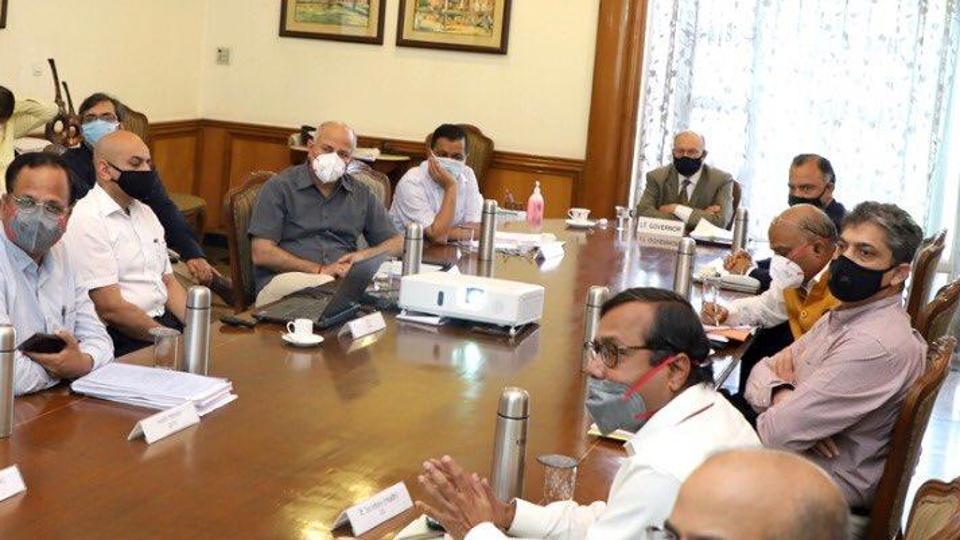
Lieutenant Governor Anil Baijal on Thursday led a review of the Covid-19 spread in national capital Delhi, the lockdown protocols and the ability of the administration to accommodate a large number of coronavirus patients in case of a spike in cases. In a statement issued later, Raj Nivas put out a statement outlining the status in concrete terms.
What it did not reflect, officials said, were the two key concerns that were expressed at the meeting about the Tablighi Jamaat congregation at its headquarters, or Markaz, last month.
“There were two questions to which there were no clear answers,” a senior government official told Hindustan Times after the meeting. One, if the authorities had been able to trace the last of the Tablighi Jamaat worker in Delhi who attended the congregation. “And two, have we been able to pinpoint all the clusters linked to the Jamaat”.
Complete Coverage: Coronavirus Outbreak
A second government official said there were no clear answers to these questions in a city where two-third of all Covid-19 cases have been traced back to the Jamaat. By last evening, the city had 669 Covid-19 positive cases. Of these, 426 cases had been linked to the Jamaat. There were 93 fresh cases last evening. All of them had been evacuated from the Markaz and located in quarantine facilities in north Delhi.
This remains an area of concern, the second official said, pointing that the story of the family of three in south Delhi’s Defence Colony who tested positive reinforced this worry.
It turns out that the private security guard of the locality had attended the congregation in Nizamuddin in March. He did not volunteer the information when the authorities appealed to people who had been to the Markaz to come forward. He was eventually located after the three tested positive to the Sars-Cov-2 pathogen and health officials started contact tracing.
The police registered a case against the guard and sent him to a quarantine facility. “But there could be others, many others,” the second official mentioned above said.
The police already have been trying to trace people who may have attended the Tablighi Jamaat congregation using their mobile phones. But it is a painfully slow exercise.
Also Read: How India performs on 6 steps to flatten coronavirus curve
The use of mobile phones to track people who violated orders to be in self-isolation has led the police to identify 23 violators so far. They have been charged under the penal code and sent to a state-run quarantine facility, the Raj Nivas statement said.
In his presentation, the Delhi health secretary outlined the city administration’s medical preparedness considering possible scenarios.
“The Health Department is implementing a containment strategy for all possible high risk zones.... ASHAs and ANMs (Auxiliary nurse midwife) have been trained, retired govt/private medical professionals are being engaged to augment human resources,” the statement said.


