
 E-Paper



2 FIRs against Tablighi workers for spreading disease in hospital, quarantine centre
The FIRs were registered against Tablighi Jamaat workers for spitting in Delhi’s LNJP hospital and defecating outside their room in a Narela quarantine centre

 Prefer HTon Google


Two criminal cases have been registered by Delhi Police against members of the Tablighi Jamaat for their conduct at quarantine centres in the national capital, a top Delhi Home Department official on Tuesday.
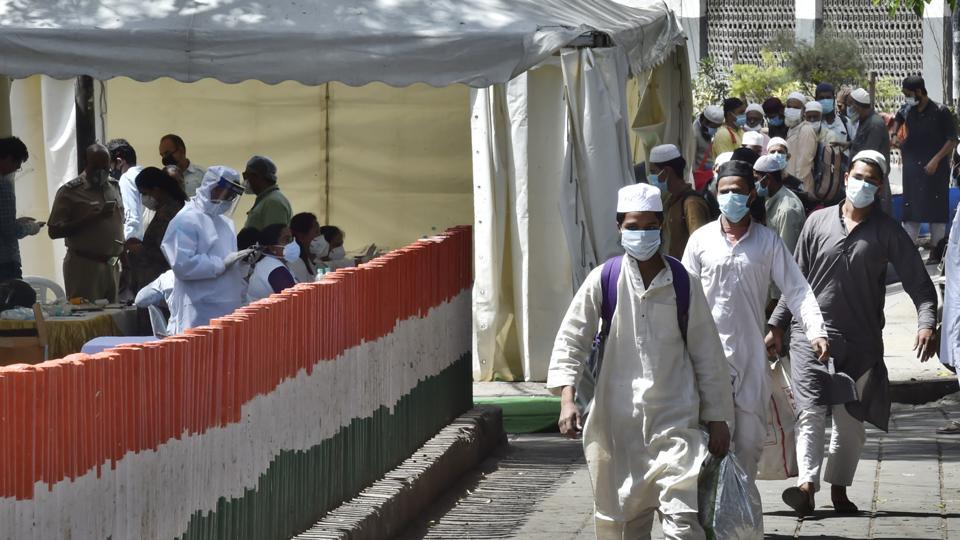
In one case, the police filed an FIR against two Jamaat members, residents of Uttar Pradesh’s Barabanki district, for defecating in front of their room at a Narela quarantine centre.
In the second, officials at the Lok Nayak Jai Prakash Narayan hospital in central Delhi complained that some Covid-19 suspected patients were spitting in the premises.
“It was reported that some Covid-19 suspected persons who have been quarantined on the third floor of the hospital’s Emergency building were spitting on the southern side towards the operation theatre,” a senior LNJP doctor said.
“The incident is purely a health hazard issue and should be simply treated as such,” the doctor said.
Hindustan Times has reviewed the FIRs.
Also Watch | Half of UP’s Covid-19 cases linked to Tablighi Jamaat
A senior Delhi Police officer said formal cases had been registered against the inmates for their actions that could help spread the disease. The FIRs (First Information Reports) have been filed under the penal code and the Epidemic Diseases Act that was invoked last month by the city government.
They had been evacuated from the Tablighi Jamaat headquarters in Nizamuddin Basti, which has emerged as the largest hot spot of Covid-19 in Delhi and across the country.
Nearly 30% of the 3,900 Covid-19 infections across the country have been linked to the Tablighi Jamaat congregation in Delhi last month that was attended by thousands of its members. After a massive operation to trace the Jamaat workers across the country, the government has placed 21,200 people and their contacts under quarantine.
National Security Adviser Ajit Doval had to intervene last month after the Tablighi leadership refused to let the authorities vacate the headquarters. Of the 2,000-odd people who had been put up in the Tablighi headquarters called the Markaz, 24 had already tested positive by then and 200 more showed symptoms. They were all sent to hospitals or quarantine centres across the city, depending on their condition.
By Monday evening, 329 of them had already tested positive. Chief Minister Arvind Kejriwal told reporters that 62% of the 525 confirmed Covid-19 cases in Delhi were linked to the Tablighi Jamaat. Not everyone has been tested yet.
Government officials told Hindustan Times that the task to track down possible contacts of the Jamaat members had become a lot more tedious after it emerged that some Jamaat members from outside Delhi were accompanied by women when they came to the city who stayed with their relatives in Delhi. “This means there is a possibility that the Jamaat infection may not be limited to the workers and their immediate family but may have spread to some pockets in Delhi,” a senior government official said.
In Delhi, the official said, the confidence of the government that it had been able to isolate all Jamaat members and their contacts would be critical to the decision on the lockdown in Delhi on April 15.
Prime Minister Narendra Modi had announced the 21-day lockdown on March 24 in a televised address to the nation. After PM Modi last week told states to start discussions on how the lockdown should be eased, some states such as Maharashtra and Telangana have called for its extension. The Centre hasn’t taken a call yet.


