
 E-Paper



104 more Covid-19 fatalities in Delhi, highest in a single day
The highest number of deaths recorded in the daily health bulletin had been on June 16, when 437 deaths were added to the toll while the city reconciled its fatality data.


Even as the number of new coronavirus disease (Covid-19) cases in the city dipped to 7,053 on Thursday, Delhi recorded the most deaths due to the infection in a single day, amid fears that the city’s medical infrastructure was struggling to keep up with the sharp spike in cases.
With 104 deaths, the city’s toll reached 7,332.
So far, the most deaths reported in a day was 101 during the June-July surge in cases, when protocols for treatment were still being worked out.
The highest number of deaths recorded in the daily health bulletin had been on June 16, when 437 deaths were added to the toll while the city reconciled its fatality data.
Despite the increase, Delhi’s case fatality ratio (CFR) – proportion of people who die among those who test positive – remained at 1.57%, slightly higher than the national CFR of 1.47%.
The 10-day average disease CFR, however, tipped over 1% — increasing from 0.99% on Wednesday to 1.03% on Thursday. Experts have said the CFR had dropped in the city and across the country as doctors realised non-invasive ventilation worker better than mechanical ventilators and that giving steroids reduced deaths.
However, experts said the non-availability of intensive care unit beds (ICU) could increase mortality.
“If the hospitals are overwhelmed and the beds get exhausted, naturally the mortality of the disease will go up. People who are in need of ICU care or oxygen support need it in a timely manner,” said Dr Shobha Broor, former head of the department of virology at the All India Institute of Medical Sciences (AIIMS).
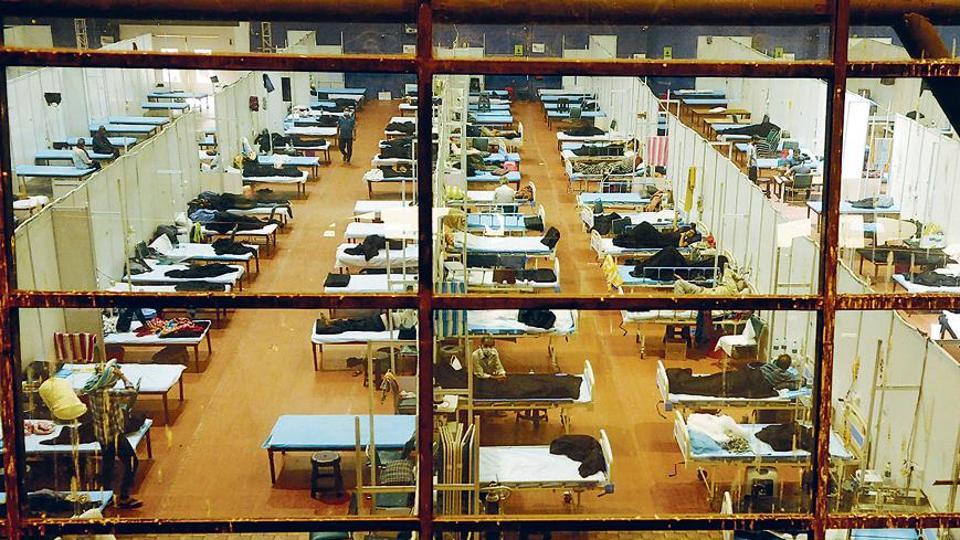
To mitigate the problem, the Delhi government had increased 500 beds — of which 110 were ICU beds — in eight of its hospitals. The Delhi high court’s decision to allow the government to reserve up to 80% of the total ICU beds in 33 big private hospitals will add several beds to the city’s total 16,609 in the coming days.
The Delhi government had on Wednesday also written to the Centre to increase Covid-19 beds by 1,000 and ICU beds by 300 in its hospitals
“We still have around 8,000 Covid-19 beds available across hospitals in the city. And, for the treatment of Covid-19 patients we do not need ventilators. But ICU beds are needed to monitor the patients and provide oxygen and non-invasive ventilation,” Delhi health minister Satyendar Jain said on Thursday during a media interaction.
To reduce mortality due to the infection, the state government has also ordered all its testing centres to check the patients’ oxygen saturation to prevent deaths from “happy hypoxia”, where a person does not have any apparent breathlessness even as their oxygen saturation drops.
“The biggest reason for death due to Covid-19 is a drop in oxygen saturation. So, we have asked our centres to test the oxygen level of the patients undergoing Covid-19 test so that even if they do not feel other symptoms they can receive timely treatment,” Jain had said a day ago.
This comes even as the city recorded the highest number of the more accurate RT-PCR tests — 19,752 — on Thursday. The alternate rapid antigen test, which accounted for over 67% of the total tests conducted on Wednesday, are known to throw false negatives.
This also reduced the positivity rate to 11.7% on Thursday from 13.40% recorded a day ago. As long as this number is above 8%, the outbreak is believed to be bigger than what the current number of tests can effectively identify.
“”The general rule of thumb to check whether testing is adequate is a sustained positivity rate of 5% or less. What are you testing with matters as well? The ICMR testing strategy has to be followed. Anyone outside the containment areas have to be tested using RT PCR which is much more accurate. Another thing we need to see is how many tests are needed for us to find one positive cases. If that number is coming down, then we aren’t testing enough,” said Dr Lalit Kant, former head of the department of epidemiology and infectious diseases, Indian Council of Medical Research (ICMR).


Stay updated with all top Cities including, Bengaluru, Delhi, Mumbai and more across India. Stay informed on the latest happenings in World News along with Delhi Election 2025 and Delhi Election Result 2025 Live, New Delhi Election Result Live, Kalkaji Election Result Live at Hindustan Times.


