
 E-Paper



Delhi’s air quality starts deteriorating, inches closer to ‘poor’ zone
According to officials in Haryana and Punjab, this year crop stubble burning started at least a week before it usually does because of early harvest of several paddy varieties

 Prefer HTon Google


After months of breathing relatively clean air, Delhi’s air is likely to turn poor in the coming days, according to government agencies. The city’s air quality has started deteriorating, inching close to the ‘poor’ zone, as the night temperature consistently drops and stubble burning incidents increase in neighbouring Haryana and Punjab.
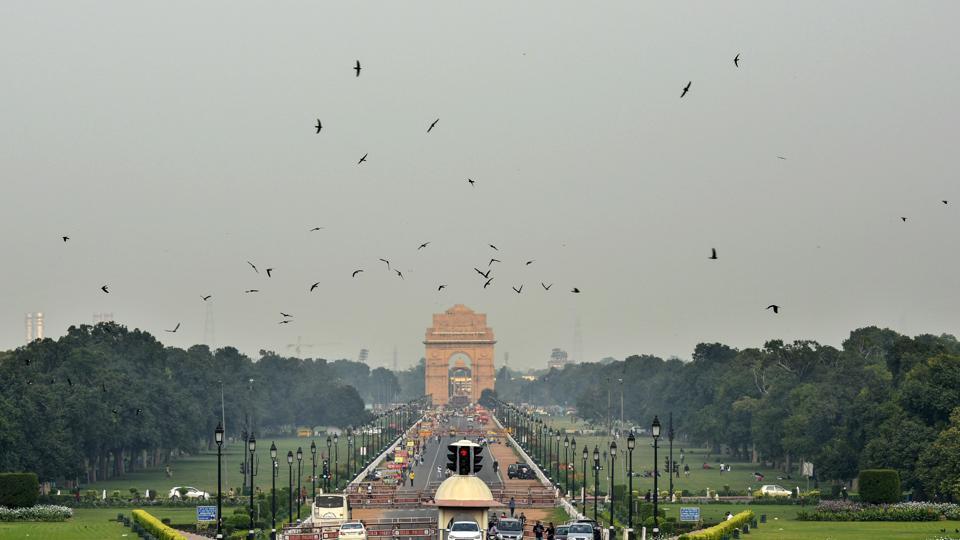
At 9 am on Sunday, the air quality index (AQI) reading was 173 (in ‘moderate’ zone), as per the Central Pollution Control Board (CPCB) data. The AQI reading has been in the higher end of the ‘moderate’ zone over the past two days—189 on Saturday and 180 on Friday. When an AQI reading touches 201, air quality enters the ‘poor’ category.
Also Read: Delhi’s early morning temp dips to 18.5 degrees Celsius
According to the System of Air Quality and Weather Forecasting and Research (Safar), the Central government’s air quality monitoring and forecasting wing, Delhi’s air quality is forecasted to deteriorate over the next few days. “The overall Delhi AQI reading is in the higher end of the moderate category. The forecasted PM2.5 contribution is increasing as a characteristic of winter coupled with an increase in stubble burning incidents. Further deterioration to lower end of poor category is likely on October 4 -5. An increase in farm fires observed on Friday around Punjab, Haryana and neighbouring border regions is likely to start impacting Delhi in the coming days,” said Safar.
After January and February, which had several ‘poor’ days, only two ‘poor’ category days were recorded each in March, May and June. April, July, August and September had only ‘satisfactory’ and ‘moderate’ days. August was the cleanest month since 2015 when four ‘good’ air days were recorded.
According to officials in Haryana and Punjab, this year crop stubble burning started at least a week before it usually does because of early harvest of several paddy varieties.
From September 25 to October 2, Haryana recorded 256 farm fires. Last year by the same time, only 35 incidents had been recorded, as per Haryana State Pollution Control Board officials.
Punjab, which has a larger area under paddy cultivation, has recorded a much higher number of incidents so far due to early harvest.
As per NASA (National Aeronautics Space Administration) satellite imagery, between September 22 and October 1, there have been 880 farm fires, some of which could be accidental fires, in various districts of Punjab. Of this, the highest count has been recorded in Amritsar with 554 incidents. In 2019, only 224 fire counts were recorded by October 1.
Also Read: Air quality in UP cities turns poor as winter nears
According to scientists in the India Meteorological Department (IMD), there has been a consistent decrease in night temperature over the past few days. On Saturday, the night temperature was 20.3 degrees Celsius, a notch below normal, while the maximum temperature was 36.1 degrees Celsius, two notches above normal.
“A slight decrease in both day and night temperatures is likely from October 5. Also, the wind pattern is changing to north-westerlies, which brings pollutants from fires in Haryana and Punjab. Besides, the wind speed is set to reduce from October 15. Falling of temperature and reducing of wind speed are not favourable for the dispersion of pollutants. This, combined with higher density of farm fires, may lead to a deterioration in air quality,” said a senior IMD scientist.


