
 E-Paper



Dense areas with less than three Covid -19 cases can be red zones in Delhi
The revised containment policy implemented in Delhi earlier this week allows districts to create containment zones in densely populated areas, even if there are fewer than three cases, if officials assess that there is a high risk of transmission, said a senior government official.

 Prefer HTon Google


The revised containment policy implemented in Delhi earlier this week allows districts to create containment zones in densely populated areas, even if there are fewer than three cases, if officials assess that there is a high risk of transmission, said a senior government official.
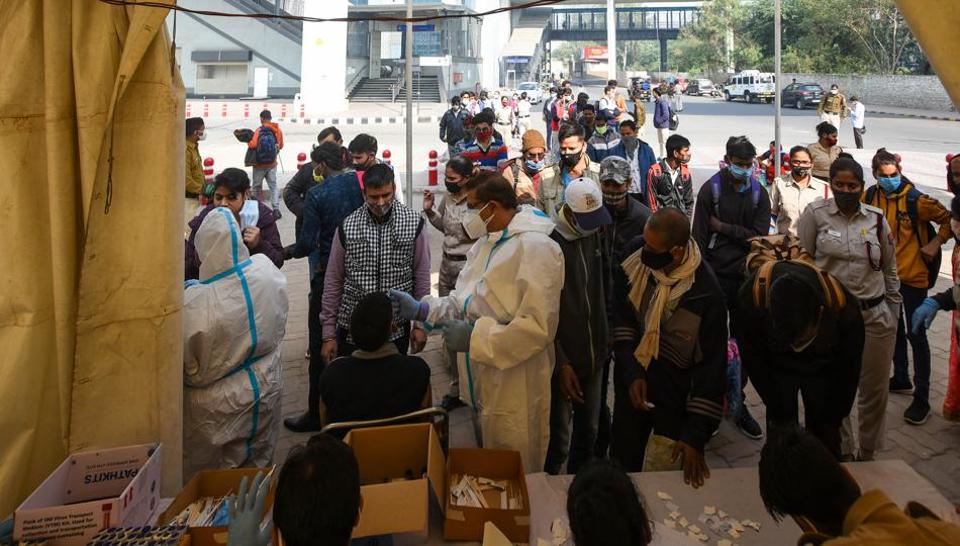
The official further said the revised containment policy was implemented on Monday. The revised strategy also requires districts to ensure that all elderly residents, pregnant women and people with comorbidities – collectively referred to as “high risk” individuals – living in containment zones are subjected to RT-PCR tests along with all symptomatic people and contacts of Covid-19 patients.
As on Wednesday, Delhi had 5,772 containment zones, of which at least 331 were notified on or after Monday, government data showed.
In his meeting with chief minister Arvind Kejriwal and lieutenant-governor Anil Baijal, Union home minister Amit Shah had recommended a revised containment policy for the capital to stem the tide of cases.
Under the policy, applicable till last week, the districts adhered to a protocol which required them to identify at least three cases for initiating the process of demarcating an area as a containment zone. The zone could range from a single house to an apartment or part of a lane comprising a few houses and shops, as opposed to entire lanes and blocks which were sealed as containment zones till late June.
Under the new policy, the government would continue with the micro containment policy (smaller areas) while scaling up testing and surveillance measures. The protocol has been minorly tweaked to allow districts to create containment zones with fewer than three cases on the bases of a risk assessment in a case to case basis, said a senior government official who did not wish to be identified.
Delhi’s revenue minister Kailash Gahlot said, “We are leaving no stone unturned to arrest the spread of Covid-19. District teams have been entrusted with assessment of transmission risk and the creation of micro containment zones wherever necessary. It has helped in reducing the number of cases and the positivity rate in recent days. Testing and surveillance in the containment zones have been scaled up.”
Delhi recorded 3,944 new Covid-19 cases on Wednesday – the first time since October since October 22 when daily cases have fallen below the 4,000-mark. With 78,949 total tests, the positivity rate was 5% -- as against 15.33% recorded on November 15, the government’s daily health bulletin said.
Several resident welfare groups, however, pointed out that the containment efforts would not make much of a difference unless the government scales up contact tracing.
“Transmission can primarily be controlled only with timely detection and isolation of Covid-19 patients. The government must scale up contact tracing,” said Saurabh Gandhi, general secretary,United Residents of Delhi, an umbrella body of resident groups.
BS Vohra, president of the East Delhi resident welfare associations’ front, said, “Containment zones are much smaller now. Also, now posters are not stuck outside the homes of positive persons and so, there are no visible markers for people to know who or where to keep away from. People are totally dependent on the government in terms of contact tracing. Containment and other efforts would yield results only if contact tracing is done appropriately.”
The government, however, said currently around 15 contacts per Covid-19 patient are being identified and tested – as against two contacts per Covid-19 patient till late September.
Gahlot said, “Contract tracing was scaled up before the festive season and, currently, around 15 contacts per Covid-19 patient are being identified and tested.”


