
 E-Paper



Delhi Assembly Elections 2020: Muslims say voted over issues of jobs, development
Many Muslim voters said though they were “anxious” over some objectionable statements made by the saffon party leaders, they rejected politics over religion.


Voters in Muslim-dominated constituencies of Delhi said they voted on Saturday over the issues of jobs, development, education, health care and civic amenities. Of all constituencies where the community’s population can sway the poll results, three witnessed a healthy turnout.
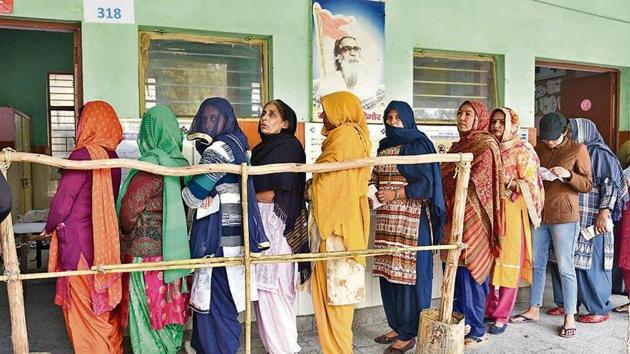
In the run-up to the February 8 polls, there were allegations of religious polarisation with the BJP making the anti-CAA protests at Shaheen Bagh its poll plank. Many Muslim voters said though they were “anxious” over some objectionable statements made by the saffon party leaders, they rejected politics over religion.
At the close of polling, the top three assembly segments in terms of voter turnout were Mustafabad, Matia Mahal and Seelampur, as per provisional turnout figures provided by the election commission. All these seats have a large Muslim population.
“More than casting a vote in favour of someone, this election is about casting a vote against someone. Against those who believe in politics of religion over politics of work, employment and development,” said Sarfaraz Khan, a resident of Seelampur, a constituency that witnessed violence in December, days after the Citizenship Amendment Act was passed in Parliament.
As many as five out of 70 assembly constituencies in Delhi have about 50% Muslim population, suggested data shared by political parties. Several residents of these colonies said that they voted for good education, good healthcare and civic amenities such as water, sewer and better roads even as they expressed anxiety over the Citizenship (Amendment) Act and the idea of a pan-India National Register of Citizens (NRC).
Iqbal Ahmed, an embroidery worker in Ballimaran, said he would not vote for “Hindu-Muslim politics”. “The most important thing for a common man is development. We want our state government to provide us basic facilities such as electricity, water, education and clean roads and not one that divides people on religious lines,” he said.
Araish Fateema, a resident of Matia Mahal, said: “Our choice is clear. We have voted for the party who can provide better future to our children. My daughter studies in a government school and I am very happy with her progress. We don’t need leaders who know only about politics on religious lines.”
Praveen Rai, political analyst with the Centre for Study of Developing Societies, said: “The BJP polemics against anti-CAA protesters at Shaheen Bagh and other places have led to a strong consolidation of Muslim votes against it. They seem to have voted en bloc for AAP in this election. The exit polls predicting a clean sweep for AAP confirms their voting choices.”
In the 2015 polls, the Aam Aadmi Party (AAP) won the Matia Mahal and Seelampur constituencies with margins exceeding 25,000 votes in each. The party, in its second poll outing in the year, also went on to win the Ballimaran and Okhla seats with huge mandates – around 60% and 62.5% vote shares, respectively. However, this year, these two constituencies witnessed very low turnout.
The Bharatiya Janata Party (BJP) had won the Mustafabad seat with a 35% vote share, benefiting from a split of Muslim votes between AAP and the Congress – they bagged around 32% and 30% votes, respectively, from the constituency. The BJP’s Jagdish Pradhan, a Gujjar, is the first non-Muslim MLA since the assembly segment was carved in 2008.
In few Muslim-dominated constituencies, voters anticipated a split in Muslim votes between two parties but found themselves in a fix when asked if they could see a third party could benefit from the potential split.
“It does not seem like the numbers could add up and lead to an unexpected result. The winning candidate is likely to be a Muslim,” said Mohammad Usman, a resident of Jafarabad in Seelampur.
While both AAP and the Congress have fielded Muslim candidates in the constituency, the BJP’s choice is a Hindu face – a strategy the saffron party has followed in all Muslim-dominated constituencies across the city.
However, in neighbouring Mustafabad constituency, Samiuddin Haider did not seem confident about the outcome. He said, “A split can lead to unexpected results and we have seen that happen last year.”
Most Muslim constituencies in Delhi have some common trends – old-school political leaders with large personal following is one such. In several of them, the parties have fielded political heavyweights – Mateen Ahmed and Parvez Hashmi for the Congress in Seelampur and Okhla, respectively. The AAP’s choice for Matia Mahal, Shoaib Iqbal, has been MLA for five terms for three different parties since 1993.
Such factors make calculations difficult in many such Muslim-dominated constituencies, several residents said.


