
 E-Paper



Plea in NGT says odd-even didn’t curb air pollution
The plea also sought the NGT to direct the Delhi government to submit the joint study conducted by the University of Chicago and Harvard University based on which the AAP government had decided to implement the odd-even policy.


A plea was filed in the National Green Tribunal by an advocate on Monday, challenging the Aam Admi Party’s (AAP) decision to roll out the odd-even vehicle rationing scheme this November, to keep pollution levels under check.
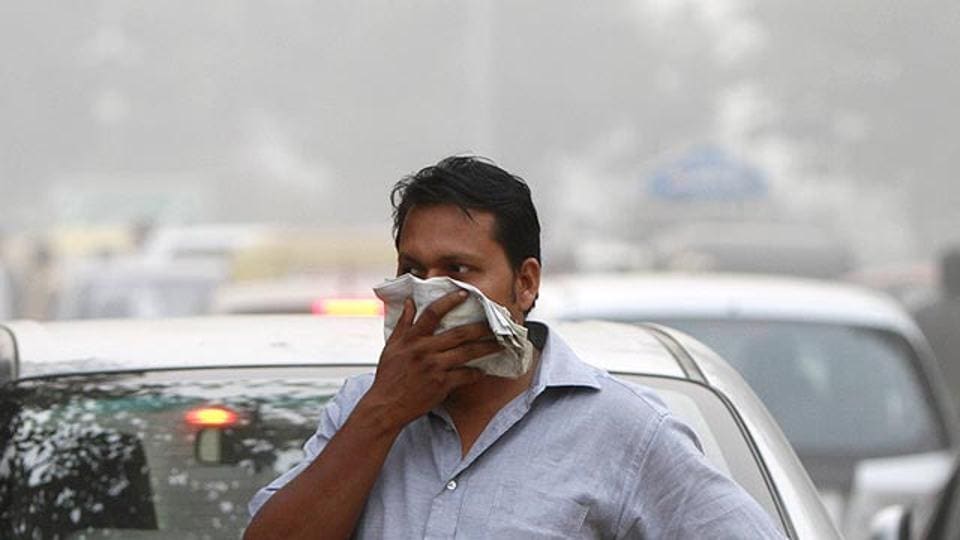
The plea stated that the Central Pollution Control Board (CPCB) had earlier found that air quality had deteriorated after the odd-even scheme was rolled out for the first time in 2016. To date, the odd-even scheme has been rolled out twice in Delhi.
“At a time when the country’s top environmental pollution control boards such as the CPCB and the Delhi Pollution Control Committee have unequivocally stated that odd-even policy, when implemented in 2016, failed to curb air pollution, the Delhi government’s implementation of the policy based merely on a study by another country downgrades the reputation of these institutes,” the plea filed by advocate Gaurav Kumar Bansal stated.
Last week, chief minister Arvind Kejriwal, while announcing a seven-point ‘Parali Pradushan’ (pollution caused by crop stubble burning) action plan, had stated that the road rationing scheme would be rolled out in Delhi for the third time between November 4 and November 15.
Seeking quashing of the ‘Parali Pradushan’ action plan, the plea stated that the Delhi government’s decision to implement the road rationing policy was based on a study conducted by persons from a foreign country, which would set the wrong precedent for India.
The plea also sought the NGT to direct the Delhi government to submit the joint study conducted by the University of Chicago and Harvard University based on which the AAP government had decided to implement the odd-even policy. It also sought the constitution of a committee of senior scientists to check the veracity of the study.
The CPCB, in its 2016 report had told the NGT that there was no data to suggest that odd-even scheme had any impact on the decrease in vehicular pollution, adding that fluctuations in PM10 and PM2.5 were due to weather and change in wind patterns.
“Pollution levels were studied in three phases—seven days before the odd-even scheme was rolled out, during the fortnight in which the measure was implemented, and seven days after the odd-even scheme ended. Pollution levels had shot up during the implementation because of adverse meteorological factors,” D Saha, former head of the CPCB air quality laboratory, who led the pollution levels study, said.
HT had earlier reported that a few other studies done by Indian research organisations had also found that the odd-even scheme had little impact. Some studies, such as the one done by the Centre for Science and Environment, however, indicated some improvement in the air quality.
“The matter is sub-judice. We will submit our response to the court,” a media advisor to the Delhi government said.

Stay updated with all top Cities including, Bengaluru, Delhi, Mumbai and more across India. Stay informed on the latest happenings in World News along with Delhi Election 2025 and Delhi Election Result 2025 Live, New Delhi Election Result Live, Kalkaji Election Result Live at Hindustan Times.


