
 E-Paper



China's new favourite – Tiger tonic wine
China has officially allowed dose of tiger body parts - traditionally part of Chinese medicines - through an intoxicant - wine. Selling of Chinese medicines derived from tiger bones has been banned there but not the "tiger tonic wine". Chetan Chauhan reports.


China has officially allowed dose of tiger body parts - traditionally part of Chinese medicines - through an intoxicant - wine.
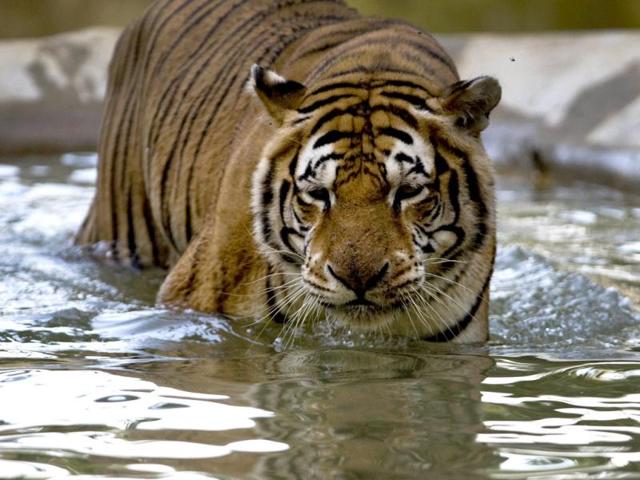
Selling of Chinese medicines derived from tiger bones has been banned there but not the "tiger tonic wine".
The basic wine is made through traditional method but a tinge of tiger bone, before bottling, has turned out to be its unique selling point. A bottle costs anything between $100 to $800 depending for how tiger bone was in contact with wine.
An investigation by London based non-governmental group, Environment Investigation Agency (EIA) released on Tuesday, has found that tiger bones are soaked in wine and then removed, thereby not leaving any trace of it in the wine. Therefore, the company selling the wine is not entitled to list the tiger body part as one of the ingredients.
This is the catch.
When it comes to selling, mostly at country's 200 tiger farms, where captive bred tiger are kept for tourists, the tiger link proves to the delicacy.
"A government notification allows use of the bones of the captive-bred tigers to justify the manufacture of 'tonic' wines so no action can be taken against manufacturers," said Debbie Banks, head of EIA Tiger Campaign.
China, however, insisted that it has enacted laws and taken other steps to protect the wild cat. PTI quoted Chinese foreign ministry spokesperson Hua Chunying to say that the Chinese government attaches great importance to the protection of endangered wildlife, including tigers.
These tiger farms have around 5,000 tigers - highest population of captive bred tigers in the world - and a stockpile of body parts of many dead big-cats, which are regularly audited by the authorities. "These bones are kept back in the stockpile at the time of auditing," Banks said.
China's illegal big cat body part industry is considered biggest incentive for poachers, especially in tiger's biggest home in wild, India, to kill the endangered species for a price ranging between Rs 10 to Rs 15 lakh per animal.
Around 60 % of 89 tiger deaths reported from 41 tiger reserves in India in 2012 were poaching related. Many believe that actual poaching could be higher because many a time poachers don't leave trace of the hunted animal behind for the killing to be reported.
Banks believes that the Chinese government's policy for promoting use of tiger skins as home décor and wine was stimulating poaching of wild tigers and other big cats in South Asia. The civil society group wants the Chinese government to destroy the stockpile of tiger body parts to effectively check the illegal wildlife trade.
India and United Kingdom has been seeking a ban on tiger farms in China, which the Communist government has refused to accept saying there was no evidence to link tiger farms with increase in demand for big cat body parts.

Stay updated with all top Cities including, Bengaluru, Delhi, Mumbai and more across India. Stay informed on the latest happenings in World News along with Delhi Election 2025 and Delhi Election Result 2025 Live, New Delhi Election Result Live, Kalkaji Election Result Live at Hindustan Times.


