
 E-Paper



Delhi polls: Kejriwal rides development agenda, BJP misses the bus
The Aam Aadmi Party was quick to realise an important aspect of Delhi that the Bharatiya Janata Party failed to notice. It was that elections in Delhi are different from that in any other state since the Capital is a city-state where people come to meet their aspirations and need development.


The Aam Aadmi Party (AAP) was quick to realise an important aspect of Delhi that the Bharatiya Janata Party (BJP) failed to notice. It was that elections in Delhi are different from that in any other state since the Capital is a city-state where people come to meet their aspirations and need development.
The polls in Delhi cannot be fought merely on insinuations against opponents, creating communal divide, or on caste lines. It has to be contested on an agenda to bring about positive change in the lives of people.
That was the mantra of Sheila Dikshit, who was chief minister for 15 years, before Arvind Kejriwal upset her apple-cart riding high on his anti-corruption crusade in 2013.
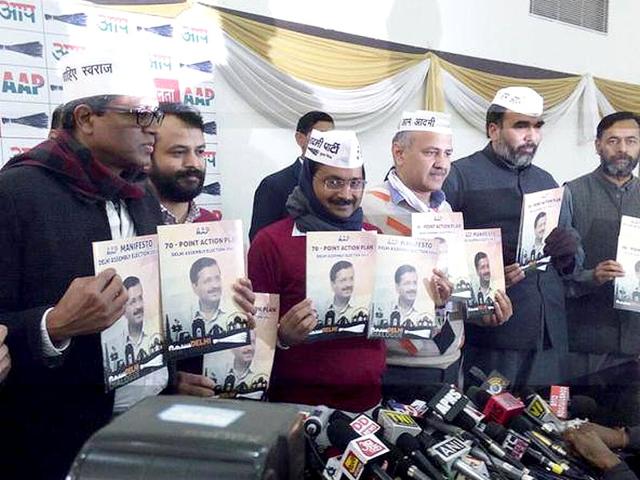
Wiser after his messy 49 days in government, Kejriwal has somewhat adopted Dikshit’s election promise basket where there was something for every section of the society and the opponents were not attacked vociferously. Kejriwal projected himself in a developmental avatar as he promised more colleges and free WiFi for the youth, a better and responsive security system for women, a better and corruption-free working environment for the business community, apart from repeated apologies for quitting about a year ago. He did not attack Prime Minister Narendra Modi in his election rallies and instead marketed his developmental plank.
The reframed Kejriwal has found traction among Delhiites and as per the HT-C Fore survey, his party will emerge as the single largest party in the Delhi Assembly and will pass the majority test. Other opinion polls in the last few days have also indicated that Kejriwal would be the next chief minister of Delhi.
The BJP on the other hand presented its vision — a mere expression of interest and not a promise — for Delhi on Tuesday, just four days before the city goes to polls showing the terrible state of affairs in the party. Unlike the AAP, the BJP does not have enough time to convince people about its development vision. Kejriwal, on the other hand, has been talking about his agenda for the city for the last three months.
Sudanshu Trivedi, BJP spokesperson, was candid enough on a television channel to admit that Kejriwal had an advantage of starting early but expressed confidence that his party would overcome that advantage. But his party has not explained the reason for the delay in preparing the development agenda for the city.
The question that may be asked is what difference does development agenda make. The reply could be found in a simple but complex statistics that about 80% of the city’s population comprises migrants who came here in the last 25 years. They are not bothered about individuals, caste and community, or religion. An unifying factor for them is that they are aspirational and would like to vote for the government that can meet their aspirations.
The BJP has not been able to meet that aspiration. The HT opinion poll shows the party will suffer defeat in outer and east Delhi — the two regions it almost swept in the 2013 assembly polls. The AAP has made deep inroads in these regions even though it may lose a bit in the middle class majority areas in Central and South Delhi, the survey shows.
It was strange to see that the BJP wasted so much time on trying to polarise voters, targeting its main opponent Kejriwal and making the Delhi polls a high voltage drama instead of presenting a developmental agenda much in advance for a debate and discussion by voters. It will be interesting to see whether its “late” vision document, which is not a promise to voters like a manifesto, will have considerable impact for the party in the polls? Opinion polls show it will do so.

Stay updated with all top Cities including, Bengaluru, Delhi, Mumbai and more across India. Stay informed on the latest happenings in World News along with Delhi Election 2025 and Delhi Election Result 2025 Live, New Delhi Election Result Live, Kalkaji Election Result Live at Hindustan Times.


