
 E-Paper



Udta Delhi: Capital is new drug hub with maximum seizures in 2016
Not Punjab but Delhi is high on drugs. The year 2016 saw the national capital emerging as Udta Delhi with the highest drug haul for any state in the country, data tabled in Lok Sabha on Tuesday shows.


Not Punjab but Delhi is high on drugs. The year 2016 saw the national capital emerging as Udta Delhi with the highest drug haul for any state in the country, data tabled in Lok Sabha on Tuesday shows.
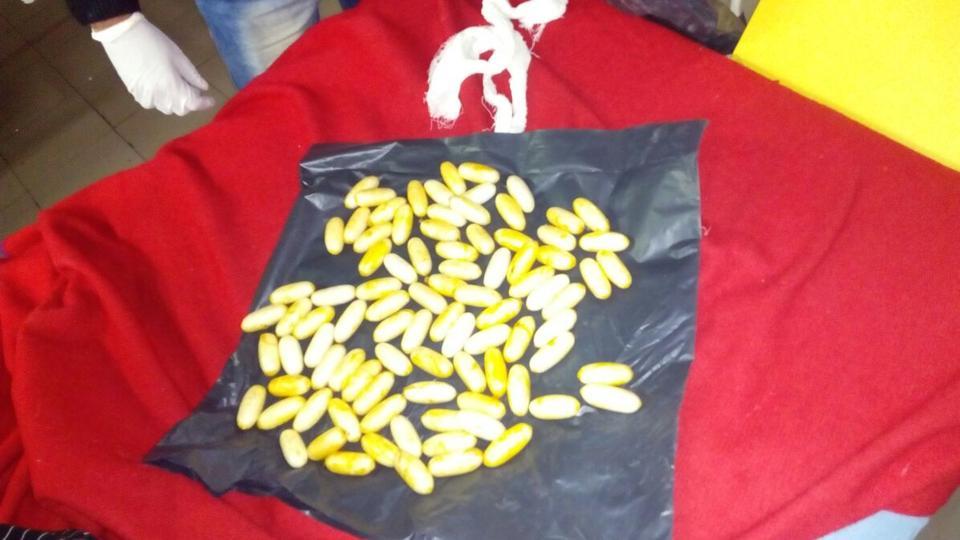
The information collated from investigating agencies — federal and states — on drugs banned under the Narcotic Drugs and Psychotropic Substances (NDPS) Act showed that Delhi had the highest seizure of chemical based intoxicants such as mandrax, syrup and tablets.
The anti-drug agencies caught 23,519 kg mandrax, 98,480 kg syrup and 1.77 lakh tablets in Delhi in 2016, the government informed the lower house. But, unlike Punjab and Haryana, Delhi was low on seizure of hashish, cannabis, poppy husk and heroin.
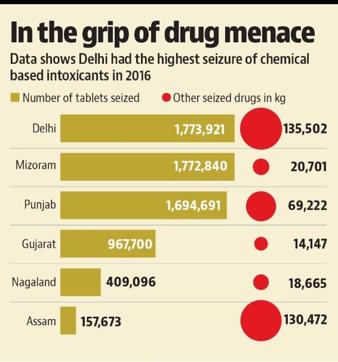
The drug haul in recent years show rising seizures in Delhi, which the investigating agencies said indicated at two trends — increase in demand and Delhi emerging as the main transit point for illegal drug trade. Experts estimate that seizures account for not more than 20% of the business.
Special commissioner Dependra Pathak said the high recovery was because of Delhi Police’s “zero-tolerance” towards sale and supply of narcotics. “Our anti-narcotics unit, crime branch, special cell and even local police make continuous and collective efforts to contain drugs supply menace,” he said.
Overall, there has been a five-fold increase in confiscation of drug in India since 2012 with highest in the decade being in 2016 — 5 lakh kg of drugs and 7.93 lakh banned tablets — estimated to be over Rs 50,000 crore in the international market.
A World Drug Report 2016 identified India as prime market for illicit opiates originating from south-east and south-west Asia because of its young aspiring population. About 60% of India’s population is less than 35 years of age.
The report also identified India as one of the most frequently mentioned countries of departure and transit of drugs after Thailand, Malaysia, and Philippines. India was one of the eight countries worldwide on high seizures of chemical based drugs like ketamine between 2009 and 2014, the report said.
A survey of United Nations with the ministry of social justice and empowerment estimated that 11.7 million people in India — more than the population of Portugal — were addicted to drugs. Punjab, north-eastern states like Mizoram and Nagaland had large number of drug users.
Many state governments have identified drug use as a rising problem among youth with Rajasthan, Madhya Pradesh and Gujarat banning sale of poppy husk to addicts from licensed shops in 2016. In addition, the ministry of youth affairs has created a special fund for north-east states and Punjab to deal with rising drug problem among youth. Delhi had so far not figured in the list.
Narcotic substance use among youth have been an electoral issue.
Both Congress and the Aam Aadmi Party accused the Akali Dal of spread drug use in the recently concluded polls in Punjab whereas Bihar chief minister Nitish Kumar promise of prohibition helped him get women votes, clinching victory for the grand alliance in 2015 assembly polls.
In the recent past, states like Madhya Pradesh and Haryana have announced steps to control sale of liquor without going for prohibition.
In its reply, the Home Ministry said the Narcotics Control Bureau has taken various several steps to check illegal drug trade including cooperation with neighbouring countries and sharing of information with law enforcement agencies including para-military forces and state police.

Stay updated with all top Cities including, Bengaluru, Delhi, Mumbai and more across India. Stay informed on the latest happenings in World News along with Delhi Election 2025 and Delhi Election Result 2025 Live, New Delhi Election Result Live, Kalkaji Election Result Live at Hindustan Times.


