
 E-Paper



A victory of democracy
The Kashmir talks have opened the door for a political solution to the post-2019 stalemate. But statehood is key

 Prefer HTon Google


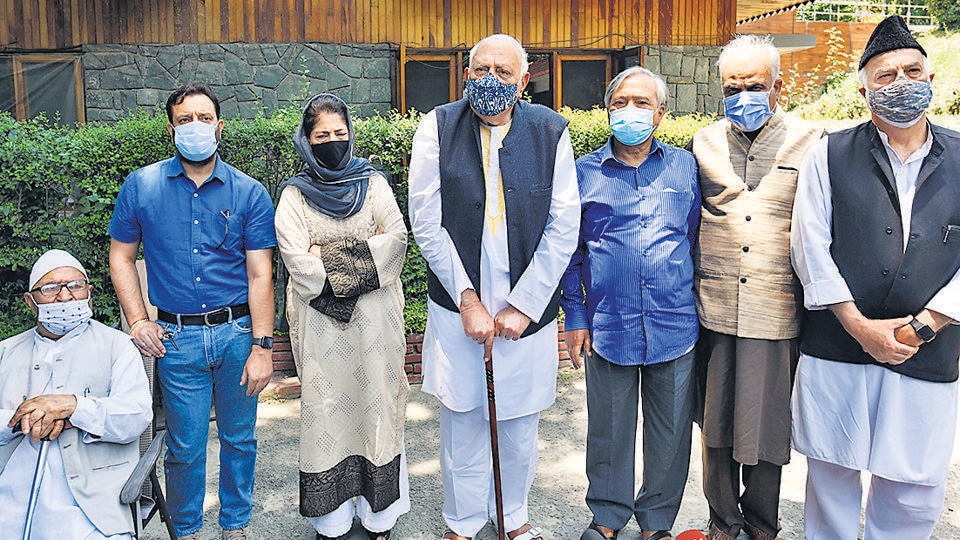
Prime Minister (PM) Narendra Modi’s decision to invite leaders of Jammu and Kashmir’s mainstream political formations, including four former chief ministers, three of whom were arrested by the central government less than two years ago, is a victory of Indian democracy. The fact that these leaders had an opportunity to articulate their grievances and sense of betrayal at the events of 2019, and the fact that the Centre was able to present its viewpoint on the path ahead, too reflects the best traditions of democratic dialogue. There can be a legitimate debate on what prompted the government to send the invitation out in the first place, and whether it was from a position of strength or weakness. There can also be a legitimate debate on what prompted the Kashmiri parties to accept the invitation, and whether it was from a sense of seeking validation and legitimacy or out of desperation. But irrespective of the motive, the outcome was positive.
Also Read | Bridging Kashmir’s ‘dil ki duri’ with Delhi
Having said that, this is only the first step in a long and challenging process ahead. The achievement of Thursday’s talks is that it is now clear that the restoration of Article 370 is no longer a precondition to political progress, and all parties have found the fact that the issue is sub-judice a good cover to tell their respective constituencies that they haven’t diluted their position on it. But the script then gets complicated. The Centre has made it clear that it wants to restore the democratic process, and has pushed for delimitation, elections and statehood, in that order. But for Kashmir’s parties, as well as the Congress which has a presence in Kashmir, this sequence doesn’t work. If they are expected to participate in the democratic process, despite the massive trust deficit of the past few years, it is hard for them to do so in return for elections to a Union Territory. And so, they want statehood and elections, in that order.
The Centre has already succeeded in creating a new post-370 reality in Kashmir, fulfilling a key ideological goal. It has, to a large extent, also managed to defuse the international pressure on this specific question. But it needs to send a signal to both the Kashmiri street and Kashmiri politicians that Delhi respects their political aspirations for genuine federalism. As for Kashmir’s parties, they have an opportunity to be part of the electoral process and it is likely they can negotiate for some special dispensation for locals much like some other states have. The interests of the two sides, perhaps for the first time in decades, are broadly aligned. Now both need to look at the bigger picture to ensure a divergence in sequencing does not become a deal-breaker.


