
 E-Paper



Art in the age of public fairs and exhibitions
Art became a commodity to be acquired for individual consumption or investment, and moved further away from being a part of the commons

 Prefer HTon Google


There was a time in the Indian subcontinent when all art production was meant for public viewing. Places of faith to memorials to mourn were also platforms that showcased art – murals, reliefs and sculptures to musical and dance performances — that the public, while mediated and restricted by social institutions such as caste, accessed and appreciated. In modern times, they moved to museums and galleries, where, increasingly, the viewership got limited to chosen communities, with a clear divide emerging between the cultural elites and the masses. Art also became a commodity to be acquired for individual consumption or investment, and moved further away from being a part of the commons.
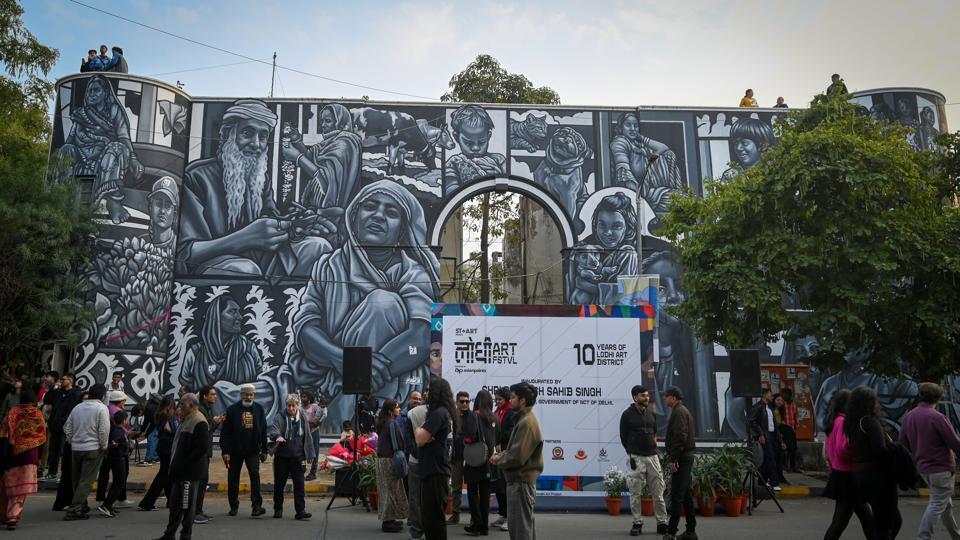
In the past few years, this seems to be changing with art (creators to collectors) reaching out to a wider public, inviting a larger cross-section of society, across class and caste, language and region, to engage. This outreach is visible in public events such as the Kochi Muziris Biennale, which started in 2012, or the Lodhi Art Festival, an open-air art festival in Lodhi Colony, Delhi, that started a decade ago, or the India Art Fair, which is into its 17th edition in Delhi, and numerous smaller and larger exhibitions and festivals. One may call it a democratisation of cultural engagement as (visual) art and artists leave galleries to engage and interact through public displays to performances, encouraging immersive viewing and interaction. At its best, these mark the revival of a carnivalesque atmosphere, a recreation of our public festivals, noisy as well as reflective, breaking down social barriers and offering fare for both the schooled and the unschooled, and expanding the space for cultural production. Hearteningly, a new set of collectors has emerged who are keen to offer their collections for curated public viewing. All of this augurs well for India’s culture economy, which has been underappreciated and underfunded, and mostly controlled by the State or exposed to manipulations of the market.


