
 E-Paper



Campaigning for peace in Jammu
A rise in terror in the region is a worry, particularly with the Amarnath Yatra set to begin and assembly elections likely soon

 Prefer HTon Google


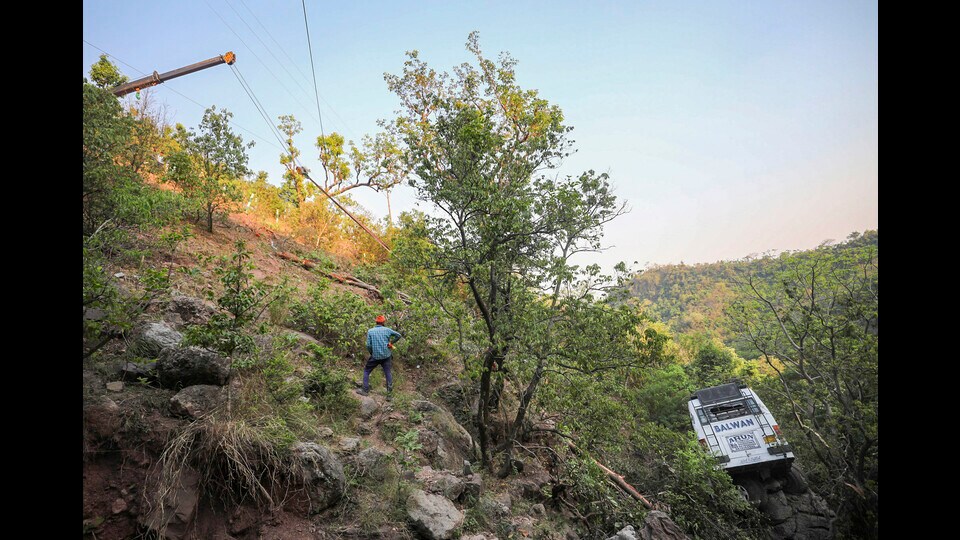
The spate of attacks that have roiled Jammu over the last week has got the attention of policymakers at the highest level in Delhi and Srinagar, and rightly so. Over the last two years or so, Jammu has emerged as the new epicentre of militancy in the Union Territory with a string of encounters between security forces and extremists. In four back-to-back terror attacks in Reasi, Kathua and Doda districts since June 9, terrorists from Pakistan have targeted civilians and security forces. The first was an attack on a bus carrying pilgrims in Reasi on June 9, killing nine people and injuring 42 others. Two days later, another gunbattle began in Kathua, leaving one Central Reserve Police Force (CRPF) jawan dead, six security personnel and one civilian injured, and two terrorists neutralised. Then, two attacks took place on Wednesday. In the first, a group of three to four militants opened fire on a joint check post of the 4 Rashtriya Rifles and the Jammu and Kashmir Police in Chattargala area in Doda on the Bhaderwah-Pathankot road. Five army personnel and a special police officer were injured. The second attack was in the Kota Top area, 150km away, when a separate group of terrorists attacked a police team and injured a head constable.
The government is right to ratchet up alertness; the Reasi attack was even more alarming because it happened outside the hotbed districts of Poonch and Rajouri, away from the Line of Control, and on a bus full of pilgrims. High-level meetings, one chaired by Prime Minister Narendra Modi and another by Union home minister Amit Shah, have directed the Army, paramilitary forces and intelligence agencies to replicate the Kashmir strategy against terrorism in the Jammu region, use the full spectrum of anti-terror capabilities and make better use of technology to strengthen local intelligence networks.
This is coming not a moment too soon. In two weeks, tens of thousands of pilgrims will begin pouring into Jammu and Kashmir for the annual Amarnath Yatra, presenting a logistical and security challenge for the administration. Then, the first assembly elections in a decade are planned before September. The historic turnouts during the Lok Sabha elections in Kashmir have boosted public morale about democratic processes. It cannot be allowed to be dampened by terror strikes that not only have the potential to depress turnout but also derail the return of normalcy to the region. The government has repeatedly spoked of its success in arresting militancy in Kashmir. It is now time to bring those plans to fruition on the other side of the Pir Panjal.


