
 E-Paper



Decoding RSS chief’s speech
In his annual Vijayadashami speech, Rashtriya Swayamsevak Sangh (RSS) chief Mohan Bhagwat puts the onus on minorities to condemn violence; hate by fringe groups must be decried too

 Prefer HTon Google


In his annual Vijayadashami speech, Rashtriya Swayamsevak Sangh (RSS) chief Mohan Bhagwat touched on many things — from how India could take advantage of its demographic dividend, empowerment of women and the need to end caste-based discrimination. But two subjects stood out in his hour-long address: His observations on population control and communal violence. On population, Mr Bhagwat said population imbalance and demographic changes might lead to changes in geographical boundaries. The RSS chief is right about the pressures of a burgeoning population on a nation’s resources and his speech should be seen in the context of the decades-old demand of the Sangh for a new policy to rein in growing numbers. But it must also be remembered that according to data from the National Family Health Survey (NFHS)-5, the total fertility rate (TFR), or the number of children per woman, is 2.0, lower than the population replacement rate of 2.1, indicating that the country’s population has stabilised. This underlines that the challenge for the government is ensuring growth and equitable access to resources while continuing the mass awareness programmes that have led to a dip in fertility rates.
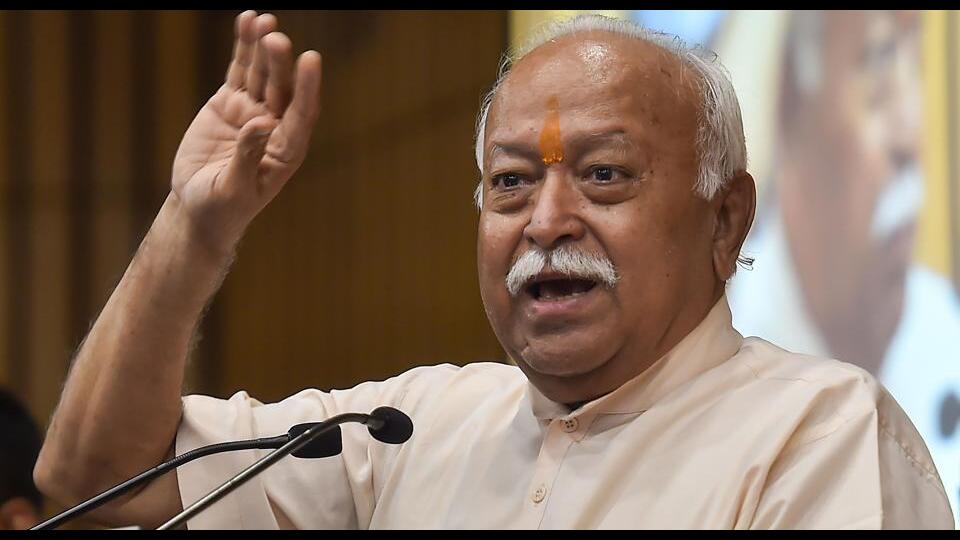
On communal violence, Mr Bhagwat said all sections of society and representatives of all faiths should unequivocally denounce incidents of comm-unal violence and cited the crimes in Udaipur and Amravati earlier this year following a row over controversial remarks made on Prophet Moham-med, to say that only a few prominent people within the Muslim community voiced their protest. “Protes-ting against such incidents should not be an isolated phenomenon within the Muslim society…Hindu society in general assertively expresses protest and after such incidents even if the accused are Hindus,” he added. He also said that “fear mongering” was done about the Sangh and its motives and referred to his recent meetings with prominent Muslim civil society and faith leaders to ward off such concerns.
The crimes Mr Bhagwat referred to were indeed reprehensible and were widely condemned by many as even anti-Islamic. But one should also note that India’s multi-cultural core has come under repeated attack in recent years with instances of hate speech and violence by Right-wing outfits. Fringe groups of all shades and faiths that intentionally spew hate for political purposes should be denied patronage or protection and authorities should not hesitate to take strict action against such people and groups. Communal amity has been one of the great success stories of Indian democracy, even with its imperfections, compromises and occasional ruptures. No group or individual should be allowed to threaten it.


