
 E-Paper



For Mumbai, an annual climate crisis reminder
But the climate crisis is certainly not the only driver of environmental risk in Mumbai. The phenomenon’s impact is aggravated by continuous and brazen development on its most ecologically sensitive zones — lakes, rivers, mudflats, wetlands, woods and coastline, and mangroves that create a sort of buffer zone against floods and storm surges.


Three weeks after Cyclone Tauktae battered Mumbai, the southwest monsoon arrived in the city on June 9, two days before the official onset. On the very first day of the season, the downpour (between 8.30 am and 5.30 pm) accounted for 43.6% of the city’s average rainfall for June (505mm). The city came to a standstill, with waterlogging and traffic snarls and train services partially hit.
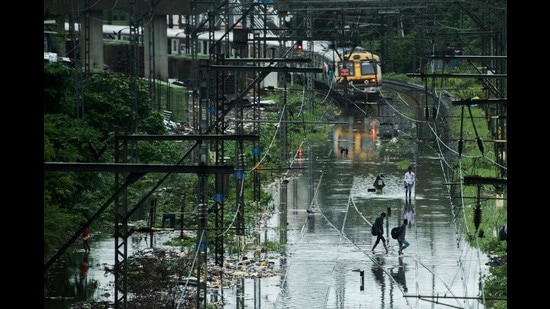
While the India Meteorological Department has downgraded the “red alert” warning of “extremely heavy rain” to “orange alert” warning of “heavy to very heavy rain”, monsoon flooding has been a recurring challenge for India’s financial capital. Climate scientists attribute this pattern of intense rainfall within a short timeframe, resulting in flooding, to the climate crisis. According to a ministry of earth sciences report, the Mumbai region is highly vulnerable to the climate crisis due to sea-level rise, storm surge, and extreme precipitation.
But the climate crisis is certainly not the only driver of environmental risk in Mumbai. The phenomenon’s impact is aggravated by continuous and brazen development on its most ecologically sensitive zones — lakes, rivers, mudflats, wetlands, woods and coastline, and mangroves that create a sort of buffer zone against floods and storm surges. The increase in hard surfaces and loss of tree cover has prevented rainfall from seeping into the groundwater. Poor sewage and drainage systems also exacerbate the health risks of flooding. The poor are usually the worst-hit since they often live in dense settlements that lack essential services and infrastructure that could reduce risk. But that’s not all; climate-induced heavy rainfall, floods, cyclones, water shortage and rising temperature are also affecting business, and will dent plans of eradicating poverty and achieving economic development. Mumbai offers a warning every year. It is high time to act on it.


