
 E-Paper



How closer Japan-US ties may benefit Quad
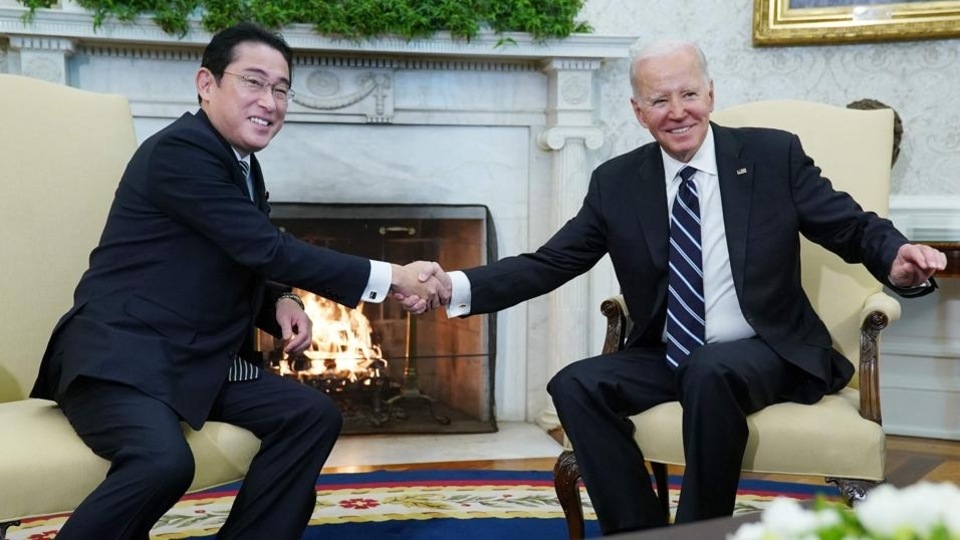
Last week’s meeting between Prime Minister Fumio Kishida and President Joe Biden reflects the sea change in Tokyo’s security policies in response to China’s aggressive policies.

 Prefer HTon Google


The tighter security embrace between Japan and the United States (US) following last week’s meeting between Prime Minister Fumio Kishida and President Joe Biden reflects the sea change in Tokyo’s security policies in response to China’s aggressive policies. The transformation, already underway for some time, gained pace after Russia’s invasion of Ukraine triggered fears of similar unilateral actions in Asia. Mr Biden has spoken of modernising the military alliance between the US and Japan, while Mr Kishida has described China as the “central challenge” for both countries. Japan has unveiled a robust new national security strategy, including the creation of a counter-strike capability, which is being seen as a response to its vulnerability to threats from China and North Korea. Japan has also signed military logistics support pacts with key countries in recent years, including India, the United Kingdom and the US, announced plans to build a combat jet along with Britain and Italy, and the air forces of India and Japan are conducting their first joint exercise. All of this signals Japan’s desire to play a greater role in its own defence, instead of relying on the US for protection, just as it has done since the end of World War II.
It is obvious that Japan and the US are looking to their partners in the Quadrilateral Security Dialogue — Australia and India — to play a role in their efforts to ensure peace and stability across the Indo-Pacific. The joint statement issued after the meeting between Mr Biden and Mr Kishida pointed to this, with a reference to Quad’s role in security-related matters. India has traditionally shied away from any talk of a security dimension for Quad, but the looming threat from China can only be tackled jointly.


