
 E-Paper



Modi’s promise of peace
Economically integrating Kashmir is sound, but political outreach is as important


Prime Minister Narendra Modi, in an address to the nation on Thursday, laid out the rationale and implications of the government’s decision to constitutionally change the status of Jammu and Kashmir (J&K). Placing Article 370 and Article 35A, which had given a degree of autonomy to J&K, as a problem, rather than a partial solution, Mr Modi blamed the provisions for terrorism, separatism, corruption and dynastic rule in the state. But the PM’s thrust was on how the end of these provisions would now open up opportunities for citizens of the state-turned-Union Territories.
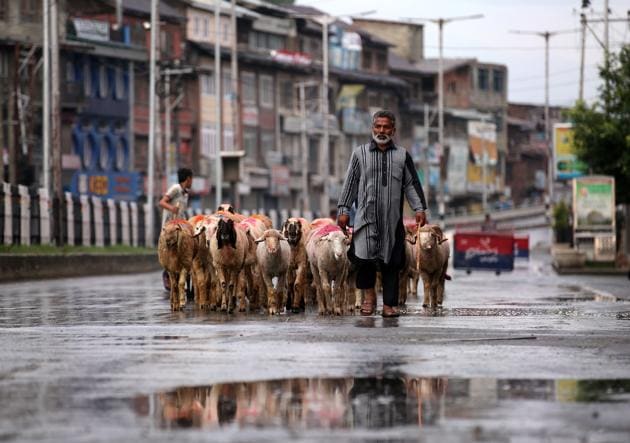
This vision is sound. The fact that Indian sovereignty was somehow restricted in Kashmir has been a matter of concern for many. Progressive laws would now apply to the state. There are, the PM argued, a host of economic avenues which can be tapped to spur growth and bring prosperity. While encouraging citizens of the region to take the lead, he also asked the rest of India to play its part and work in J&K and Ladakh. The PM’s assurance that the Union Territory status for J&K is temporary, that elections for the Assembly will happen soon, and that political representation would remain intact was much needed to allay fears that the changes could curtail existing rights. Mr Modi’s second underlying theme was that of peace. These changes, the government clearly feels, will help in preventing violence, as opposed to critics who feel the changes could well exacerbate it.
While the vision of peace and development is sound, there were gaps in the PM’s speech, where further clarity in the coming weeks would help. For one, while acknowledging the difficulties being faced by citizens in Kashmir, Mr Modi did not give a specific timeline of when security restrictions would ease. The fact that a key audience he was addressing were citizens in the Valley, but that the same citizens did not really have ways to hear him due to the information clampdown, is a matter of concern. The second gap was more political. The lack of development in J&K is definitely an issue, but that alone does not explain the sense of alienation in the Valley. Many Indian states have worse development indicators. The alienation has also emanated from a perceived lack of justice. It is important that the government reaches out to Kashmir and convinces citizens that it would not merely rely on a security and economic paradigm, but consciously recognise their political aspirations.


