
 E-Paper



Talking peace in the Russia-Ukraine war
The US effort may not be enough to end a conflict that has already done immense harm to the global economy and eroded the European security architecture

 Prefer HTon Google


The Donald Trump administration’s on-off efforts to end the Russia-Ukraine war appear to have entered a new phase following a visit by the US President’s envoys, Steve Witkoff and Jared Kushner, to Moscow for more than three hours of “highly useful” talks with Russian President Vladimir Putin. Witkoff and Kushner then landed in Kyiv on Sunday, and there is talk of “substantive plans” on the next steps for ending the war that has dragged on for more than four years and continues to cause hardship for the Global South in the form of food, fuel and fertiliser shortages. In recent months, more than 50 Indian nationals have been killed while serving with the Russian military on the frontlines, five Indian seafarers dying in attacks on merchant vessels in the Black Sea and another killed in Russian air strikes.
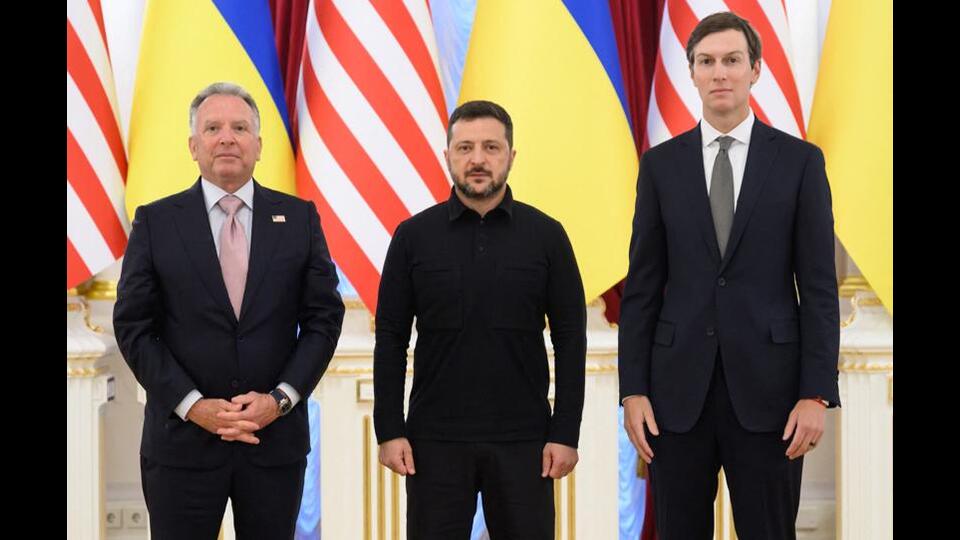
This is the first initiative on the Russia-Ukraine conflict by the US since January, with Trump’s push to end the fighting largely losing momentum as his attention was focused on the war with Iran. Putin’s remark to Trump’s envoys that the situation is “not simple” is an understatement, especially given that Moscow is hanging on to the unrealistic military objective of seizing the rest of eastern Ukraine. Ukrainian President Volodymyr Zelenskyy, on the other hand, has pushed for security guarantees and a “dignified” post-war peace and said his side is ready with proposals in this regard. The frontlines of the grinding war, triggered by Russia’s invasion of Ukraine in February 2022, have largely become static as Russian and Ukrainian troops have struggled to make progress on the ground. This has resulted in the intensification of the air war, largely using drones, and a consequent and sharp rise in civilian casualties, especially in Russian missile and drone strikes. Ukraine too has carried out long-range strikes on military bases, oil refineries, and e-commerce warehouses, and focused on shutting down Russian airspace as part of a strategy to cause widespread economic disruption. In such circumstances, the US effort may not be enough to end a conflict that has already done immense harm to the global economy and eroded the European security architecture.


