
 E-Paper



The politics of protest | HT Editorial
This is the tricky balance in a democracy, where citizen rights and civil liberties must be respected, decision-making should be participative and representative, but the authority of the State and law and order must also be preserved


With the farm protests turning anarchic and violent on Republic Day, the debate has moved from the substance of the farm laws — which was the original point of discord between protesters and the government — to the nature of Indian democracy, the authority of the Indian State, and the possibilities and limits of the politics of protest. The dark episode — for which farm unions bear responsibility — has lessons for all sides and will have a far-reaching impact.
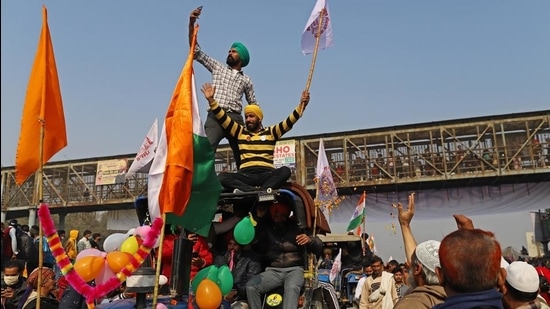
One, any group of citizens who plan protests needs to have a more viable framework in place. Yes, oppose the government and push demands. But if the protests get too prolonged, or if there is an internal tussle where some factions are engaged in the politics of competitive radicalism, or if the protest organisers can’t control their own support base, then they need to revise their methods. In this case, the farm unions had several opportunities to claim victory but refused to do so, swayed by radicalism, only to see the gains of the movement being possibly frittered away. What happened on Tuesday was not just a mere incident of violence — but the fraying of India’s social contract, for which citizens too need to take responsibility. And this can only be repaired with maturity and restraint.
Two, the State will have to relook at its approach to protests. The freedom to dissent or protest against the government, of course, is a fundamental right — and despite Tuesday’s provocation, the government must respect this right as a matter of principle. But the frequency and intensity of protests in recent years must prompt a revision in approach. The first objective should be to engage with citizens unhappy with a set of policies and legislations, allay apprehensions, and win them over. This requires a more democratic approach than the government has displayed so far. But if it does not work, and protests do go ahead, the State needs to have better mechanisms in place, including stronger intelligence gathering, to anticipate the mood on the street and prevent trouble. This is the tricky balance in a democracy, where citizen rights and civil liberties must be respected, decision-making should be participative and representative, but the authority of the State and law and order must also be preserved.


