
 E-Paper



The response to Delhi riots a story of missed opportunities | Opinion
In 2014, when a petition to seek curbs on hate speeches was sought before the Supreme Court, I was representing the Union Government. The top court noted the existence of laws, yet lamented the lack of implementation.

 Prefer HTon Google


Having been born and lived in Delhi for over five decades, the recent riots and inability of administration and law enforcing agencies to prevent and limit the violence in time shows how we remain vulnerable as a society to mob violence.
Both the administration and police have vast powers for maintaining law and order under the Criminal Procedure Code, 1973, or CrPC.
Police have vast preventive powers to stop anticipated acts of breach of peace. They can even arrest and detain persons who are about to commit offences (Sections 149, 150 & 151 CrPC.) A recent example of preventive arrest powers being used effectively to curb rabble rousing and violence is the detention of leaders and others in the erstwhile State of Jammu and Kashmir. Incendiary speeches and slogans, even if not strictly within the contours of criminal offences, can be subjected to preventive breach of peace laws applied effectively for over 700 years in England and over 150 years in India.
In 2014, when a petition to seek curbs on hate speeches was sought before the Supreme Court, I was representing the Union Government. The top court noted the existence of laws, yet lamented the lack of implementation and wanted the Law Commission to look into the issue {Pravasi Bhalai Sangathan v/s UOI (2013)}.
At the time, the court declared: “Hate speech is an effort to marginalise individuals based on their membership in a group. Using expression that exposes the group to hatred, hate speech seeks to de-legitimise group members in the eyes of the majority, reducing their social standing and acceptance within society. Hate speech, therefore, rises beyond causing distress to individual group members. It can have a societal impact. Hate speech lays the groundwork for later, broad attacks on vulnerable that can range from discrimination, to ostracism, segregation, deportation, violence and, in the most extreme cases, to genocide.”
Yet, in dealing with recent incidents of hate speeches in Delhi and elsewhere, this declaration of law has been glossed over.
To ensure that rule of law prevails and police do not prevaricate in registration of FIRs, a Constitution Bench of the Supreme Court in Lalita Kumari vs. Govt. of Uttar Pradesh (2014) mandated immediate registration of FIRs for offences. Yet, despite acts of hate speeches and incitement to violence, neither preventive action has been taken nor FIRs registered expeditiously.
By allowing state agencies four weeks to respond, the courts lost the opportunity to enforce the law. The Supreme Court did attempt to correct this situation by fast-forwarding the high court’s hearing to Friday.
But the apex court in Lalita Kumari’s case (paragraph 120.1) had been clear. It said “the registration of FIR is mandatory under section 154 of the Code if the information discloses commission of a cognizable offence and no preliminary inquiry is permissible in such a situation”.
Yet, with the adjournment by the high court by four weeks, the mandate of the Supreme Court in Lalita Kumari’s case stands eroded. Post Lalita Kumari, high courts have routinely been approached seeking directions to the police to register FIRs and have done so. Cases of failure or delay to register FIRs have led to strictures being passed by the courts.
Safety of citizens and non-citizens alike, is realized when our police and administration ensure strict compliance of the law. In 1968, the famous jurist Lord Denning said, “I hold it to be the duty of the Commissioner of Police of the Metropolis, as it is of every Chief Constable, to enforce the law of the land. He must take steps so to post his men that crimes may be detected; and honest citizens may go about their affairs in peace. He must decide whether or not suspected persons are to be prosecuted; and, if need be, bring the prosecution or see that it is brought. But in all these things he is not the servant of anyone, save of the law itself. No minister of the Crown can tell him that he must, or must not, keep observations on this place or that; or that he must, must not prosecute this man or that one. Nor can any police authority tell him so. The responsibility for law enforcement lies on him. He is answerable to the law and to the law alone”.
Amongst all the limbs of government functionaries, it is the policeman who has a constant interface with the public. In India, a police officer wears many hats, far beyond the charter of his duties dealing with issues ranging from family matters, matrimonial law, missing children, protection of the elderly, law enforcement, intelligence gathering, investigation and prosecution. Delhi Police has always prided itself on its independence.
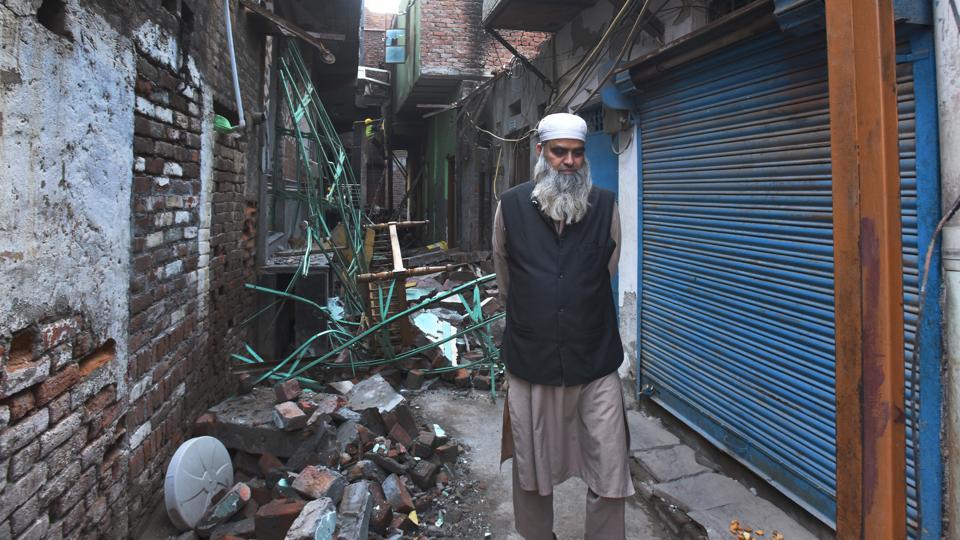
What is crucial for the man on the street is timely preventive action by the police. While restrictions are in place and violence has ended, yet parts of Delhi have burnt, many are injured and killed and the public’s confidence in their safety stands eroded. This is not acceptable in 21st century India.
(The author is a Supreme Court lawyer and former Additional Solicitor General of India)


